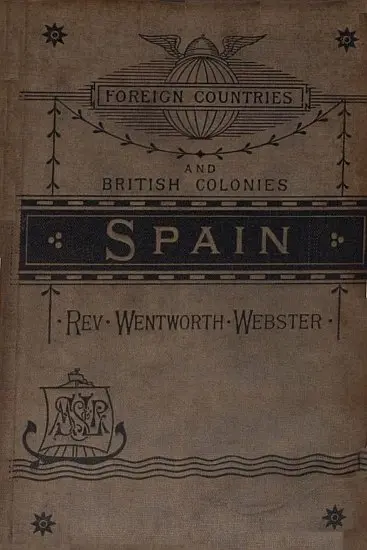
Spain
Wentworth Webster
THE CLASSIC COLLECTION · 1877
"Basque Legends; With an Essay on the Basque Language" by Wentworth Webster is a collection of traditional tales and folklore from the Basque region, written in the late 19th century. The book explores the unique mythology and cultural narratives of the Basques, including legendary creatures such as the Tartaro and the Heren-Suge, as well as various animal fables. It offers an intriguing look into the Basque societal values and linguistic elements, making it a valuable resource for anthropology and folklore enthusiasts. At the start of the work, the introduction emphasizes the significance of studying comparative mythology and highlights the Basque people’s distinct cultural heritage, characterized by their unwritten language and rich oral traditions. The opening portion sets the stage for the stories to come, revealing how these legends—believed to represent ancient truths—are recounted by Basque peasants during communal activities. The narratives intertwine historical influences and local beliefs, depicting characters like the one-eyed Tartaro and heroic figures enmeshed in quests and adventures, illustrating themes of cleverness, survival, and the interplay of the familiar with the supernatural.
Introduction adapted from the source catalogue; source summaries may be automatically generated.
Free to read · English · 96,186 words · No account needed
MAKE TIME FOR A GOOD BOOK
On by default. Untick to stop anonymous reading totals. Each page counts after 10 seconds in view. How this works.
Anonymous counting is on unless you have switched it off.
[200] There are other examples of similar mystification in later Basque literature. "Les Échos du Pas de Roland," par J. B. Dasconaguerre, Bayonne, 1868, professes on the title to be "traduit du Basque"; but the "Atheko-gaitzeko Oiharzunak" (the echoes of the bad door or pass), Bayonan, 1870, is really a translation from the French. To the Basques the name of Roland is unknown in connection with this beautiful ravine. M. Fr. Michel's "Le Romancero du Pays Basque," Didot, Paris, 1859, is scarcely less an embroidery on themes of which the ground only is Basque.
[201] Cf. lorea, from the Latin flos flore.
[202] An exact reprint of Echepare's "Poems," edited by M. Vinson, was published by Cazals, Bayonne, 1874.
[203] The most curious fact to notice in these hymns is, how very soon after their death the Jesuit Fathers, Ignatius de Loyola and François de Xavier, were celebrated and addressed as saints in Basque verse.
[204] This song is prettily translated in Miss Costello's "Béarn and the Pyrénées," London, 1844, where are also translations of some other Basque songs, the originals of which I have failed to trace.
Borne on thy wings amidst the air,
Sweet bird, where wilt thou go?
For if thou wouldst to Spain repair,
The ports are filled with snow.
Wait, and we will fly together,
When the Spring brings sunny weather.
St. Joseph's Hermitage is lone,
Amidst the desert bare,
And when we on our way are gone,
Awhile we'll rest us there;
As we pursue our mountain track,
Shall we not sigh as we look back?
Go to my love, oh! gentle sigh,
And near her chamber hover nigh;
Glide to her heart, make that thy shrine,
As she is fondly kept in mine.
Then thou may'st tell her it is I
Who sent thee to her, gentle sigh!
[205] For the most recent theory on the Cagots, see "Les Parias de France et de l'Espagne," par M. de Rochas (Hachette, Paris, 1876).
[206] More often the Cagots' ears were said to be either completely round or with very long lobes, or with the lobes adhering. We have found examples of all of these in the Basque country, but not confined or peculiar to the Cagots. A case like that described in the verse above we have never seen.
[207] Michel, "Le Pays Basque," p. 352.
[208] Michel, "Le Pays Basque," p. 414.
[209] I owe the MS. of this song to the kindness of M. Achille Fouquier, author, sportsman, and artist.
[210] A line has dropped out of the MS. here. We supply the probable meaning. The composer is one P. Mendibel, 1859.
Your reading position is saved on this browser. Take it to another device with a library code. Reading pages adapt to text, rather than matching a printed edition.
Wentworth Webster
BEHIND THE BOOK
This eBook is for the use of anyone anywhere in the United States and most other parts of the world at no cost and with almost no restrictions whatsoever. You may copy it, give it away or re-use it under the terms of the Project Gutenberg License included with this eBook or online at www.gutenberg.org. If you are not located in the United States, you will have to check the laws of the country where you are located before using this eBook. Read the source licence.
The original source file, including credits and licence, is retained by this library. Request an original-format copy at no charge. Please include the book title and Project Gutenberg identifier #34902.
KEEP YOUR CURIOSITY GOING

Maurice Baring
Francis Greenleaf Allinson & Anne C. E. (Anne Crosby Emery) Allinson
Stuart Dodgson Collingwood
Percy Keese Fitzhugh
Mary Macleod & Edmund Spenser

Cooke Don-Carlos