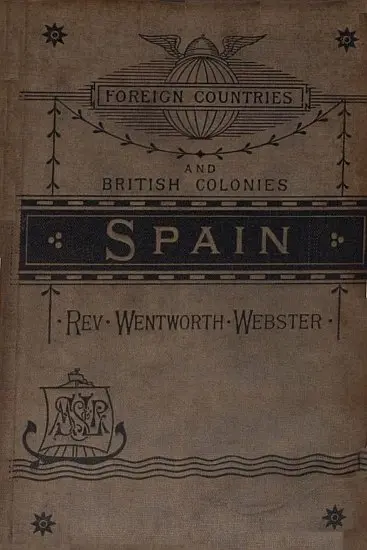
Spain
Wentworth Webster
THE CLASSIC COLLECTION · 1877
"Basque Legends; With an Essay on the Basque Language" by Wentworth Webster is a collection of traditional tales and folklore from the Basque region, written in the late 19th century. The book explores the unique mythology and cultural narratives of the Basques, including legendary creatures such as the Tartaro and the Heren-Suge, as well as various animal fables. It offers an intriguing look into the Basque societal values and linguistic elements, making it a valuable resource for anthropology and folklore enthusiasts. At the start of the work, the introduction emphasizes the significance of studying comparative mythology and highlights the Basque people’s distinct cultural heritage, characterized by their unwritten language and rich oral traditions. The opening portion sets the stage for the stories to come, revealing how these legends—believed to represent ancient truths—are recounted by Basque peasants during communal activities. The narratives intertwine historical influences and local beliefs, depicting characters like the one-eyed Tartaro and heroic figures enmeshed in quests and adventures, illustrating themes of cleverness, survival, and the interplay of the familiar with the supernatural.
Introduction adapted from the source catalogue; source summaries may be automatically generated.
Free to read · English · 96,186 words · No account needed
MAKE TIME FOR A GOOD BOOK
On by default. Untick to stop anonymous reading totals. Each page counts after 10 seconds in view. How this works.
Anonymous counting is on unless you have switched it off.
[57] This tale, or at least this version of it, with the names Rose and Bellarose, must come from the French.
[58] "A little dog" is mentioned in Campbell's "The Daughter of the Skies," Vol. I., 202, and notes.
[59] "Kopetaen erdian diamanteko bista batez"--"a view of diamonds in the middle of the forehead."
[60] Nothing has been said about this dress before. Something must have dropped out of the story.
[61] At a Pyrenean wedding the bride and bridegroom, with the wedding party, spend nearly the whole day in promenading through the town or village. The feast often lasts several days, and the poor bride is an object of pity, she sometimes looks so deadly tired.
[62] Cerquand, Part I., p. 29, notes to Conte 8; Fr. Michel, "Le Pays Basque," p. 152 (Didot, Paris, 1857).
[63] "Akhelarre," literally "goat pasture." This was the name in the
16th century.
[64] This belief in a toad sitting at the church door to swallow the
Host is found in De Lancre.
[65] That is, one with bran, or herbs, wood-ashes, &c., or plain water.
[66] M. Cerquand gives this tale at length, Part II., pp. 10, 11. The incidents are very slightly changed.
[67] Compare this with the scene in Apuleius, "De Asino Aureo;" and, for a somewhat similar "fairy ointment," see Hunt's "Popular Romances of the West of England," pp. 110-113.
[68] The blunder is confounding "dessus," over, and "dessous," under. This shows that the tale is originally French, or, at least, the witch's part of it; for this punning mistake could not be made in Basque. The two words are not in the least similar in sound. "Gaiñetik" and "azpetik" are the words here used.
[69] Witches still appear in the shape of cats, but generally black ones. About two years ago we were told of a man who, at midnight, chopped off the ear of a black cat, who was thus bewitching his cattle, and lo! in the morning it was a woman's ear, with an earring still in it. He deposited it in the Mairie, and we might see it there; but we did not go to look, as it was some distance off.
[70] Literally, "red misery." In Basque the most intense wretchedness of any kind is always called "red."
[71] There are several superstitions connected with cross-roads in the Pays Basque. When a person dies, the bedding or mattress is sometimes burnt at the nearest cross-roads, and every passer-by says a "Paternoster" for the benefit of the deceased. This custom is becoming extinct, but is still observed in old families.
[72] This is, of course, only a mispronunciation of "Dominus tecum"--"The Lord be with you." Compare the opposite effect of "God save us," in Croker's tale of "Master and Man," pp. 96, 97.
Your reading position is saved on this browser. Take it to another device with a library code. Reading pages adapt to text, rather than matching a printed edition.
Wentworth Webster
BEHIND THE BOOK
This eBook is for the use of anyone anywhere in the United States and most other parts of the world at no cost and with almost no restrictions whatsoever. You may copy it, give it away or re-use it under the terms of the Project Gutenberg License included with this eBook or online at www.gutenberg.org. If you are not located in the United States, you will have to check the laws of the country where you are located before using this eBook. Read the source licence.
The original source file, including credits and licence, is retained by this library. Request an original-format copy at no charge. Please include the book title and Project Gutenberg identifier #34902.
KEEP YOUR CURIOSITY GOING

Maurice Baring
Francis Greenleaf Allinson & Anne C. E. (Anne Crosby Emery) Allinson
Stuart Dodgson Collingwood
Percy Keese Fitzhugh
Mary Macleod & Edmund Spenser

Cooke Don-Carlos