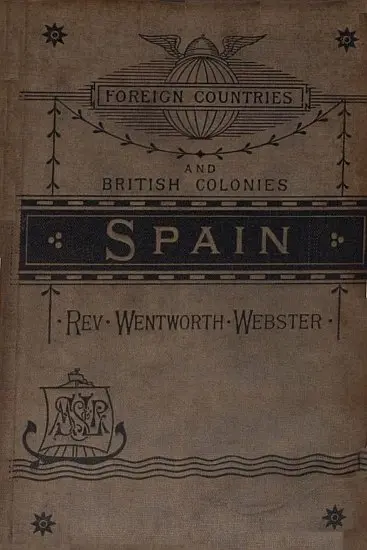
Spain
Wentworth Webster
THE CLASSIC COLLECTION · 1877
"Basque Legends; With an Essay on the Basque Language" by Wentworth Webster is a collection of traditional tales and folklore from the Basque region, written in the late 19th century. The book explores the unique mythology and cultural narratives of the Basques, including legendary creatures such as the Tartaro and the Heren-Suge, as well as various animal fables. It offers an intriguing look into the Basque societal values and linguistic elements, making it a valuable resource for anthropology and folklore enthusiasts. At the start of the work, the introduction emphasizes the significance of studying comparative mythology and highlights the Basque people’s distinct cultural heritage, characterized by their unwritten language and rich oral traditions. The opening portion sets the stage for the stories to come, revealing how these legends—believed to represent ancient truths—are recounted by Basque peasants during communal activities. The narratives intertwine historical influences and local beliefs, depicting characters like the one-eyed Tartaro and heroic figures enmeshed in quests and adventures, illustrating themes of cleverness, survival, and the interplay of the familiar with the supernatural.
Introduction adapted from the source catalogue; source summaries may be automatically generated.
Free to read · English · 96,186 words · No account needed
MAKE TIME FOR A GOOD BOOK
On by default. Untick to stop anonymous reading totals. Each page counts after 10 seconds in view. How this works.
Anonymous counting is on unless you have switched it off.
[73] See notes to "Juan Dekos," p. 146.
[74] I think this word occurs in some "Chanson de Gestes," and in the Basque "Pastorales," as a Mahommedan devil. If not, it is probably our own "Duke of Marlborough" thus transformed. Cf. the song, "Malbrouk s'en va en guerre."
[75] This is again, "red, angry."
[76] Cf. Campbell, "The Tale of Connal," Vol. I., p. 142.
[77] This looks uncommonly like "Ho, you!" but it is given by Salaberry as a Basque cry, "Appel par un cri fort, par la voix élevée." "Play," as an exclamation to begin at games of ball, has no meaning in Basque, and is believed to come from the English. We have borrowed "Jingo," "by Jingo," from "Jinkoa," "the deity."
[78] In Campbell's first tale, "The Young King of Easaidh Ruadh, the hero is assisted by a dog, a falcon, and an otter. Cf. the notes in the translation of this tale in Brueyre's "Contes de la Grande Bretagne;" cf. also, "The Sea-Maiden," pp. 73 and 94, for a still closer resemblance.
[79] Cf. "Tabakiera," p. 94, and "Old Deccan Days," pp. 83-91. It is curious to hear of the Red Sea from narrators so far apart, on opposite sides, as the Lingaets of the Deccan and the Basques, neither of whom, probably, had the most distant idea of its geographical position; certainly our Basque narrators had not.
[80] In Campbell's "Sea-Maiden," the hero has only to think of the animals, and they are at his side; but he is not transformed into them.
[81] Campbell refers to "The Giant who had no Heart in his Body," "Norse Tales," 1859. See his references, and those in the "Contes Populaires de la Grande Bretagne," cited above. M. d'Abbadie has also communicated to us the outlines of a wild Tartaro story, told in Basque, in which the hero "fights with a body without a soul."
[82] Cf. Campbell's "Tales," before quoted, and "Old Deccan Days" ("Punchkin"), pp. 14, 15, for the whole of this incident.
[83] Malbrouk seems now to assume the character of "Hermes, the clever thief." If we mistake not, this cow appears also in Indian mythology.
[84] For the whole of this tale compare Campbell's "Sea-Maiden," Vol. I., p. 71. The sea-maiden takes the place of the fish. Besides the three sons, the three foals, and the three puppies, three trees grow behind the house, and serve as a sign like the well boiling. Bladé's "Les Deux Jumeaux," in his "Contes Agenais," is identical with this; cf. also Köhler's notes, p. 148.
[85] Much more is made of the sword in the Gaelic tales. In them it is always a magic or a mystic weapon.
Your reading position is saved on this browser. Take it to another device with a library code. Reading pages adapt to text, rather than matching a printed edition.
Wentworth Webster
BEHIND THE BOOK
This eBook is for the use of anyone anywhere in the United States and most other parts of the world at no cost and with almost no restrictions whatsoever. You may copy it, give it away or re-use it under the terms of the Project Gutenberg License included with this eBook or online at www.gutenberg.org. If you are not located in the United States, you will have to check the laws of the country where you are located before using this eBook. Read the source licence.
The original source file, including credits and licence, is retained by this library. Request an original-format copy at no charge. Please include the book title and Project Gutenberg identifier #34902.
KEEP YOUR CURIOSITY GOING

Maurice Baring
Francis Greenleaf Allinson & Anne C. E. (Anne Crosby Emery) Allinson
Stuart Dodgson Collingwood
Percy Keese Fitzhugh
Mary Macleod & Edmund Spenser

Cooke Don-Carlos