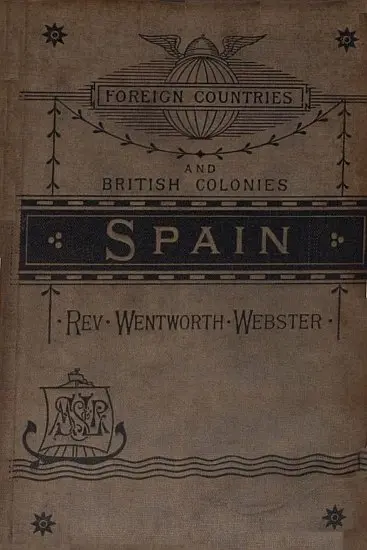
Spain
Wentworth Webster
THE CLASSIC COLLECTION · 1877
"Basque Legends; With an Essay on the Basque Language" by Wentworth Webster is a collection of traditional tales and folklore from the Basque region, written in the late 19th century. The book explores the unique mythology and cultural narratives of the Basques, including legendary creatures such as the Tartaro and the Heren-Suge, as well as various animal fables. It offers an intriguing look into the Basque societal values and linguistic elements, making it a valuable resource for anthropology and folklore enthusiasts. At the start of the work, the introduction emphasizes the significance of studying comparative mythology and highlights the Basque people’s distinct cultural heritage, characterized by their unwritten language and rich oral traditions. The opening portion sets the stage for the stories to come, revealing how these legends—believed to represent ancient truths—are recounted by Basque peasants during communal activities. The narratives intertwine historical influences and local beliefs, depicting characters like the one-eyed Tartaro and heroic figures enmeshed in quests and adventures, illustrating themes of cleverness, survival, and the interplay of the familiar with the supernatural.
Introduction adapted from the source catalogue; source summaries may be automatically generated.
Free to read · English · 96,186 words · No account needed
MAKE TIME FOR A GOOD BOOK
On by default. Untick to stop anonymous reading totals. Each page counts after 10 seconds in view. How this works.
Anonymous counting is on unless you have switched it off.
[37] Cf. Campbell's tale, "The Keg of Butter," Vol. III., 98, where the fox cheats the wolf by giving him the bottoms of the oats and the tops of the potatoes. See also the references there given.
[38] Cf. Cerquand, Part I., p. 27, "Ancho et les Vaches," and
notes. Also Part II., 34, et seq.
[39] Cf. Cerquand, Part I., pp. 33, 34, "La Dame au Peigne d'Or."
[40] Cerquand, Part I., p. 30, "Basa-Jauna et le Salve Regina."
[41] Cerquand, "L'Eglise d'Espés." "Le Pont de Licq," Part I., pp. 31, 32, and Part II., pp. 50-52.
[42] But compare the well or marsh of the Basa-Andre in the Tartaro
tale, p. 15.
[43] Cerquand, Part I., pp. 32, 33.
[44] The owner of the farm and the "métayère," or tenant's wife. Under the "métayer" system the landlord and tenant divide the produce of the farm. This is the case almost universally in South-Western France, as elsewhere in the South. The "métayer's" residence often adjoins the landlord's house.
[45] Cf. "The Sister and her Seven Brothers."
[46] This is the only representation that we know of Basa-Jaun as
a vampire.
[47] As the Basques commonly go barefooted, or use only hempen sandals, the feet require to be washed every evening. This is generally done before the kitchen fire, and in strict order of age and rank. Cf. also "The Sister and her Seven Brothers."
[48] The running water, we suspect, gives the girl power over the
witch.
[49] "Hazel sticks." In the sixteenth century the dog-wood, "cornus sanguinea," seems to have been the witches' wood. In the "Pastorales," all the enchantments, etc., are done by the ribboned wands of the Satans. This tale ends rather abruptly. The reciter grew very tired at the last.
[50] Basque Lamiñak always say exactly the contrary to what they mean.
[51] Cf. Bladé's "Contes Agenais," "Les Deux Filles," and Köhler's "Notes Comparatives" on the tale, p. 149.
[52] That is, the wife span evenly with a clear steady sound of the wheel, but the man did it unevenly.
[53] Cf. Campbell's "The Brollachan," Vol. II., p. 189, with the notes and variations. "Me myself," as here, seems the equivalent of the Homeric "o>'utic."
[54] M. Cerquand has the same tale, Part I., p. 41.
[55] This is a very widely spread legend. Cf. Patrañas, "What Ana saw in the Sunbeam;" "Duffy and the Devil," in Hunt's "Popular Romances of the West of England," p. 239; also Kennedy's "Idle Girl and her Aunts," which is very close to the Spanish story; and compare the references subjoined to the translation of the Irish legend in Brueyre's "Contes Populaires de la Grande Bretagne," p. 159.
[56] Cf. "The Brewery of Egg-shells," in Croker's "Fairy Legends of the South of Ireland," pp. 32-36.
Your reading position is saved on this browser. Take it to another device with a library code. Reading pages adapt to text, rather than matching a printed edition.
Wentworth Webster
BEHIND THE BOOK
This eBook is for the use of anyone anywhere in the United States and most other parts of the world at no cost and with almost no restrictions whatsoever. You may copy it, give it away or re-use it under the terms of the Project Gutenberg License included with this eBook or online at www.gutenberg.org. If you are not located in the United States, you will have to check the laws of the country where you are located before using this eBook. Read the source licence.
The original source file, including credits and licence, is retained by this library. Request an original-format copy at no charge. Please include the book title and Project Gutenberg identifier #34902.
KEEP YOUR CURIOSITY GOING

Maurice Baring
Francis Greenleaf Allinson & Anne C. E. (Anne Crosby Emery) Allinson
Stuart Dodgson Collingwood
Percy Keese Fitzhugh
Mary Macleod & Edmund Spenser

Cooke Don-Carlos