
The lost dirigible
Ralph Henry Barbour
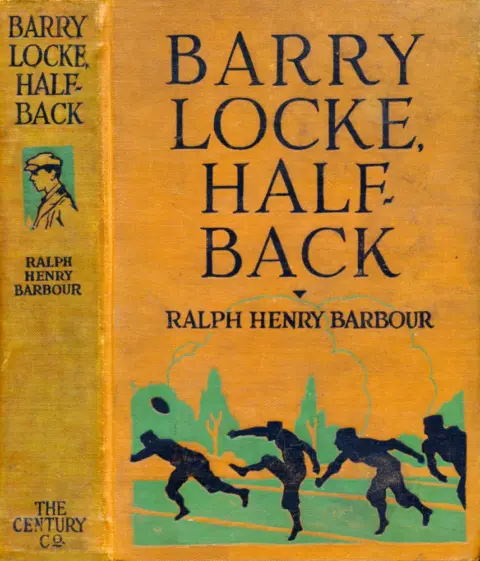
THE CLASSIC COLLECTION · 1925
"Barry Locke, half-back" by Ralph Henry Barbour is a school sports novel written in the early 20th century. It follows Barry Locke, a new boy at Broadmoor School, as he navigates housing mishaps, shifting friendships, and the pull between football, baseball, and school cliques; key figures include his status‑minded friend Clyde Allen, the wry and grounded Crawford “Peaches” Jones, and sensitive violinist Alonzo “Zo” Fessenden.
The opening of the book traces Barry’s arrival in the Connecticut village of Wessex, where a promised dorm room falls through and he instead boards with kindly Mrs. Lyle, meeting her daughter Betty, the quirky specimen-collector Toby Nott, and the affable Peaches Jones. Barry registers, samples campus life, buys a sturdy second‑hand desk, and endures Clyde’s attempts to steer him toward “the right sort” of friends and clubs while discouraging baseball and Jones. On “Pup Night” he intervenes when Third Class boys try to drag the panicked Fourth Class Zo Fessenden to the pond, scuffling with Rusty Waterman until Peaches steps in, and the three begin a quiet friendship. These chapters establish Barry’s daily routine, early football Saturdays, and the warm porch camaraderie at the Lyles, while hinting at the social divides Barry must choose his way through.
Introduction adapted from the source catalogue; source summaries may be automatically generated.
Free to read · English · 66,507 words · No account needed
MAKE TIME FOR A GOOD BOOK
On by default. Untick to stop anonymous reading totals. Each page counts after 10 seconds in view. How this works.
Anonymous counting is on unless you have switched it off.
Toby blinked, thought hard an instant, and then nodded.
“Yeah, there was a letter――no, not a letter――well, something up in the corner. It was stuck up against the top with a splinter. I told you about it and I put it in one of those drawers, and you needn’t try to make out that I swiped it!”
“Is this it?”
Toby moved forward, glanced at the indicated article, and nodded.
“Sure it is! What’s all the row about, then? If you’ve got it――”
“You’re certain this is what you found?”
“’Course I’m certain! It had printing on it just like that. Say, what’s it all about, anyway?” Toby viewed the document again. “Bond? Lookut, Barry: if it don’t belong to you, I claim it! Yes, sir, I found it! Lookut――”
“Much obliged,” said Peaches. “That’s all, Toby.”
“No, it ain’t, either! If that’s worth anything, I’ve got a right to share in it. Now, see here, you fellows――”
“Toby!” said Peaches, quietly emphatic.
Toby became silent and moved toward the door, his gaze, however, still lingering on the bond. Finally the mutinous spirit prevailed.
“That’s all right,” he ejaculated bitterly as he held the door between him and Peaches, “but all I’ve got to say is you guys have got a gall to throw my moth away and then try to do me out of my bond!”
As, however, neither of the others was longer aware of his existence, he went off, muttering, and presently the slam of his door sounded a final indignant protest.
Some three minutes later Barry and Peaches left the house hurriedly and made toward the village. Somewhere at the rear of Mr. Hannabury’s shop a bell tinkled, and the dealer in antiques answered the summons.
“About that desk I bought from you a while ago, Mr. Hannabury――” began
Barry.
“Yes, a very good desk,” said the dealer, smiling. “A real bargain,
too, young man.”
“Yes. Well, sir, I was wondering where it came from. I mean, would you mind telling me where you got it?”
Mr. Hannabury was silently suspicious a moment. Then he answered:
“Well, now, it ain’t customary to tell where things come from, but I guess there ain’t any harm in telling you that. That desk belonged to Mr. Watkins, Mr. Benton Watkins, of Watkins and Boyle. He used it in his office for more than twenty years, he told me. You don’t find desks nowadays made like that one’s made. They used to――”
Your reading position is saved on this browser. Take it to another device with a library code. Reading pages adapt to text, rather than matching a printed edition.
Ralph Henry Barbour
Ralph Henry Barbour

Ralph Henry Barbour

Ralph Henry Barbour
BEHIND THE BOOK
This eBook is for the use of anyone anywhere in the United States and most other parts of the world at no cost and with almost no restrictions whatsoever. You may copy it, give it away or re-use it under the terms of the Project Gutenberg License included with this eBook or online at www.gutenberg.org. If you are not located in the United States, you will have to check the laws of the country where you are located before using this eBook. Read the source licence.
The original source file, including credits and licence, is retained by this library. Request an original-format copy at no charge. Please include the book title and Project Gutenberg identifier #78118.
KEEP YOUR CURIOSITY GOING
Coulson Kernahan

Maurice Baring
Frances Wright
Cécile Tormay

Frederic Jesup Stimson

W. H. P. (William Henry Pope) Jarvis