
The lost dirigible
Ralph Henry Barbour
THE CLASSIC COLLECTION · 1925
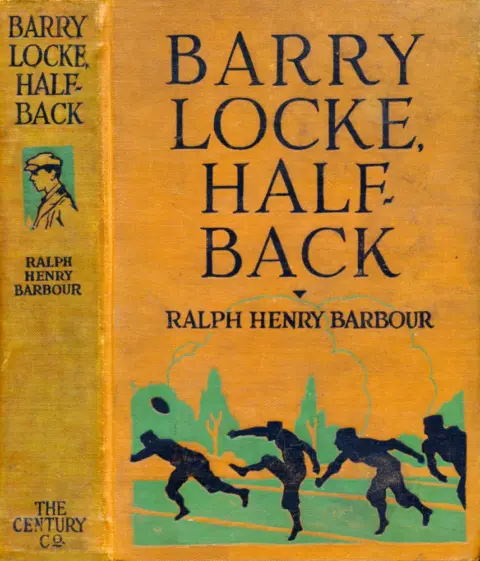
"Barry Locke, half-back" by Ralph Henry Barbour is a school sports novel written in the early 20th century. It follows Barry Locke, a new boy at Broadmoor School, as he navigates housing mishaps, shifting friendships, and the pull between football, baseball, and school cliques; key figures include his status‑minded friend Clyde Allen, the wry and grounded Crawford “Peaches” Jones, and sensitive violinist Alonzo “Zo” Fessenden.
The opening of the book traces Barry’s arrival in the Connecticut village of Wessex, where a promised dorm room falls through and he instead boards with kindly Mrs. Lyle, meeting her daughter Betty, the quirky specimen-collector Toby Nott, and the affable Peaches Jones. Barry registers, samples campus life, buys a sturdy second‑hand desk, and endures Clyde’s attempts to steer him toward “the right sort” of friends and clubs while discouraging baseball and Jones. On “Pup Night” he intervenes when Third Class boys try to drag the panicked Fourth Class Zo Fessenden to the pond, scuffling with Rusty Waterman until Peaches steps in, and the three begin a quiet friendship. These chapters establish Barry’s daily routine, early football Saturdays, and the warm porch camaraderie at the Lyles, while hinting at the social divides Barry must choose his way through.
Introduction adapted from the source catalogue; source summaries may be automatically generated.
Free to read · English · 66,507 words · No account needed
MAKE TIME FOR A GOOD BOOK
On by default. Untick to stop anonymous reading totals. Each page counts after 10 seconds in view. How this works.
Anonymous counting is on unless you have switched it off.
“Did you find him?” asked Peaches, carelessly.
“Find who?” asked Barry, perplexed.
“Mister Moth.”
“Oh! Yes, I let him out.”
Peaches seated himself on an arm of the easy-chair and viewed Barry shrewdly. After a silence he asked:
“Well, going to let anything else out?”
“Huh?” Barry was not, it seemed, very quick-witted this evening. “What
do you mean?”
Peaches shrugged.
“Oh, nothing, nothing at all. Only, if the head coach paid me a visit I’d be telling all about it. But I dare say I lack what-you-call-it――er――reticence.”
Barry began to lift the desk drawers and slide them back into place. He performed the task very slowly, very thoughtfully. When the last one was in he perched himself on the edge of the desk, studied his hands a moment――rather scratched and scarred they were these days――and finally said:
“Well, I guess I’d like to tell you, only――”
“Since I’m being consumed by curiosity,” said Peaches, when the other paused, “I might perhaps be prevailed on to listen. You were about to say――?”
“It’s no joke,” answered Barry, rather plaintively. “He――I――he said I needn’t report again.”
“’Cause why?” asked the audience, after a surprised instant.
So the story came out and Peaches listened, without comment, to the
end. Then he said:
“It’s hard to say which of you is right, Barry. I see your position, and his, too. I can’t blame him for wanting to get his hands on the moron who sent that letter, and I can see that you’d naturally hate to get Allen into trouble.”
“Allen!” exclaimed Barry. “Why, I didn’t say―― What makes you think――”
“Of course you didn’t say, but he’s the only chap in school you’d lose your job on the team for, isn’t he? Don’t be worried. I’m as deaf as the grave. No, I mean dumb. Well, what are you going to do about it?”
“Nothing,” muttered Barry.
“All you can do, I guess,” said Peaches, after some thought. “I don’t quite get the Major’s view, though. Near as I can make out, he’s been grooming you for more than a month to play against Hoskins. Now he drops you three days before the game, for something that isn’t really connected with the team. I guess he was sort of mad, wasn’t he? They say he has a fair to middling temper. Still, it doesn’t seem quite like him to make the school pay for a personal grudge. Well, it isn’t exactly that, either, but――”
Your reading position is saved on this browser. Take it to another device with a library code. Reading pages adapt to text, rather than matching a printed edition.
Ralph Henry Barbour
Ralph Henry Barbour

Ralph Henry Barbour

Ralph Henry Barbour
BEHIND THE BOOK
This eBook is for the use of anyone anywhere in the United States and most other parts of the world at no cost and with almost no restrictions whatsoever. You may copy it, give it away or re-use it under the terms of the Project Gutenberg License included with this eBook or online at www.gutenberg.org. If you are not located in the United States, you will have to check the laws of the country where you are located before using this eBook. Read the source licence.
The original source file, including credits and licence, is retained by this library. Request an original-format copy at no charge. Please include the book title and Project Gutenberg identifier #78118.
KEEP YOUR CURIOSITY GOING
Coulson Kernahan

Maurice Baring
Frances Wright
Cécile Tormay

Frederic Jesup Stimson

W. H. P. (William Henry Pope) Jarvis