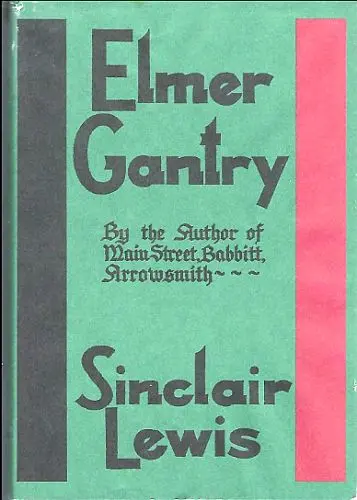
Elmer Gantry
Sinclair Lewis
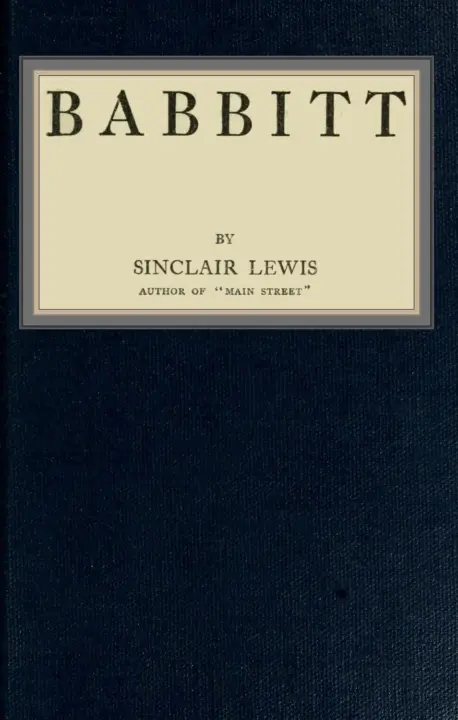
THE CLASSIC COLLECTION · 1922
"Babbitt" by Sinclair Lewis is a satirical novel published in 1922. It follows George F. Babbitt, a middle-aged real estate broker who appears to embody the American Dream—success, conformity, and middle-class respectability. Yet beneath his comfortable existence lies growing dissatisfaction. When his best friend's life unravels, Babbitt begins questioning everything he once valued, launching into rebellion against social conventions. His journey explores the emptiness of conformity and the cost of living according to others' expectations in 1920s America.
Introduction adapted from the source catalogue; source summaries may be automatically generated.
Free to read · English · 126,072 words · No account needed
MAKE TIME FOR A GOOD BOOK
On by default. Untick to stop anonymous reading totals. Each page counts after 10 seconds in view. How this works.
Anonymous counting is on unless you have switched it off.
At the Regency Hotel cigar-counter he fell to talking with a salesman of pianos, and they dined together. Babbitt was filled with friendliness and well-being. He enjoyed the gorgeousness of the dining-room: the chandeliers, the looped brocade curtains, the portraits of French kings against panels of gilded oak. He enjoyed the crowd: pretty women, good solid fellows who were “liberal spenders.”
He gasped. He stared, and turned away, and stared again. Three tables off, with a doubtful sort of woman, a woman at once coy and withered, was Paul Riesling, and Paul was supposed to be in Akron, selling tar-roofing. The woman was tapping his hand, mooning at him and giggling. Babbitt felt that he had encountered something involved and harmful. Paul was talking with the rapt eagerness of a man who is telling his troubles. He was concentrated on the woman’s faded eyes. Once he held her hand and once, blind to the other guests, he puckered his lips as though he was pretending to kiss her. Babbitt had so strong an impulse to go to Paul that he could feel his body uncoiling, his shoulders moving, but he felt, desperately, that he must be diplomatic, and not till he saw Paul paying the check did he bluster to the piano-salesman, “By golly--friend of mine over there--’scuse me second--just say hello to him.”
He touched Paul’s shoulder, and cried, “Well, when did you hit town?”
Paul glared up at him, face hardening. “Oh, hello, George. Thought you’d gone back to Zenith.” He did not introduce his companion. Babbitt peeped at her. She was a flabbily pretty, weakly flirtatious woman of forty-two or three, in an atrocious flowery hat. Her rouging was thorough but unskilful.
“Where you staying, Paulibus?”
The woman turned, yawned, examined her nails. She seemed accustomed to
not being introduced.
Paul grumbled, “Campbell Inn, on the South Side.”
“Alone?” It sounded insinuating.
“Yes! Unfortunately!” Furiously Paul turned toward the woman, smiling with a fondness sickening to Babbitt. “May! Want to introduce you. Mrs. Arnold, this is my old--acquaintance, George Babbitt.”
“Pleasmeech,” growled Babbitt, while she gurgled, “Oh, I’m very pleased to meet any friend of Mr. Riesling’s, I’m sure.”
Babbitt demanded, “Be back there later this evening, Paul? I’ll drop
down and see you.”
“No, better-- We better lunch together to-morrow.”
“All right, but I’ll see you to-night, too, Paul. I’ll go down to your hotel, and I’ll wait for you!”
Your reading position is saved on this browser. Take it to another device with a library code. Reading pages adapt to text, rather than matching a printed edition.
Sinclair Lewis
Sinclair Lewis
Sinclair Lewis
Sinclair Lewis
BEHIND THE BOOK
This eBook is for the use of anyone anywhere in the United States and most other parts of the world at no cost and with almost no restrictions whatsoever. You may copy it, give it away or re-use it under the terms of the Project Gutenberg License included with this eBook or online at www.gutenberg.org. If you are not located in the United States, you will have to check the laws of the country where you are located before using this eBook. Read the source licence.
The original source file, including credits and licence, is retained by this library. Request an original-format copy at no charge. Please include the book title and Project Gutenberg identifier #1156.
KEEP YOUR CURIOSITY GOING
Coulson Kernahan

Maurice Baring
Frances Wright
Cécile Tormay

Frederic Jesup Stimson

W. H. P. (William Henry Pope) Jarvis