THE CLASSIC COLLECTION✦SocialismCLASSIC FREE BOOKS
Socialism
John Stuart Mill
THE CLASSIC COLLECTION · 1873
"Autobiography" by John Stuart Mill is a personal account written in the mid-19th century that reflects on the life and philosophical development of one of the greatest thinkers of the time. The narrative begins with his unconventional early education under the rigorous guidance of his father, James Mill, and explores the profound intellectual influences that shaped his views on politics, ethics, and society. Mill emphasizes the remarkable depth of learning he experienced during his formative years, which often included studying classical texts in Greek and Latin as well as engaging in discussions on topics ranging from history to mathematics. The opening of the autobiography details Mill's childhood and educational experiences from birth to around age fourteen. He recounts the heavy emphasis his father placed on rigorous intellectual training and the remarkable curriculum that he was subjected to, which included Greek at a very young age and a wide range of historical literature. Mill also reflects on the moral and intellectual influences of his father's philosophy, particularly his rejection of conventional religious belief and advocacy for utilitarian principles. This early exposure, coupled with enriching conversations with influential figures such as Jeremy Bentham and David Ricardo, ultimately fostered Mill's own philosophical outlook and commitment to societal reform. Each chapter of Mill's life hints at the broader social and political context of his work, making it clear that his theoretical inquiries are deeply connected to his lived experiences and the vibrant discussions occurring in his intellectual milieu.
Introduction adapted from the source catalogue; source summaries may be automatically generated.
Free to read · English · 75,090 words · No account needed
MAKE TIME FOR A GOOD BOOK
On by default. Untick to stop anonymous reading totals. Each page counts after 10 seconds in view. How this works.
Anonymous counting is on unless you have switched it off.
This last change, which took place very gradually, dates its commencement from my reading, or rather study, of M. de Tocqueville's Democracy in America, which fell into my hands immediately after its first appearance. In that remarkable work, the excellences of democracy were pointed out in a more conclusive, because a more specific manner than I had ever known them to be, even by the most enthusiastic democrats; while the specific dangers which beset democracy, considered as the government of the numerical majority, were brought into equally strong light, and subjected to a masterly analysis, not as reasons for resisting what the author considered as an inevitable result of human progress, but as indications of the weak points of popular government, the defences by which it needs to be guarded, and the correctives which must be added to it in order that while full play is given to its beneficial tendencies, those which are of a different nature may be neutralized or mitigated. I was now well prepared for speculations of this character, and from this time onward my own thoughts moved more and more in the same channel, though the consequent modifications in my practical political creed were spread over many years, as would be shown by comparing my first review of Democracy in America, written and published in 1835, with the one in 1840 (reprinted in the Dissertations), and this last, with the Considerations on Representative Government.
A collateral subject on which also I derived great benefit from the study of Tocqueville, was the fundamental question of centralization. The powerful philosophic analysis which he applied to American and to French experience, led him to attach the utmost importance to the performance of as much of the collective business of society, as can safely be so performed, by the people themselves, without any intervention of the executive government, either to supersede their agency, or to dictate the manner of its exercise. He viewed this practical political activity of the individual citizen, not only as one of the most effectual means of training the social feelings and practical intelligence of the people, so important in themselves and so indispensable to good government, but also as the specific counteractive to some of the characteristic infirmities of democracy, and a necessary protection against its degenerating into the only despotism of which, in the modern world, there is real danger--the absolute rule of the head of the executive over a congregation of isolated individuals, all equals but all slaves. There was, indeed, no immediate peril from this source on the British side of the channel, where nine-tenths of the internal business which elsewhere devolves on the government, was transacted by agencies independent of it; where centralization was, and is, the subject not only of rational disapprobation, but of unreasoning prejudice; where jealousy of Government interference was a blind feeling preventing or resisting even the most beneficial exertion of legislative authority to correct the abuses of what pretends to be local self-government, but is, too often, selfish mismanagement of local interests, by a jobbing and borné local oligarchy. But the more certain the public were to go wrong on the side opposed to centralization, the greater danger was there lest philosophic reformers should fall into the contrary error, and overlook the mischiefs of which they had been spared the painful experience. I was myself, at this very time, actively engaged in defending important measures, such as the great Poor Law Reform of 1834, against an irrational clamour grounded on the anti-centralization prejudice: and had it not been for the lessons of Tocqueville, I do not know that I might not, like many reformers before me, have been hurried into the excess opposite to that, which, being the one prevalent in my own country, it was generally my business to combat. As it is, I have steered carefully between the two errors, and whether I have or have not drawn the line between them exactly in the right place, I have at least insisted with equal emphasis upon the evils on both sides, and have made the means of reconciling the advantages of both, a subject of serious study.
Your reading position is saved on this browser. Take it to another device with a library code. Reading pages adapt to text, rather than matching a printed edition.
John Stuart Mill
John Stuart Mill
John Stuart Mill
John Stuart Mill
BEHIND THE BOOK
This eBook is for the use of anyone anywhere in the United States and most other parts of the world at no cost and with almost no restrictions whatsoever. You may copy it, give it away or re-use it under the terms of the Project Gutenberg License included with this eBook or online at www.gutenberg.org. If you are not located in the United States, you will have to check the laws of the country where you are located before using this eBook. Read the source licence.
The original source file, including credits and licence, is retained by this library. Request an original-format copy at no charge. Please include the book title and Project Gutenberg identifier #10378.
KEEP YOUR CURIOSITY GOING

David Patterson (Spirit) Hatch
Coulson Kernahan
John L. Ransom

Ralph Waldo Emerson
Frances Wright
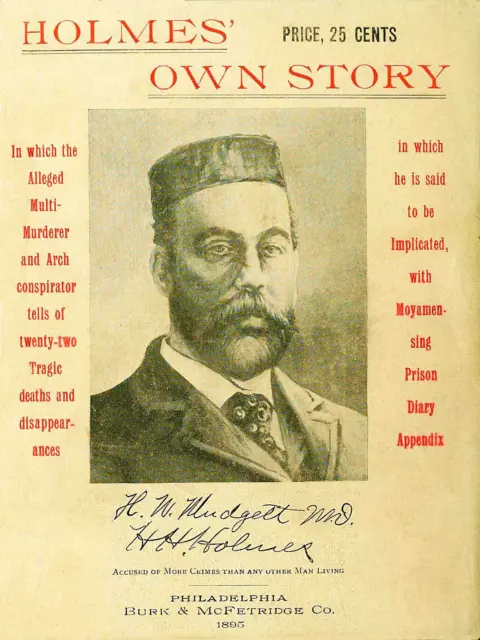
Herman W. Mudgett