THE CLASSIC COLLECTION✦SocialismCLASSIC FREE BOOKS
Socialism
John Stuart Mill
THE CLASSIC COLLECTION · 1873
"Autobiography" by John Stuart Mill is a personal account written in the mid-19th century that reflects on the life and philosophical development of one of the greatest thinkers of the time. The narrative begins with his unconventional early education under the rigorous guidance of his father, James Mill, and explores the profound intellectual influences that shaped his views on politics, ethics, and society. Mill emphasizes the remarkable depth of learning he experienced during his formative years, which often included studying classical texts in Greek and Latin as well as engaging in discussions on topics ranging from history to mathematics. The opening of the autobiography details Mill's childhood and educational experiences from birth to around age fourteen. He recounts the heavy emphasis his father placed on rigorous intellectual training and the remarkable curriculum that he was subjected to, which included Greek at a very young age and a wide range of historical literature. Mill also reflects on the moral and intellectual influences of his father's philosophy, particularly his rejection of conventional religious belief and advocacy for utilitarian principles. This early exposure, coupled with enriching conversations with influential figures such as Jeremy Bentham and David Ricardo, ultimately fostered Mill's own philosophical outlook and commitment to societal reform. Each chapter of Mill's life hints at the broader social and political context of his work, making it clear that his theoretical inquiries are deeply connected to his lived experiences and the vibrant discussions occurring in his intellectual milieu.
Introduction adapted from the source catalogue; source summaries may be automatically generated.
Free to read · English · 75,090 words · No account needed
MAKE TIME FOR A GOOD BOOK
On by default. Untick to stop anonymous reading totals. Each page counts after 10 seconds in view. How this works.
Anonymous counting is on unless you have switched it off.
To be admitted into any degree of mental intercourse with a being of these qualities, could not but have a most beneficial influence on my development; though the effect was only gradual, and many years elapsed before her mental progress and mine went forward in the complete companionship they at last attained. The benefit I received was far greater than any which I could hope to give; though to her, who had at first reached her opinions by the moral intuition of a character of strong feeling, there was doubtless help as well as encouragement to be derived from one who had arrived at many of the same results by study and reasoning: and in the rapidity of her intellectual growth, her mental activity, which converted everything into knowledge, doubtless drew from me, as it did from other sources, many of its materials. What I owe, even intellectually, to her, is in its detail, almost infinite; of its general character a few words will give some, though a very imperfect, idea.
With those who, like all the best and wisest of mankind, are dissatisfied with human life as it is, and whose feelings are wholly identified with its radical amendment, there are two main regions of thought. One is the region of ultimate aims; the constituent elements of the highest realizable ideal of human life. The other is that of the immediately useful and practically attainable. In both these departments, I have acquired more from her teaching, than from all other sources taken together. And, to say truth, it is in these two extremes principally, that real certainty lies. My own strength lay wholly in the uncertain and slippery intermediate region, that of theory, or moral and political science: respecting the conclusions of which, in any of the forms in which I have received or originated them, whether as political economy, analytic psychology, logic, philosophy of history, or anything else, it is not the least of my intellectual obligations to her that I have derived from her a wise scepticism, which, while it has not hindered me from following out the honest exercise of my thinking faculties to whatever conclusions might result from it, has put me on my guard against holding or announcing these conclusions with a degree of confidence which the nature of such speculations does not warrant, and has kept my mind not only open to admit, but prompt to welcome and eager to seek, even on the questions on which I have most meditated, any prospect of clearer perceptions and better evidence. I have often received praise, which in my own right I only partially deserve, for the greater practicality which is supposed to be found in my writings, compared with those of most thinkers who have been equally addicted to large generalizations. The writings in which this quality has been observed, were not the work of one mind, but of the fusion of two, one of them as pre-eminently practical in its judgments and perceptions of things present, as it was high and bold in its anticipations for a remote futurity. At the present period, however, this influence was only one among many which were helping to shape the character of my future development: and even after it became, I may truly say, the presiding principle of my mental progress, it did not alter the path, but only made me move forward more boldly, and, at the same time, more cautiously, in the same course. The only actual revolution which has ever taken place in my modes of thinking, was already complete. My new tendencies had to be confirmed in some respects, moderated in others: but the only substantial changes of opinion that were yet to come, related to politics, and consisted, on one hand, in a greater approximation, so far as regards the ultimate prospects of humanity, to a qualified Socialism, and on the other, a shifting of my political ideal from pure democracy, as commonly understood by its partisans, to the modified form of it, which is set forth in my Considerations on Representative Government.
Your reading position is saved on this browser. Take it to another device with a library code. Reading pages adapt to text, rather than matching a printed edition.
John Stuart Mill
John Stuart Mill
John Stuart Mill
John Stuart Mill
BEHIND THE BOOK
This eBook is for the use of anyone anywhere in the United States and most other parts of the world at no cost and with almost no restrictions whatsoever. You may copy it, give it away or re-use it under the terms of the Project Gutenberg License included with this eBook or online at www.gutenberg.org. If you are not located in the United States, you will have to check the laws of the country where you are located before using this eBook. Read the source licence.
The original source file, including credits and licence, is retained by this library. Request an original-format copy at no charge. Please include the book title and Project Gutenberg identifier #10378.
KEEP YOUR CURIOSITY GOING

David Patterson (Spirit) Hatch
Coulson Kernahan
John L. Ransom

Ralph Waldo Emerson
Frances Wright
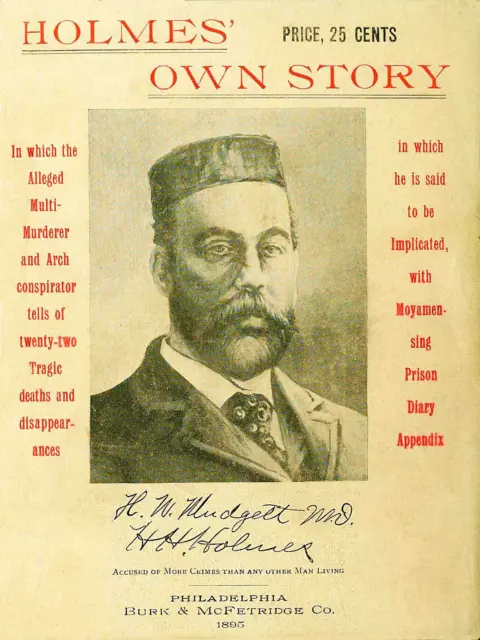
Herman W. Mudgett