THE CLASSIC COLLECTION✦SocialismCLASSIC FREE BOOKS
Socialism
John Stuart Mill
THE CLASSIC COLLECTION · 1873
"Autobiography" by John Stuart Mill is a personal account written in the mid-19th century that reflects on the life and philosophical development of one of the greatest thinkers of the time. The narrative begins with his unconventional early education under the rigorous guidance of his father, James Mill, and explores the profound intellectual influences that shaped his views on politics, ethics, and society. Mill emphasizes the remarkable depth of learning he experienced during his formative years, which often included studying classical texts in Greek and Latin as well as engaging in discussions on topics ranging from history to mathematics. The opening of the autobiography details Mill's childhood and educational experiences from birth to around age fourteen. He recounts the heavy emphasis his father placed on rigorous intellectual training and the remarkable curriculum that he was subjected to, which included Greek at a very young age and a wide range of historical literature. Mill also reflects on the moral and intellectual influences of his father's philosophy, particularly his rejection of conventional religious belief and advocacy for utilitarian principles. This early exposure, coupled with enriching conversations with influential figures such as Jeremy Bentham and David Ricardo, ultimately fostered Mill's own philosophical outlook and commitment to societal reform. Each chapter of Mill's life hints at the broader social and political context of his work, making it clear that his theoretical inquiries are deeply connected to his lived experiences and the vibrant discussions occurring in his intellectual milieu.
Introduction adapted from the source catalogue; source summaries may be automatically generated.
Free to read · English · 75,090 words · No account needed
MAKE TIME FOR A GOOD BOOK
On by default. Untick to stop anonymous reading totals. Each page counts after 10 seconds in view. How this works.
Anonymous counting is on unless you have switched it off.
The occupation of so much of my time by office work did not relax my attention to my own pursuits, which were never carried on more vigorously. It was about this time that I began to write in newspapers. The first writings of mine which got into print were two letters published towards the end of 1822, in the Traveller evening newspaper. The Traveller (which afterwards grew into the Globe and Traveller, by the purchase and incorporation of the Globe) was then the property of the well-known political economist, Colonel Torrens, and under the editorship of an able man, Mr. Walter Coulson (who, after being an amanuensis of Mr. Bentham, became a reporter, then an editor, next a barrister and conveyancer, and died Counsel to the Home Office), it had become one of the most important newspaper organs of Liberal politics. Colonel Torrens himself wrote much of the political economy of his paper; and had at this time made an attack upon some opinion of Ricardo and my father, to which, at my father's instigation, I attempted an answer, and Coulson, out of consideration for my father and goodwill to me, inserted it. There was a reply by Torrens, to which I again rejoined. I soon after attempted something considerably more ambitious. The prosecutions of Richard Carlile and his wife and sister for publications hostile to Christianity were then exciting much attention, and nowhere more than among the people I frequented. Freedom of discussion even in politics, much more in religion, was at that time far from being, even in theory, the conceded point which it at least seems to be now; and the holders of obnoxious opinions had to be always ready to argue and re-argue for the liberty of expressing them. I wrote a series of five letters, under the signature of Wickliffe, going over the whole length and breadth of the question of free publication of all opinions on religion, and offered them to the Morning Chronicle. Three of them were published in January and February, 1823; the other two, containing things too outspoken for that journal, never appeared at all. But a paper which I wrote soon after on the same subject, à propos of a debate in the House of Commons, was inserted as a leading article; and during the whole of this year, 1823, a considerable number of my contributions were printed in the Chronicle and Traveller: sometimes notices of books, but oftener letters, commenting on some nonsense talked in Parliament, or some defect of the law, or misdoings of the magistracy or the courts of justice. In this last department the Chronicle was now rendering signal service. After the death of Mr. Perry, the editorship and management of the paper had devolved on Mr. John Black, long a reporter on its establishment; a man of most extensive reading and information, great honesty and simplicity of mind; a particular friend of my father, imbued with many of his and Bentham's ideas, which he reproduced in his articles, among other valuable thoughts, with great facility and skill. From this time the Chronicle ceased to be the merely Whig organ it was before, and during the next ten years became to a considerable extent a vehicle of the opinions of the Utilitarian Radicals. This was mainly by what Black himself wrote, with some assistance from Fonblanque, who first showed his eminent qualities as a writer by articles and jeux d'esprit in the Chronicle. The defects of the law, and of the administration of justice, were the subject on which that paper rendered most service to improvement. Up to that time hardly a word had been said, except by Bentham and my father, against that most peccant part of English institutions and of their administration. It was the almost universal creed of Englishmen, that the law of England, the judicature of England, the unpaid magistracy of England, were models of excellence. I do not go beyond the mark in saying, that after Bentham, who supplied the principal materials, the greatest share of the merit of breaking down this wretched superstition belongs to Black, as editor of the Morning Chronicle. He kept up an incessant fire against it, exposing the absurdities and vices of the law and the courts of justice, paid and unpaid, until he forced some sense of them into people's minds. On many other questions he became the organ of opinions much in advance of any which had ever before found regular advocacy in the newspaper press. Black was a frequent visitor of my father, and Mr. Grote used to say that he always knew by the Monday morning's article whether Black had been with my father on the Sunday. Black was one of the most influential of the many channels through which my father's conversation and personal influence made his opinions tell on the world; cooperating with the effect of his writings in making him a power in the country such as it has rarely been the lot of an individual in a private station to be, through the mere force of intellect and character: and a power which was often acting the most efficiently where it was least seen and suspected. I have already noticed how much of what was done by Ricardo, Hume, and Grote was the result, in part, of his prompting and persuasion. He was the good genius by the side of Brougham in most of what he did for the public, either on education, law reform, or any other subject. And his influence flowed in minor streams too numerous to be specified. This influence was now about to receive a great extension by the foundation of the Westminster Review.
Your reading position is saved on this browser. Take it to another device with a library code. Reading pages adapt to text, rather than matching a printed edition.
John Stuart Mill
John Stuart Mill
John Stuart Mill
John Stuart Mill
BEHIND THE BOOK
This eBook is for the use of anyone anywhere in the United States and most other parts of the world at no cost and with almost no restrictions whatsoever. You may copy it, give it away or re-use it under the terms of the Project Gutenberg License included with this eBook or online at www.gutenberg.org. If you are not located in the United States, you will have to check the laws of the country where you are located before using this eBook. Read the source licence.
The original source file, including credits and licence, is retained by this library. Request an original-format copy at no charge. Please include the book title and Project Gutenberg identifier #10378.
KEEP YOUR CURIOSITY GOING

David Patterson (Spirit) Hatch
Coulson Kernahan
John L. Ransom

Ralph Waldo Emerson
Frances Wright
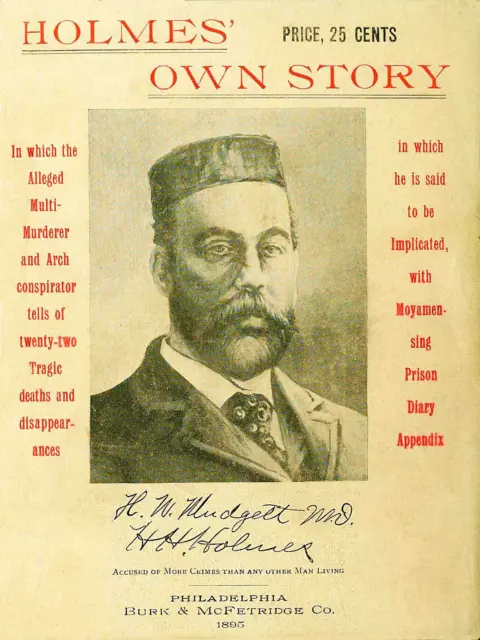
Herman W. Mudgett