THE CLASSIC COLLECTION✦SocialismCLASSIC FREE BOOKS
Socialism
John Stuart Mill
THE CLASSIC COLLECTION · 1873
"Autobiography" by John Stuart Mill is a personal account written in the mid-19th century that reflects on the life and philosophical development of one of the greatest thinkers of the time. The narrative begins with his unconventional early education under the rigorous guidance of his father, James Mill, and explores the profound intellectual influences that shaped his views on politics, ethics, and society. Mill emphasizes the remarkable depth of learning he experienced during his formative years, which often included studying classical texts in Greek and Latin as well as engaging in discussions on topics ranging from history to mathematics. The opening of the autobiography details Mill's childhood and educational experiences from birth to around age fourteen. He recounts the heavy emphasis his father placed on rigorous intellectual training and the remarkable curriculum that he was subjected to, which included Greek at a very young age and a wide range of historical literature. Mill also reflects on the moral and intellectual influences of his father's philosophy, particularly his rejection of conventional religious belief and advocacy for utilitarian principles. This early exposure, coupled with enriching conversations with influential figures such as Jeremy Bentham and David Ricardo, ultimately fostered Mill's own philosophical outlook and commitment to societal reform. Each chapter of Mill's life hints at the broader social and political context of his work, making it clear that his theoretical inquiries are deeply connected to his lived experiences and the vibrant discussions occurring in his intellectual milieu.
Introduction adapted from the source catalogue; source summaries may be automatically generated.
Free to read · English · 75,090 words · No account needed
MAKE TIME FOR A GOOD BOOK
On by default. Untick to stop anonymous reading totals. Each page counts after 10 seconds in view. How this works.
Anonymous counting is on unless you have switched it off.
Contrary to what may have been supposed, my father was in no degree a party to setting up the Westminster Review. The need of a Radical organ to make head against the Edinburgh and Quarterly (then in the period of their greatest reputation and influence) had been a topic of conversation between him and Mr. Bentham many years earlier, and it had been a part of their Château en Espagne that my father should be the editor; but the idea had never assumed any practical shape. In 1823, however, Mr. Bentham determined to establish the Review at his own cost, and offered the editorship to my father, who declined it as incompatible with his India House appointment. It was then entrusted to Mr. (now Sir John) Bowring, at that time a merchant in the City. Mr. Bowring had been for two or three years previous an assiduous frequenter of Mr. Bentham, to whom he was recommended by many personal good qualities, by an ardent admiration for Bentham, a zealous adoption of many, though not all of his opinions, and, not least, by an extensive acquaintanceship and correspondence with Liberals of all countries, which seemed to qualify him for being a powerful agent in spreading Bentham's fame and doctrines through all quarters of the world. My father had seen little of Bowring, but knew enough of him to have formed a strong opinion, that he was a man of an entirely different type from what my father considered suitable for conducting a political and philosophical Review: and he augured so ill of the enterprise that he regretted it altogether, feeling persuaded not only that Mr. Bentham would lose his money, but that discredit would probably be brought upon Radical principles. He could not, however, desert Mr. Bentham, and he consented to write an article for the first number. As it had been a favourite portion of the scheme formerly talked of, that part of the work should be devoted to reviewing the other Reviews, this article of my father's was to be a general criticism of the Edinburgh Review from its commencement. Before writing it he made me read through all the volumes of the Review, or as much of each as seemed of any importance (which was not so arduous a task in 1823 as it would be now), and make notes for him of the articles which I thought he would wish to examine, either on account of their good or their bad qualities. This paper of my father's was the chief cause of the sensation which the Westminster Review produced at its first appearance, and is, both in conception and in execution, one of the most striking of all his writings. He began by an analysis of the tendencies of periodical literature in general; pointing out, that it cannot, like books, wait for success, but must succeed immediately or not at all, and is hence almost certain to profess and inculcate the opinions already held by the public to which it addresses itself, instead of attempting to rectify or improve those opinions. He next, to characterize the position of the Edinburgh Review as a political organ, entered into a complete analysis, from the Radical point of view, of the British Constitution. He held up to notice its thoroughly aristocratic character: the nomination of a majority of the House of Commons by a few hundred families; the entire identification of the more independent portion, the county members, with the great landholders; the different classes whom this narrow oligarchy was induced, for convenience, to admit to a share of power; and finally, what he called its two props, the Church, and the legal profession. He pointed out the natural tendency of an aristocratic body of this composition, to group itself into two parties, one of them in possession of the executive, the other endeavouring to supplant the former and become the predominant section by the aid of public opinion, without any essential sacrifice of the aristocratical predominance. He described the course likely to be pursued, and the political ground occupied, by an aristocratic party in opposition, coquetting with popular principles for the sake of popular support. He showed how this idea was realized in the conduct of the Whig party, and of the Edinburgh Review as its chief literary organ. He described, as their main characteristic, what he termed "seesaw"; writing alternately on both sides of the question which touched the power or interest of the governing classes; sometimes in different articles, sometimes in different parts of the same article: and illustrated his position by copious specimens. So formidable an attack on the Whig party and policy had never before been made; nor had so great a blow ever been struck, in this country, for Radicalism; nor was there, I believe, any living person capable of writing that article except my father.[2]
Your reading position is saved on this browser. Take it to another device with a library code. Reading pages adapt to text, rather than matching a printed edition.
John Stuart Mill
John Stuart Mill
John Stuart Mill
John Stuart Mill
BEHIND THE BOOK
This eBook is for the use of anyone anywhere in the United States and most other parts of the world at no cost and with almost no restrictions whatsoever. You may copy it, give it away or re-use it under the terms of the Project Gutenberg License included with this eBook or online at www.gutenberg.org. If you are not located in the United States, you will have to check the laws of the country where you are located before using this eBook. Read the source licence.
The original source file, including credits and licence, is retained by this library. Request an original-format copy at no charge. Please include the book title and Project Gutenberg identifier #10378.
KEEP YOUR CURIOSITY GOING

David Patterson (Spirit) Hatch
Coulson Kernahan
John L. Ransom

Ralph Waldo Emerson
Frances Wright
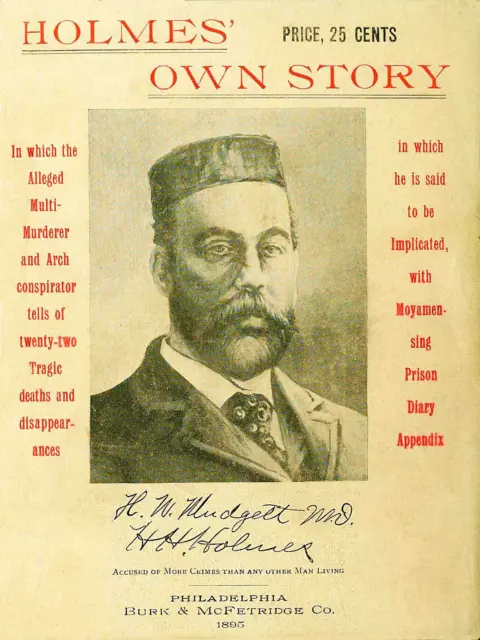
Herman W. Mudgett