THE CLASSIC COLLECTION✦Found in the Philippines: The Story of a Woman’s LettersCLASSIC FREE BOOKS
Found in the Philippines: The Story of a Woman’s Letters
Charles King
THE CLASSIC COLLECTION · 1903
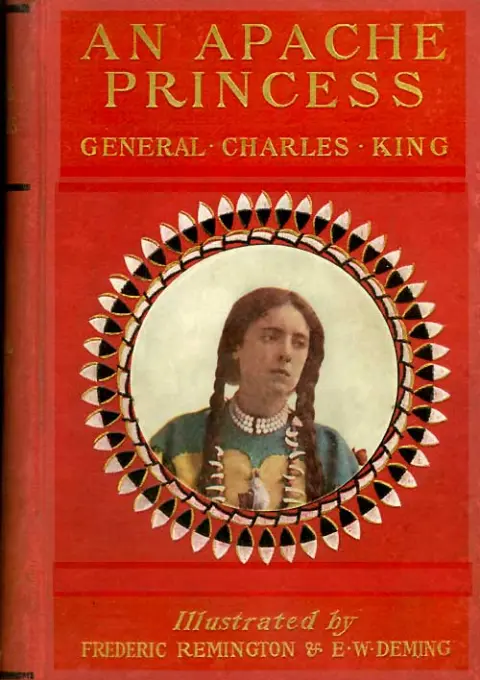
"An Apache Princess: A Tale of the Indian Frontier" by Charles King is a novel written in the early 20th century. The story unfolds in the backdrop of the American Southwest, focusing on the life of Angela Wren, the daughter of a soldier stationed at a remote fort. As tensions run high between settlers and the indigenous Apache people, the narrative explores Angela's encounters and relationship with Lieutenant Neil Blakely, a complex character often at odds with the military's expectations and societal norms. The opening of the tale introduces Angela as she waits by a tranquil pool, lost in her thoughts while the sun sets over the rugged landscape. This moment of solitude is interrupted by the presence of an Apache girl, who silently warns her of an approaching figure, leading Angela to encounter Lieutenant Blakely in a moment of vulnerability. As the chapter unfolds, the tension between Angela's burgeoning feelings and her father's protective nature sets the stage for potential conflict, foreshadowing the intertwining of their fates against the backdrop of cultural and personal struggles. The narrative hints at deeper issues of identity, loyalty, and the complex relationships between different cultures on the frontier.
Introduction adapted from the source catalogue; source summaries may be automatically generated.
Free to read · English · 81,900 words · No account needed
MAKE TIME FOR A GOOD BOOK
On by default. Untick to stop anonymous reading totals. Each page counts after 10 seconds in view. How this works.
Anonymous counting is on unless you have switched it off.
Nightfall of a weary day had come. Camp Sandy, startled from sleep in the dark hour before the dawn, had found topic for much exciting talk, and was getting tired as the twilight waned. No word had come from the party sent in search of Downs, now deemed a deserter. No sign of him had been found about the post. No explanation had occurred to either Cutler or Graham of the parting between Elise and the late "striker." She had never been known to notice or favor him in any way before. Her smiles and coquetries had been lavished on the sergeants. In Downs there was nothing whatsoever to attract her. It was not likely she had given him money, said Cutler, because he was about the post all that day after the Plumes' departure and with never a sign of inebriety. He could not himself buy whisky, but among the ranchmen, packers, and prospectors forever hanging about the post there were plenty ready to play middleman for anyone who could supply the cash, and in this way were the orders of the post commander made sometimes abortive. Downs was gone, that was certain, and the question was, which way?
A sergeant and two men had taken the Prescott road; followed it to Dick's Ranch, in the Cherry Creek Valley, and were assured the missing man had never gone that way. Dick was himself a veteran trooper of the ----th. He had invested his savings in this little estate and settled thereon to grow up with the country--the Stannards' winsome Millie having accepted a life interest in him and his modest property. They knew every man riding that trail, from the daily mail messenger to the semi-occasional courier. Their own regiment had gone, but they had warm interest in its successors. They knew Downs, had known him ever since his younger days when, a trig young Irish-Englishman, some Londoner's discharged valet, he had 'listed in the cavalry, as he expressed it, to reform. A model of temperance, soberness, and chastity was Downs between times, and his gifts as groom of the chambers, as well as groom of the stables, made him, when a model, invaluable to bachelor officers in need of a competent soldier servant. In days just after the great war he had won fame and money as a light rider. It was then that Lieutenant Blake had dubbed him "Epsom" Downs, and well-nigh quarreled with his chum, Lieutenant Ray, over the question of proprietorship when the two were sent to separate stations and Downs was "striking" for both. Downs settled the matter by getting on a seven-days' drunk, squandering both fame and money, and, though forgiven the scriptural seventy times seven (during which term of years his name was changed to Ups and Downs), finally forfeited the favor of both these indulgent masters and became thereafter simply Downs, with no ups of sufficient length to restore the average--much less to redeem him. And yet, when eventually "bobtailed" out of the ----th, he had turned up at the old arsenal recruiting depot at St. Louis, clean-shaven, neat, deft-handed, helpful, to the end that an optimistic troop commander "took him on again," in the belief that a reform had indeed been inaugurated. But, like most good soldiers, the commander referred to knew little of politics or potables, otherwise he would have set less store by the strength of the reform movement and more by that of the potations. Downs went so far on the highroad to heaven this time as to drink nothing until his first payday. Meantime, as his captain's mercury, messenger, and general utility man, moving much in polite society at the arsenal and in town, he was frequently to be seen about Headquarters of the Army, then established by General Sherman as far as possible from Washington and as close to the heart of St. Louis. He learned something of the ins and outs of social life in the gay city, heard much theory and little truth about the time that Lieutenant Blakely, returning suddenly thereto after an absence of two months, during which time frequent letters had passed between him and Clarice Latrobe, found that Major Plume had been her shadow for weeks, her escort to dance after dance, her companion riding, driving, dining day after day. Something of this Blakely had heard in letters from friends. Little or nothing thereof had he heard from her. The public never knew what passed between them (Elise, her maid, was better informed). But Blakely within the day left town again, and within the week there appeared the announcement of her forthcoming marriage, Plume the presumably happy man. Downs got full the first payday after his re-enlistment, as has been said, and drunk, as in duty bound, at the major's "swagger" wedding. It was after this episode he fell utterly from grace and went forth to the frontier irreclaimably "Downs." It was a seven-days' topic of talk at Sandy that Lieutenant Blakely, when acting Indian agent at the reservation, should have accepted the services of this unpromising specimen as "striker." It was a seven-weeks' wonder that Downs kept the pact, and sober as a judge, from the hour he joined the Bugologist to the night that self-contained young officer was sent crashing into his beetle show under the impact of Wren's furious fist. Then came the last pound that broke the back of Downs' wavering resolution, and now had come--what? The sergeant and party rode back from Dick's to tell Captain Cutler the deserter had not taken the Cherry Creek road. Another party just in reported similarly that he had not taken the old, abandoned Grief Hill trail. Still another returned from down-stream ranches to say he could not have taken that route without being seen--and he had not been seen. Ranchman Strom would swear to that because Downs was in his debt for value received in shape of whisky, and Strom was rabid at the idea of his getting away. In fine, as nothing but Downs was missing, it became a matter of speculation along toward tattoo as to whether Downs could have taken anything at all--except possibly his own life.
Your reading position is saved on this browser. Take it to another device with a library code. Reading pages adapt to text, rather than matching a printed edition.
Charles King

Charles King

Charles King

Charles King
BEHIND THE BOOK
This eBook is for the use of anyone anywhere in the United States and most other parts of the world at no cost and with almost no restrictions whatsoever. You may copy it, give it away or re-use it under the terms of the Project Gutenberg License included with this eBook or online at www.gutenberg.org. If you are not located in the United States, you will have to check the laws of the country where you are located before using this eBook. Read the source licence.
The original source file, including credits and licence, is retained by this library. Request an original-format copy at no charge. Please include the book title and Project Gutenberg identifier #19330.
KEEP YOUR CURIOSITY GOING
Cécile Tormay

Moritz Busch
Coulson Kernahan
John L. Ransom

Maurice Baring
Frances Wright