THE CLASSIC COLLECTION✦Found in the Philippines: The Story of a Woman’s LettersCLASSIC FREE BOOKS
Found in the Philippines: The Story of a Woman’s Letters
Charles King
THE CLASSIC COLLECTION · 1903
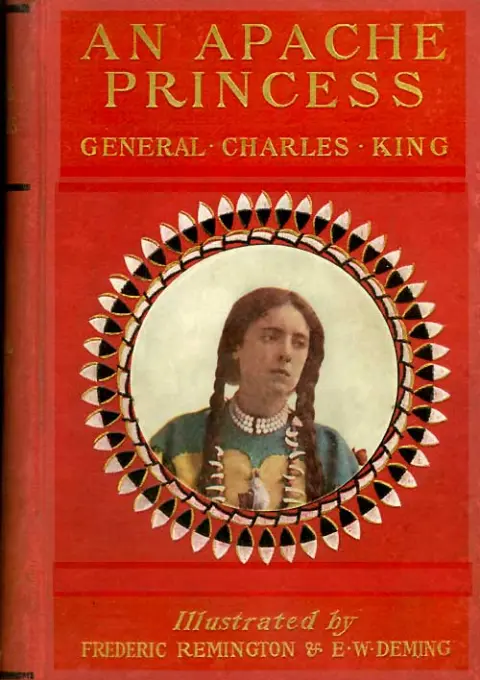
"An Apache Princess: A Tale of the Indian Frontier" by Charles King is a novel written in the early 20th century. The story unfolds in the backdrop of the American Southwest, focusing on the life of Angela Wren, the daughter of a soldier stationed at a remote fort. As tensions run high between settlers and the indigenous Apache people, the narrative explores Angela's encounters and relationship with Lieutenant Neil Blakely, a complex character often at odds with the military's expectations and societal norms. The opening of the tale introduces Angela as she waits by a tranquil pool, lost in her thoughts while the sun sets over the rugged landscape. This moment of solitude is interrupted by the presence of an Apache girl, who silently warns her of an approaching figure, leading Angela to encounter Lieutenant Blakely in a moment of vulnerability. As the chapter unfolds, the tension between Angela's burgeoning feelings and her father's protective nature sets the stage for potential conflict, foreshadowing the intertwining of their fates against the backdrop of cultural and personal struggles. The narrative hints at deeper issues of identity, loyalty, and the complex relationships between different cultures on the frontier.
Introduction adapted from the source catalogue; source summaries may be automatically generated.
Free to read · English · 81,900 words · No account needed
MAKE TIME FOR A GOOD BOOK
On by default. Untick to stop anonymous reading totals. Each page counts after 10 seconds in view. How this works.
Anonymous counting is on unless you have switched it off.
"Some day I may tell Miss Angela--but never you," had Mr. Blakely said, before setting forth on his perilous essay to find Angela's father, and with native tenacity Miss Wren the elder had remembered the words and nourished her wrath. It was strange, indeed, that Plume, an officer and a gentleman, should have bethought him of the "austere vestal" as a companion witness to Blakely's supposed iniquity; but, between these two natures,--one strong, one weak,--there had sprung up the strange sympathy that is born of a common, deep-rooted, yet ill-defined antipathy--one for which neither she nor he could yet give good reason, and of which each was secretly ashamed. Each, for reasons of her or his own, cordially disliked the Bugologist, and each could not but welcome evidence to warrant such dislike. It is human nature. Janet Wren had strong convictions that the man was immoral, if for no other reason than that he obviously sought Angela and as obviously avoided her. Janet had believed him capable of carrying on a liaison with the dame who had jilted him, and had had to see that theory crushed. Then she would have it that, if not the mistress, he dallied with the maid, and when it began to transpire that virulent hatred was the only passion felt for him by that baffling and detestable daughter of Belial, there came actual joy to the soul of the Scotchwoman that, after all, her intuition had not been at fault. He was immoral as she would have him, even more so, for he had taken base advantage of the young and presumably innocent. She craved some proof, and Plume knew it, and, seeing her there alone in her dejection, had bidden her come and look--with the result described.
His own feeling toward Blakely is difficult to explain. Kind friends had told him at St. Louis how inseparable had been Clarice and this very superior young officer. She had admitted to him the "flirtation," but denied all regard for Blakely, yet Plume speedily found her moody, fitful, and unhappy, and made up his mind that Blakely was at the bottom of it. Her desire to go to far-away Arizona could have no other explanation. And though in no way whatever, by look, word, or deed, had Blakely transgressed the strictest rule in his bearing toward the major's wife, both major and wife became incensed at him,--Plume because he believed the Bugologist still cherished a tender passion for his wife--or she for him; Clarice, it must be owned, because she knew well he did not. Plume sought to find a flaw in his subordinate's moral armor to warrant the aversion that he felt, and was balked at every turn. It was with joy almost fierce he discovered what he thought to be proof that the subaltern was no saint, and, never stopping to give his better nature time to rise and rebuke him, he had summoned Janet. It was to sting Blakely, more than to punish the girl, he had ordered Natzie to the guard-room. Then, as the hours wore on and he realized how contemptible had been his conduct, the sense of shame well-nigh crushed him, and though it galled him to think that some of his own kind, probably, had connived at Natzie's escape, he thanked God the girl was gone. And now having convinced herself that here at last she had positive proof of Mr. Blakely's depravity, Aunt Janet had not scrupled to bear it to Angela, with sharp and surprising result. A good girl, a dutiful girl, was Angela, as we have seen, but she, too, had her share of fighting Scotch blood and a bent for revolt that needed only a reason. For days Aunt Janet had bidden her shun the young man, first naming Mrs. Plume and then Elsie as the cause and corespondent. One after another Graham had demolished these possibilities, to the end that even Wren was ashamed of his unworthy suspicions. Then it was Natzie who was the prey of Blakely's immorality, and for that, Janet declared, quite as much as for stabbing the soldier, the girl had been sent to the cells. It was late in the day when she managed to find Angela away from her father, who, realizing what Natzie had done and suffered to save his own ewe lamb, was now in keen distress of mind because powerless to raise a hand to aid her. He wondered that Angela seemed so unresponsive--that she did not flare up in protest at such degrading punishment for the girl who had saved her life. He little knew how his daughter's heart was burning within her. He never dreamed that she, too, was suffering--torn by conflicting emotions. It was a sore thing to find that in her benefactress lived an unsuspected rival.
Your reading position is saved on this browser. Take it to another device with a library code. Reading pages adapt to text, rather than matching a printed edition.
Charles King

Charles King

Charles King

Charles King
BEHIND THE BOOK
This eBook is for the use of anyone anywhere in the United States and most other parts of the world at no cost and with almost no restrictions whatsoever. You may copy it, give it away or re-use it under the terms of the Project Gutenberg License included with this eBook or online at www.gutenberg.org. If you are not located in the United States, you will have to check the laws of the country where you are located before using this eBook. Read the source licence.
The original source file, including credits and licence, is retained by this library. Request an original-format copy at no charge. Please include the book title and Project Gutenberg identifier #19330.
KEEP YOUR CURIOSITY GOING
Cécile Tormay

Moritz Busch
Coulson Kernahan
John L. Ransom

Maurice Baring
Frances Wright