THE CLASSIC COLLECTION✦Found in the Philippines: The Story of a Woman’s LettersCLASSIC FREE BOOKS
Found in the Philippines: The Story of a Woman’s Letters
Charles King
THE CLASSIC COLLECTION · 1903
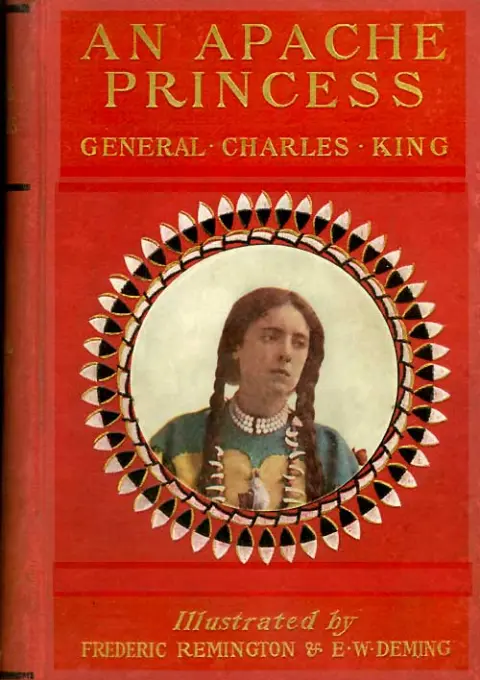
"An Apache Princess: A Tale of the Indian Frontier" by Charles King is a novel written in the early 20th century. The story unfolds in the backdrop of the American Southwest, focusing on the life of Angela Wren, the daughter of a soldier stationed at a remote fort. As tensions run high between settlers and the indigenous Apache people, the narrative explores Angela's encounters and relationship with Lieutenant Neil Blakely, a complex character often at odds with the military's expectations and societal norms. The opening of the tale introduces Angela as she waits by a tranquil pool, lost in her thoughts while the sun sets over the rugged landscape. This moment of solitude is interrupted by the presence of an Apache girl, who silently warns her of an approaching figure, leading Angela to encounter Lieutenant Blakely in a moment of vulnerability. As the chapter unfolds, the tension between Angela's burgeoning feelings and her father's protective nature sets the stage for potential conflict, foreshadowing the intertwining of their fates against the backdrop of cultural and personal struggles. The narrative hints at deeper issues of identity, loyalty, and the complex relationships between different cultures on the frontier.
Introduction adapted from the source catalogue; source summaries may be automatically generated.
Free to read · English · 81,900 words · No account needed
MAKE TIME FOR A GOOD BOOK
On by default. Untick to stop anonymous reading totals. Each page counts after 10 seconds in view. How this works.
Anonymous counting is on unless you have switched it off.
They had brought her in with them, Lola and Alchisay as well--the last two scowling and sullen, but ruled by the chieftain's daughter. They had loaded her with praise and thanks, but she paid no heed. Two hours after Stout and his troopers had reached the cliff and driven away the murderous band of renegades--Tontos and Apache Yumas--bent on stealing her captives, there had come a little party of her own kindred in answer to her signals, but these would have been much too late. Blakely would have been butchered. Angela and her benefactors, too, would probably have been the victims of their captors. Natzie could look for no mercy from them now. Through Wales Arnold, the captain and his men had little by little learned the story of Natzie's devotion. In the eyes of her father, her brother, her people, Blakely was greater even than the famous big chief, Crook, the Gray Fox, who had left them, ordered to other duties but the year gone by. Blakely had quickly righted the wrongs done them by a thieving agent. Blakely had given fair trial to and saved the life of Mariano, that fiery brother, who, ironed by the former agent's orders, had with his shackled hands struck down his persecutor and then escaped. Blakely had won their undying gratitude, and Stout and Arnold saw now why it was that one young brave, at least, could not share the love his people bore for Gran Capitan Blanco--that one was Quonothay--the Chief Raven Shield. They saw now why poor Natzie had no heart to give her Indian lover. They saw now why it was that Natzie wandered from the agency and hovered for some days before the outbreak there around the post. It was to be near the young white chief whom she well-nigh worshiped, whom she had been accustomed to see every day of her life during his duties at the agency. They saw now why it was the savage girl had dared the vengeance of the Apaches by the rescue of Angela. She believed her to be Blakely's sister, yet they could not give the reason why. They knew very little of Neil Blakely, but what they did know made them doubt that he could ever have been the one at fault. Over this problem both ranchman and soldier, Arnold and Stout, looked grave indeed. It was not like Blakely that he should make a victim of this young Indian girl. She was barely sixteen, said Arnold, who knew her people well. She had never been alone with Blakely, said her kinsfolk, who came that night in answer to her signals. She had saved Angela, believing her to be Blakely's own blood, had led her to her own mountain refuge, and then, confident that Blakely would make search for it and for his sister, had gone forth and found him, already half-dazed with fever and exhaustion, and had striven to lead his staggering horse up that precipitous trail. It was the poor brute's last climb. Blakely she managed to bring in safety to her lofty eerie. The horse had fallen, worn out in the effort, and died on the rocks below. She had roused Angela with what she thought would be joyful tidings, even though she saw that her hero was desperately ill. She thought, of course, the white girl knew the few words of Spanish that she could speak. All this was made evident to Arnold and Stout, partly through Natzie's young brother, who had helped to find and support the white chief, partly through the girl herself. It was evident to Arnold, too, that up to the time of their coming nothing had happened to undeceive Natzie as to that relationship. They tried to induce her to return to the agency, although her father and brother were still somewhere with the hostile bands, but she would not, she would go with them to Sandy, and they could not deny her. More than once on that rough march of three days they found themselves asking what would the waking be. Angela, daughter of civilization, under safe escort, had been sent on ahead, close following the courier who scurried homeward with the news. Natzie, daughter of the wilderness, could not be driven from the sight of Blakely's litter. The dumb, patient, pathetic appeal of her great soft eyes, as she watched every look in the doctor's face, was something wonderful to see. But now, at last, the fevered sufferer was home, still only semi-conscious, being borne within the walls of the major's quarters, and she who had saved him, slaved for him, dared for him, could only mutely gaze after his prostrate and wasted form as it disappeared within the darkened hallway in the arms of his men. Then came a light step bounding along the veranda--then came Angela, no longer clad in the riding garb in which hitherto Natzie had seen her, but in cool and shimmering white, with gladness and gratitude in her beautiful eyes, with welcome and protection in her extended hand, and the Indian girl looked strangely from her to the dark hallway within which her white hero had disappeared, and shrank back from the proffered touch. If this was the soldier's sister should not she now be at the soldier's side? Had she other lodge than that which gave him shelter, now that his own was burned? Angela saw for the first time aversion, question, suspicion in the great black eyes from which the softness and the pleading had suddenly fled. Then, rebuffed, disturbed, and troubled, she turned to Arnold, who would gladly have slipped away.
Your reading position is saved on this browser. Take it to another device with a library code. Reading pages adapt to text, rather than matching a printed edition.
Charles King

Charles King

Charles King

Charles King
BEHIND THE BOOK
This eBook is for the use of anyone anywhere in the United States and most other parts of the world at no cost and with almost no restrictions whatsoever. You may copy it, give it away or re-use it under the terms of the Project Gutenberg License included with this eBook or online at www.gutenberg.org. If you are not located in the United States, you will have to check the laws of the country where you are located before using this eBook. Read the source licence.
The original source file, including credits and licence, is retained by this library. Request an original-format copy at no charge. Please include the book title and Project Gutenberg identifier #19330.
KEEP YOUR CURIOSITY GOING
Cécile Tormay

Moritz Busch
Coulson Kernahan
John L. Ransom

Maurice Baring
Frances Wright