THE CLASSIC COLLECTION✦Found in the Philippines: The Story of a Woman’s LettersCLASSIC FREE BOOKS
Found in the Philippines: The Story of a Woman’s Letters
Charles King
THE CLASSIC COLLECTION · 1903
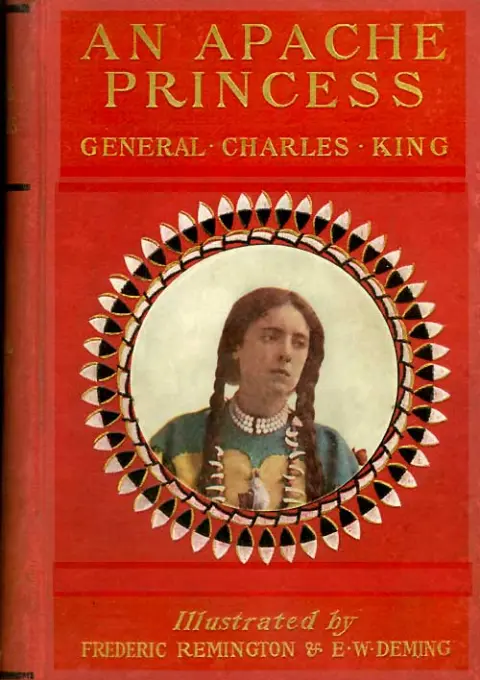
"An Apache Princess: A Tale of the Indian Frontier" by Charles King is a novel written in the early 20th century. The story unfolds in the backdrop of the American Southwest, focusing on the life of Angela Wren, the daughter of a soldier stationed at a remote fort. As tensions run high between settlers and the indigenous Apache people, the narrative explores Angela's encounters and relationship with Lieutenant Neil Blakely, a complex character often at odds with the military's expectations and societal norms. The opening of the tale introduces Angela as she waits by a tranquil pool, lost in her thoughts while the sun sets over the rugged landscape. This moment of solitude is interrupted by the presence of an Apache girl, who silently warns her of an approaching figure, leading Angela to encounter Lieutenant Blakely in a moment of vulnerability. As the chapter unfolds, the tension between Angela's burgeoning feelings and her father's protective nature sets the stage for potential conflict, foreshadowing the intertwining of their fates against the backdrop of cultural and personal struggles. The narrative hints at deeper issues of identity, loyalty, and the complex relationships between different cultures on the frontier.
Introduction adapted from the source catalogue; source summaries may be automatically generated.
Free to read · English · 81,900 words · No account needed
MAKE TIME FOR A GOOD BOOK
On by default. Untick to stop anonymous reading totals. Each page counts after 10 seconds in view. How this works.
Anonymous counting is on unless you have switched it off.
"Don't try to talk, Carmody; don't try! Of course you are right. It must be some of our people. They'll reach us soon. Then we'll have the doctor and can help you. Those saddle-bags!" he said, turning sharply to the whimpering creature kneeling by them, and the lad drew hand across his streaming eyes and passed the worn leather pouches. From one of them Blakely drew forth a flask, poured some brandy into its cup and held it to the soldier's lips. Carmody swallowed almost eagerly. He seemed to crave a little longer lease of life. There was something tugging at his heartstrings, and presently he turned slowly, painfully again. "Lieutenant," he gasped, "I'm not scared to die--this way anyhow. There's no one to care--but the boys--but there's one thing"--and now the stimulant seemed to reach the failing heart and give him faint, fluttering strength--"there's one thing I ought--I ought to tell. You've been solid with the boys--you're square, and I'm not--I haven't always been. Lieutenant--I was on guard--the night of the fire--and Elise, you know--the French girl--she--she's got most all I saved--most all I--won, but she was trickin' me--all the time, lieutenant--me and Downs that's gone--and others. She didn't care. You--you aint the only one I--I--"
"Lieutenant!" came in excited whisper, the voice of Stern, and there at his post in front of the cave he knelt, signaling urgently. "Lieutenant, quick!"
"One minute, Carmody! I've got to go. Tell me a little later." But with dying strength Carmody clung to his hand.
"I must tell you, lieutenant--now. It wasn't Downs's fault. She--she
made--"
"Lieutenant, quick! for God's sake! They're coming!" cried the voice of the German soldier at the wall, and wrenching his wrist from the clasp of the dying man, Blakely sprang recklessly to his feet and to the mouth of the cave just as Stern's carbine broke the stillness with resounding roar. Half a dozen rifles barked their instant echo among the rocks. From up the hillside rose a yell of savage hate and another of warning. Then from behind their curtaining rocks half a dozen dusky forms, their dirty white breechclouts streaming behind them, sprang suddenly into view and darted, with goatlike ease and agility, zigzagging up the eastward wall. It was a foolish thing to do, but Blakely followed with a wasted shot, aimed one handed from the shoulder, before he could regain command of his judgment. In thirty seconds the cliff was as bare of Apaches as but the moment before it had been dotted. Something, in the moment when their savage plans and triumph seemed secure, had happened to alarm the entire party. With warning shouts and signals they were scurrying out of the deep ravine, scattering, apparently, northward. But even as they fled to higher ground there was order and method in their retreat. While several of their number clambered up the steep, an equal number lurked in their covert, and Blakely's single shot was answered instantly by half a dozen, the bullets striking and splashing on the rocks, the arrows bounding or glancing furiously. Stern ducked within, out of the storm. Blakely, flattening like hunted squirrel close to the parapet, flung down his empty carbine and strove to reach another, lying loaded at the southward loophole, and at the outstretched hand there whizzed an arrow from aloft whose guiding feather fairly seared the skin, so close came the barbed messenger. Then up the height rang out a shrill cry, some word of command in a voice that had a familiar tang to it, and that was almost instantly obeyed, for, under cover of sharp, well-aimed fire from aloft, from the shelter of projecting rock or stranded bowlder, again there leaped into sight a few scattered, sinewy forms that rushed in bewildering zigzag up the steep, until safe beyond their supports, when they, too, vanished, and again the cliff stood barren of Apache foemen as the level of the garrison parade. It was science in savage warfare against which the drill book of the cavalry taught no method whatsoever. Another minute and even the shots had ceased. One glimpse more had Blakely of dingy, trailing breechclouts, fluttering in the breeze now stirring the fringing pines and cedars, and all that was left of the late besiegers came clattering down the rocks in the shape of an Indian shield. Stern would have scrambled out to nab it, but was ordered down. "Back, you idiot, or they'll have you next!" And then they heard the feeble voice of Wren, pleading for water and demanding to be lifted to the light. The uproar of the final volley had roused him from an almost deathlike stupor, and he lay staring, uncomprehending, at Carmody, whose glazing eyes were closed, whose broken words had ceased. The poor fellow was drifting away into the shadows with his story still untold.
Your reading position is saved on this browser. Take it to another device with a library code. Reading pages adapt to text, rather than matching a printed edition.
Charles King

Charles King

Charles King

Charles King
BEHIND THE BOOK
This eBook is for the use of anyone anywhere in the United States and most other parts of the world at no cost and with almost no restrictions whatsoever. You may copy it, give it away or re-use it under the terms of the Project Gutenberg License included with this eBook or online at www.gutenberg.org. If you are not located in the United States, you will have to check the laws of the country where you are located before using this eBook. Read the source licence.
The original source file, including credits and licence, is retained by this library. Request an original-format copy at no charge. Please include the book title and Project Gutenberg identifier #19330.
KEEP YOUR CURIOSITY GOING
Cécile Tormay

Moritz Busch
Coulson Kernahan
John L. Ransom

Maurice Baring
Frances Wright