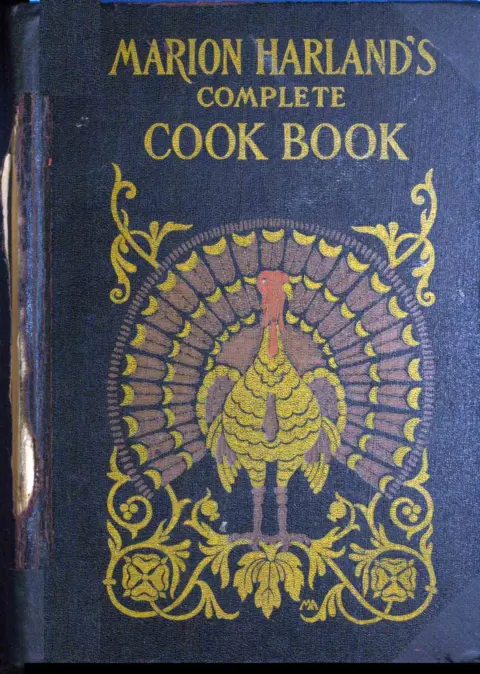
Marion Harland’s Complete Cook Book A Practical and Exhaustive Manual of Cookery and Housekeeping
Marion Harland

THE CLASSIC COLLECTION · 1898
"Alone" by Marion Harland is a novel written in the mid-19th century. The story explores themes of love, loss, and the emotional struggles of its main character, Ida Ross, who is grappling with the tragic death of her mother. As she navigates her newfound life as an orphan, the novel delves into her profound sense of isolation and her search for genuine companionship. The opening portion of the book immediately immerses readers in a somber atmosphere, highlighting Ida's heartbreaking experience at her mother's funeral. The ceremony poignantly captures the deep sorrow of loss, emphasizing the profound bond between Ida and her mother. The narrative then shifts to the young girl’s painful transition into her new life with a guardian who lacks warmth and understanding. Harland's writing paints a vivid picture of Ida's emotions, showcasing her yearning for love and her struggle against a world that seems indifferent to her suffering. As the story progresses, the dynamics between Ida and the people around her, including her cold guardian and new acquaintances, promise a deeper exploration of her character and the challenges she must face.
Introduction adapted from the source catalogue; source summaries may be automatically generated.
Free to read · English · 137,500 words · No account needed
MAKE TIME FOR A GOOD BOOK
On by default. Untick to stop anonymous reading totals. Each page counts after 10 seconds in view. How this works.
Anonymous counting is on unless you have switched it off.
Her physician was a son of Mr. Hall, the old minister, who had gone to
his rest.
"You must exert yourself, Miss Ida," said he. "Have you walked yet?"
"No, sir."
"Cannot you do it?"
"I don't know, indeed, sir."
"But, my dear child, nature cannot do everything; we must aid her. It is as binding upon us to save our own lives, as those of others."
"When they are worth saving."
"You want more powerful tonics than any I have;" said the doctor, eyeing her curiously. "I must think your case over. I command you to walk across the room twice to-day, three times to-morrow, and so on. See that she minds me, Rachel!"
Rachel gave her no peace, until she consented to sit up awhile in the easy-chair, by the window. Sunnybank was sadly changed. The buildings and enclosures were in good repair, and the fields cultivated; but the walks and shrubbery were neglected; and the garden, into which Ida was looking, overgrown with high weeds. Here and there a rose-tree struggled for a foothold, a scanty growth of yellow leaves clinging to the mossy stems; the sweetbrier still hung over the window, its long, bare arms rattling in the cold wind like fleshless bones; the tangled grass in the yard had run to seed, and piles of dead leaves were heaped against the palings. She could not see the grave-yard; she knew, though, that the willows were leafless, and how the sprays were waving in their melancholy dance, and whispering their old song--"Alone!" If alone then, how now? sick--dying, perhaps! where were those who had proudly borne the name of friend? where the sister, in whose bosom she had lain for months, and eased her sorrows and heightened her joys? the brother, she had averred, was "all kindness and truth?" and oh! where he, who had filled her heart to the brim with the rich, red wine of life, to change, in a moment, to fiery, deadly poison! She felt no resentment against him; she was too utterly broken-hearted, she thought, even if she had cause; and she had not. Her wilful self-deception had been her snare; instead of studying his heart, she had judged it by her own. Were his candor--his undisguised interest in her welfare, tokens of love, that ever seeks concealment? No! he had tried to lead her, a wayward child, to the paths of happiness; and she had seen nought but the hand which pointed the way. There was prophetic meaning in Lynn's eye, when he spoke of "the finest growth of heart and soul, which you flattered yourself were climbing heavenward, twining with strengthening tendrils around the altar of that one love!" She had been impious enough to imagine that she was imbibing a fondness for holy things; her heart had burned within her, as he talked of the loved theme; she had read the Scriptures, and prayed, in words, for light and guidance. And by the fierce rebellion which fired her breast--rebellion against--hatred of the Being, this lip service had blasphemed, she knew that she had never bowed in soul to Him; and her heart--broken, though she said it was,--trusting still--adoring still the mortal, through the great love she bore him--yet reared itself in angry defiance, saying to the Chastener,--"I will not submit!" What had she done, to be left desolate--comfortless in the spring-time of life! "He is, they tell me, merciful and all-powerful;--let Him give me back my love, and I will believe in Him." And as day by day passed, and there were no tidings of Carry or the Danas, she felt a morose complacency in the confirmation of her hard thoughts of them, and in repeating, "I am not humbled yet!"
Your reading position is saved on this browser. Take it to another device with a library code. Reading pages adapt to text, rather than matching a printed edition.
Marion Harland

Marion Harland
Marion Harland
Marion Harland
BEHIND THE BOOK
This eBook is for the use of anyone anywhere in the United States and most other parts of the world at no cost and with almost no restrictions whatsoever. You may copy it, give it away or re-use it under the terms of the Project Gutenberg License included with this eBook or online at www.gutenberg.org. If you are not located in the United States, you will have to check the laws of the country where you are located before using this eBook. Read the source licence.
The original source file, including credits and licence, is retained by this library. Request an original-format copy at no charge. Please include the book title and Project Gutenberg identifier #46505.
KEEP YOUR CURIOSITY GOING
Coulson Kernahan

Maurice Baring
Frances Wright
Cécile Tormay

Frederic Jesup Stimson

W. H. P. (William Henry Pope) Jarvis