
Marion Harland’s Complete Cook Book A Practical and Exhaustive Manual of Cookery and Housekeeping
Marion Harland

THE CLASSIC COLLECTION · 1898
"Alone" by Marion Harland is a novel written in the mid-19th century. The story explores themes of love, loss, and the emotional struggles of its main character, Ida Ross, who is grappling with the tragic death of her mother. As she navigates her newfound life as an orphan, the novel delves into her profound sense of isolation and her search for genuine companionship. The opening portion of the book immediately immerses readers in a somber atmosphere, highlighting Ida's heartbreaking experience at her mother's funeral. The ceremony poignantly captures the deep sorrow of loss, emphasizing the profound bond between Ida and her mother. The narrative then shifts to the young girl’s painful transition into her new life with a guardian who lacks warmth and understanding. Harland's writing paints a vivid picture of Ida's emotions, showcasing her yearning for love and her struggle against a world that seems indifferent to her suffering. As the story progresses, the dynamics between Ida and the people around her, including her cold guardian and new acquaintances, promise a deeper exploration of her character and the challenges she must face.
Introduction adapted from the source catalogue; source summaries may be automatically generated.
Free to read · English · 137,500 words · No account needed
MAKE TIME FOR A GOOD BOOK
On by default. Untick to stop anonymous reading totals. Each page counts after 10 seconds in view. How this works.
Anonymous counting is on unless you have switched it off.
"No apologies are necessary. We all agree that such depreciation would come with a bad grace from Mr. Talbot," said Ida, pointedly, returning a still deeper curtsey.
No. 1 nodded, as he laughed, to some one beside her. "Good evening," said Mr. Lacy, as she looked around.
"And he has overheard this nonsensical stuff!" thought she, with inward disturbance. "When did you come in?" she inquired.
"About ten minutes since; most of which time has been spent in a search for Mrs. or Miss Morris."
"I am glad to hear it."
"Glad--how?"
"I feared you had occupied your present position some time."
He understood her. "There are more people here than I expected to see," he said, after some general conversation.
"Almost too many," replied Ida; "I am getting tired of these great
parties."
"The heat is oppressive. Have you a liking for this stand?"
"No--my being here is accidental. It requires some effort to stand, or walk upright, in the heart of this crowd."
"I noticed, as I came through, that the music room was more thinly-populated--will you rest there?"
This was a mere boudoir compared with others of the suite, and the prepossessions of the company were for music of a different kind. The violin was discoursing its enchanting strains in the farther apartment, and there were not above a dozen persons in the one, where slumbered the piano and guitar.
"Are you indisposed, Miss Ross?" asked Mr. Brigham, who was fanning a fragile-looking girl, reclining in an easy chair.
"No--only tired. You have acted wisely in shunning the press and
bustle, Miss Moore. I am happy to see you able to venture out in the
evening."
"Your climate is doing wonderful things for me," answered Miss Moore,
smiling.
"How dreadful to be deprived of health, and the hope of a long life!" said Ida, when they were seated.
"And especially mournful in this instance, if I am not deceived!" replied Mr. Lacy. "I pity that man! he will not believe that bereavement is inevitable; and if death was ever branded upon human brow, it is upon hers."
"I honor his constancy and devotion," said Ida. "The object of his visit in the fall, was to acquaint himself with the advantages our city possesses for invalids; then he went back for her mother and herself. He is both brother and lover. Who would have expected this from a man of his phlegmatic constitution?"
"Another warning of the folly of judging by appearances. It is possible, too, that we who are pitying her are as much in want of compassion. The highest happiness is unaffected by extraneous influences."
"Happiness!" echoed Ida, "It is a myth."
Your reading position is saved on this browser. Take it to another device with a library code. Reading pages adapt to text, rather than matching a printed edition.
Marion Harland

Marion Harland
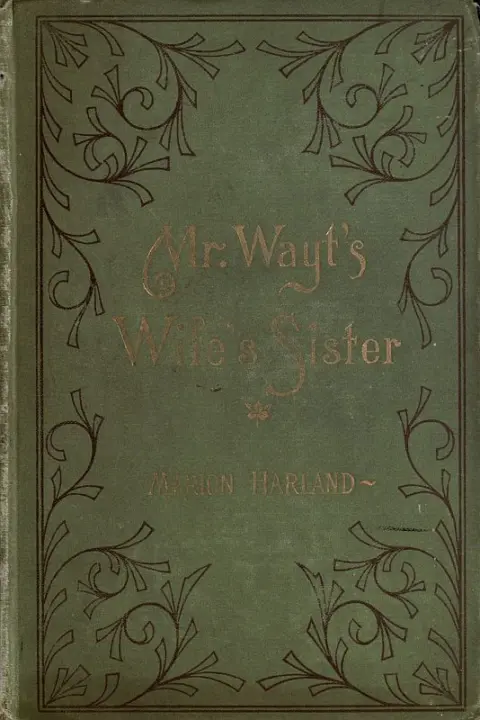
Marion Harland
Marion Harland
BEHIND THE BOOK
This eBook is for the use of anyone anywhere in the United States and most other parts of the world at no cost and with almost no restrictions whatsoever. You may copy it, give it away or re-use it under the terms of the Project Gutenberg License included with this eBook or online at www.gutenberg.org. If you are not located in the United States, you will have to check the laws of the country where you are located before using this eBook. Read the source licence.
The original source file, including credits and licence, is retained by this library. Request an original-format copy at no charge. Please include the book title and Project Gutenberg identifier #46505.
KEEP YOUR CURIOSITY GOING
Coulson Kernahan

Maurice Baring
Frances Wright
Cécile Tormay

Frederic Jesup Stimson

W. H. P. (William Henry Pope) Jarvis