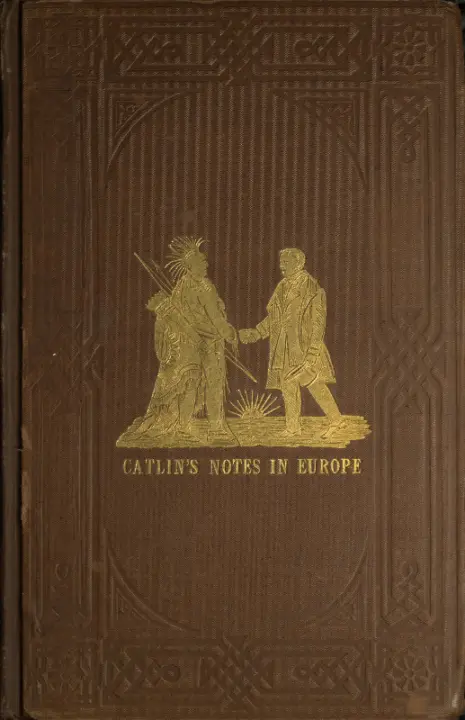
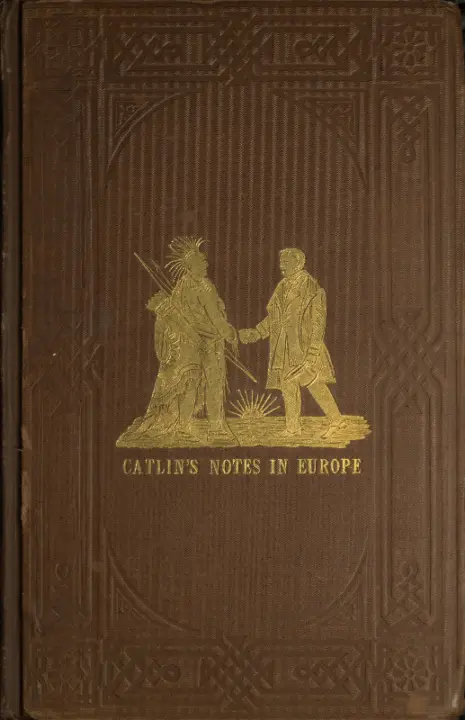
Adventures of the Ojibbeway and Ioway Indians in England, France, and Belgium; Vol. 2 (of 2) being Notes of Eight Years’ Travels and Residence in Europe with his North American Indian Collection
George Catlin
THE CLASSIC COLLECTION · 1852
"Adventures of the Ojibbeway and Ioway Indians in England, France, and Belgium" by George Catlin is a historical account written in the mid-19th century. The book chronicles Catlin's experiences and observations during his travels across Europe with his Indian collection, highlighting interactions between Native Americans and European society. It aims to provide a deeper understanding of North American Indian culture while documenting the perspectives of both the indigenous people and the European aristocracy. The opening of the book sets the stage for Catlin's journey, recapping his earlier experiences among Native American tribes and detailing his transatlantic voyage with two grizzly bears, which adds both humor and intrigue. As he arrives in England, Catlin describes the arrival of the bears amidst public excitement, as well as his intentions to showcase his extensive collection of Native American artifacts. He reflects on the various accidents and cultural misunderstandings he encounters during this impactful period in his travels, establishing a tone of lively adventure that promises readers a vivid exploration of the contrasts between indigenous and civilized life.
Introduction adapted from the source catalogue; source summaries may be automatically generated.
Free to read · English · 113,465 words · No account needed
MAKE TIME FOR A GOOD BOOK
On by default. Untick to stop anonymous reading totals. Each page counts after 10 seconds in view. How this works.
Anonymous counting is on unless you have switched it off.
"No, there are no tribes that go entirely naked; they are all very
decent."
"The Indians don't eat raw meat, they cook it more than the whites
do."
"Mr. Catlin was amongst the Indians eight years, and was never killed
during that time."
"The scalp is a patch of the skin and hair taken from the top of the head by a warrior when he kills his enemy in battle."
"No, they don't scalp the living--it is not a scalp to count if the
man is alive."
"They sometimes eat a great deal, to be sure, but generally not so
much as white people."
"They do get drunk sometimes, but white people sell them rum and make them so, therefore I don't think we ought to call them drunkards exactly."
"The Indians all get married--some have a number of wives."
"Yes, they seem as fond of their wives as any people I ever saw."
"The Indians never injured Mr. Catlin in any way."
"Mr. Catlin didn't live on 'raw meat;' he was one time eighteen months with nothing but meat to eat, but it was well cooked."
"The Indians know nothing about salt--they don't use it at all."
"Reason! yes; why, do you think they are wild beasts? to be sure they reason as well as we do."
"They are thieves, sometimes; but I don't think they thieve so
often as white people do."
"The Indians do lend their wives sometimes to white men, but it is only their old superannuated ones, who are put aside to hard labour, so it is a sort of kindness all around, and I don't see that there is much harm in it."
"The Indians all have their religion, they all worship the Great
Spirit."
"They are treacherous, to be sure, towards their enemies only, and I'll be whipped if the white people an't just as bad."
"The Indians are cruel, there's no mistake about that; but it is
only to their enemies."
"Sale? there won't be any sale; Mr. Catlin don't intend to sell his collection in this country."
"Mr. Catlin is not an Indian."
"No, he has no Indian blood in him."
"Mr. Catlin speaks the English language very well."
"The Indians don't raise tea."
"They never eat the scalps."
"The Indians that Mr. Catlin saw are not near Chusan, they are 3,000 miles from there, they are in America."
"You can't come overland from America."
"A scalping-knife is any large knife that an Indian takes a scalp
with."
"A prairie is a meadow."
"The Indians speak their own language."
"A pappoose is an Indian baby while it is carried in the cradle."
Your reading position is saved on this browser. Take it to another device with a library code. Reading pages adapt to text, rather than matching a printed edition.
BEHIND THE BOOK
This eBook is for the use of anyone anywhere in the United States and most other parts of the world at no cost and with almost no restrictions whatsoever. You may copy it, give it away or re-use it under the terms of the Project Gutenberg License included with this eBook or online at www.gutenberg.org. If you are not located in the United States, you will have to check the laws of the country where you are located before using this eBook. Read the source licence.
The original source file, including credits and licence, is retained by this library. Request an original-format copy at no charge. Please include the book title and Project Gutenberg identifier #44776.
KEEP YOUR CURIOSITY GOING
Wilfrid Scawen Blunt
Wilfrid Scawen Blunt

E. W. (Edgar Watson) Howe
Cécile Tormay

Moritz Busch
John L. Ransom