
Neka, the boy conjuror
Edward Stratemeyer
THE CLASSIC COLLECTION · 1901
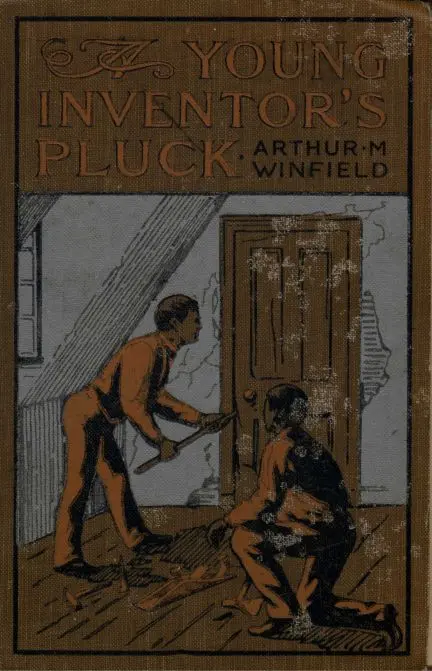
"A Young Inventor’s Pluck; or, The Mystery of the Willington Legacy" by Arthur M. Winfield is a novel written in the early 20th century. The story centers around Jack Willington, a young and resourceful machinist who faces numerous misfortunes when he is suddenly thrust into a position of responsibility as the sole guardian of his sister, Deb. The narrative explores themes of perseverance, ambition, and the challenges of proving one's innocence against adverse circumstances. The opening of the novel introduces Jack and Deb Willington, orphans struggling to make ends meet in the factory town of Corney. Their troubles begin when Jack learns of the factory's closure, leading to their financial instability as their savings in the bank become inaccessible. In the midst of their woes, Jack is wrongfully accused of setting fire to Mr. Gray's mansion, an event that further complicates their situation. Jack's unwavering spirit and inventive nature drive him to seek a resolution in order to secure their futures amidst the unfolding challenges. As Jack navigates these obstacles, he must also solve the mystery behind the accusations and support his sister while grappling with the pressure that comes with being the head of their small household.
Introduction adapted from the source catalogue; source summaries may be automatically generated.
Free to read · English · 40,793 words · No account needed
MAKE TIME FOR A GOOD BOOK
On by default. Untick to stop anonymous reading totals. Each page counts after 10 seconds in view. How this works.
Anonymous counting is on unless you have switched it off.
"Not now. His wife used to, but she died last winter."
"I suppose you keep house for him?"
"Yep."
A faint smile accompanied the monosyllable this time.
"It's rather hard work for a girl like you," Jack remarked.
Meg tossed back her head.
"Hard! 'Tain't nothing; cookin' and cleanin' ain't. It's garden work that's tough. Look at them hands." She dropped the pail and held them up. "Been blistered lots of times hoein' and diggin'."
"It's too bad," cried the young machinist, indignantly. "It ain't fair to make you work like a slave."
"What would you do if you was me?" asked the girl, with a hungry,
searching look in her eyes.
For a moment Jack was nonplused.
"I don't know," he replied, slowly; "I might, though, if I thought over it. Are you a relative of his?"
"Not's I know."
"How long have you been here?"
"Ever since I can remember. I didn't mind it so much when Mrs. Pooler was alive, but since she died I hate it;" and Meg grated her teeth tightly together.
"Where is the house?" asked Mont.
"Over yonder, through the trees."
"Do you think you can get us something to eat?" continued the young man. "We have been out since yesterday, and I'm as hungry as a stray dog."
The girl hesitated.
"We will pay you for it," Mont went on, feeling for his purse, which, luckily, still remained in his pocket.
"Guess I can," said Meg, finally. "Pooler ain't home; he went to the mainland this morning. Did you really go over them falls?" she continued, jerking her thumb in the direction.
"Yes, indeed we did. It was a terrible experience," replied the young
man with a shudder.
"Must be. Never heard of 'em comin' out alive--'em as goes over, I
mean."
"We are not anxious to try it again," Jack put in.
The "house" consisted of a dilapidated cottage of two rooms and an attic, almost wholly covered by grape vines. Meg led the way around to the back, and motioned them to a bench under a big tree.
"Better stay out here. It's cooler and nicer," she said. "I'll fetch a table;" and in a few seconds she had done so, and placed it before them.
"Don't take too much trouble," said Mont; "we are hungry enough to
tackle almost anything."
"'Tain't no trouble--leastwise, not if there's money in it. Pooler
worships money."
"Is he rich?" asked Jack.
"Don't ask me!" replied Meg. "I've often heard the men say he was rich, but I never see any money."
"Doesn't he give you any?"
Your reading position is saved on this browser. Take it to another device with a library code. Reading pages adapt to text, rather than matching a printed edition.
Edward Stratemeyer

Edward Stratemeyer
Edward Stratemeyer

Edward Stratemeyer
BEHIND THE BOOK
This eBook is for the use of anyone anywhere in the United States and most other parts of the world at no cost and with almost no restrictions whatsoever. You may copy it, give it away or re-use it under the terms of the Project Gutenberg License included with this eBook or online at www.gutenberg.org. If you are not located in the United States, you will have to check the laws of the country where you are located before using this eBook. Read the source licence.
The original source file, including credits and licence, is retained by this library. Request an original-format copy at no charge. Please include the book title and Project Gutenberg identifier #42142.
KEEP YOUR CURIOSITY GOING
Coulson Kernahan

Maurice Baring
Frances Wright
Cécile Tormay

Frederic Jesup Stimson

W. H. P. (William Henry Pope) Jarvis