
Neka, the boy conjuror
Edward Stratemeyer
THE CLASSIC COLLECTION · 1901
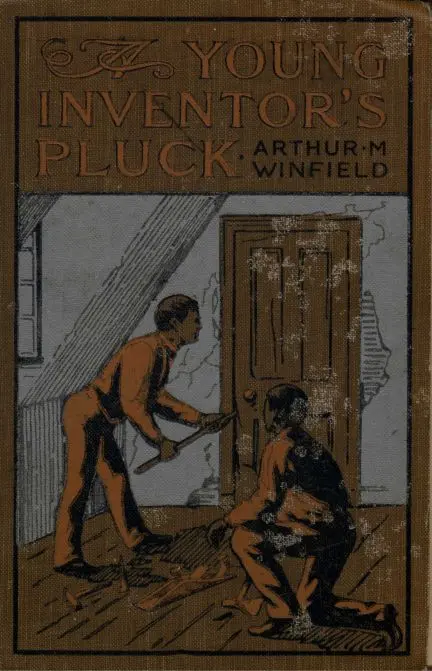
"A Young Inventor’s Pluck; or, The Mystery of the Willington Legacy" by Arthur M. Winfield is a novel written in the early 20th century. The story centers around Jack Willington, a young and resourceful machinist who faces numerous misfortunes when he is suddenly thrust into a position of responsibility as the sole guardian of his sister, Deb. The narrative explores themes of perseverance, ambition, and the challenges of proving one's innocence against adverse circumstances. The opening of the novel introduces Jack and Deb Willington, orphans struggling to make ends meet in the factory town of Corney. Their troubles begin when Jack learns of the factory's closure, leading to their financial instability as their savings in the bank become inaccessible. In the midst of their woes, Jack is wrongfully accused of setting fire to Mr. Gray's mansion, an event that further complicates their situation. Jack's unwavering spirit and inventive nature drive him to seek a resolution in order to secure their futures amidst the unfolding challenges. As Jack navigates these obstacles, he must also solve the mystery behind the accusations and support his sister while grappling with the pressure that comes with being the head of their small household.
Introduction adapted from the source catalogue; source summaries may be automatically generated.
Free to read · English · 40,793 words · No account needed
MAKE TIME FOR A GOOD BOOK
On by default. Untick to stop anonymous reading totals. Each page counts after 10 seconds in view. How this works.
Anonymous counting is on unless you have switched it off.
"Help! Help!"
"Vas is dot?" exclaimed Mrs. Snitzer, who had been dozing in the rocking chair awaiting her son's return.
"Sounds like some von vas in troubles," replied her husband, from the
sofa.
Both sprang to their feet and hurried to the door.
Mrs. Snitzer had scarcely opened it when a man rushed past her and out
of the front hall-way.
"Help! Help!"
"It vas Deb, for sure!" cried the German woman, and she ascended the stairs as fast as her portly form would permit, closely followed by her husband.
It took but a moment to pass through the kitchen and unlock the door of the adjoining chamber. They found Deb half dead from fright, and vainly endeavoring to escape.
"Oh, Mrs. Snitzer, a man has just stolen Jack's model!" gasped the poor girl. "He ran down stairs."
"Ve saw him," put in Mr. Snitzer. "I go me after him," he continued, hurrying off as rapidly as his legs would move.
"Oh, what will Jack say when he hears that it's gone!" moaned Deb.
"Tell me apout it," said the kindly German woman.
She took the excited girl in her arms, and stroking the soft, curly hair, tried to calm Deb as best she could.
In a nervous voice the girl told her story. She was on the verge of hysterics, and it was only Mrs. Snitzer's quick sense of comprehension that enabled her fully to understand the situation.
In about ten minutes Mr. Snitzer returned. The look upon his face told plainly that he had failed in the pursuit.
"It vas no use," he said, "I couldn't see nodding of him;" and he dropped into a chair exhausted.
Deb's grief was hard to witness. It was bad enough to have Jack away, but to have some one steal his precious model, the idea of his life, was too dreadful to contemplate.
"I shall never get over it," she sobbed; "I ought to have been more
careful!"
Mrs. Snitzer let her cry it out. Experience had taught her that it would do no good to check the flow of tears. She motioned her husband to leave, while she herself made preparations to stay all night.
As the hours wore on Deb for a while forgot the model in her anxiety concerning Jack's welfare. As long as she could remember, her brother had never remained away over night, and whether by premonition or otherwise, she was positive something dreadful had happened.
With the first break of day she was on the watch. She prepared no
breakfast, nor did she touch that which the German woman generously
offered.
Deb wandered up and down the street for two hours.
Your reading position is saved on this browser. Take it to another device with a library code. Reading pages adapt to text, rather than matching a printed edition.
Edward Stratemeyer

Edward Stratemeyer
Edward Stratemeyer

Edward Stratemeyer
BEHIND THE BOOK
This eBook is for the use of anyone anywhere in the United States and most other parts of the world at no cost and with almost no restrictions whatsoever. You may copy it, give it away or re-use it under the terms of the Project Gutenberg License included with this eBook or online at www.gutenberg.org. If you are not located in the United States, you will have to check the laws of the country where you are located before using this eBook. Read the source licence.
The original source file, including credits and licence, is retained by this library. Request an original-format copy at no charge. Please include the book title and Project Gutenberg identifier #42142.
KEEP YOUR CURIOSITY GOING
Coulson Kernahan

Maurice Baring
Frances Wright
Cécile Tormay

Frederic Jesup Stimson

W. H. P. (William Henry Pope) Jarvis