
Neka, the boy conjuror
Edward Stratemeyer
THE CLASSIC COLLECTION · 1901
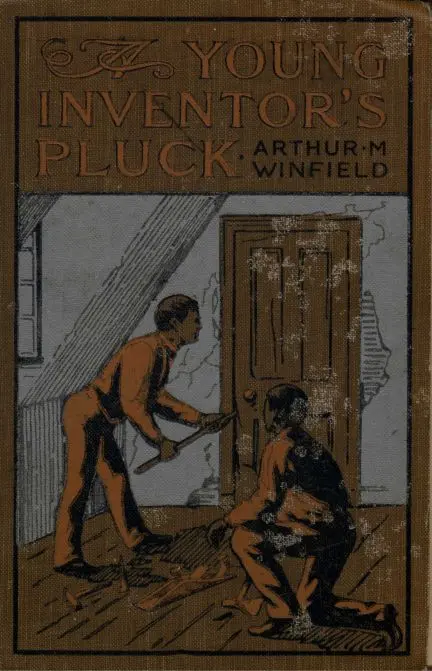
"A Young Inventor’s Pluck; or, The Mystery of the Willington Legacy" by Arthur M. Winfield is a novel written in the early 20th century. The story centers around Jack Willington, a young and resourceful machinist who faces numerous misfortunes when he is suddenly thrust into a position of responsibility as the sole guardian of his sister, Deb. The narrative explores themes of perseverance, ambition, and the challenges of proving one's innocence against adverse circumstances. The opening of the novel introduces Jack and Deb Willington, orphans struggling to make ends meet in the factory town of Corney. Their troubles begin when Jack learns of the factory's closure, leading to their financial instability as their savings in the bank become inaccessible. In the midst of their woes, Jack is wrongfully accused of setting fire to Mr. Gray's mansion, an event that further complicates their situation. Jack's unwavering spirit and inventive nature drive him to seek a resolution in order to secure their futures amidst the unfolding challenges. As Jack navigates these obstacles, he must also solve the mystery behind the accusations and support his sister while grappling with the pressure that comes with being the head of their small household.
Introduction adapted from the source catalogue; source summaries may be automatically generated.
Free to read · English · 40,793 words · No account needed
MAKE TIME FOR A GOOD BOOK
On by default. Untick to stop anonymous reading totals. Each page counts after 10 seconds in view. How this works.
Anonymous counting is on unless you have switched it off.
A little later Jack and Mont separated, and in company with the constable, the young machinist called on Mr. Benton at the Coney House.
The speculator listened attentively to Jack's story. He was shrewd, a close reader of human nature, and thought he saw a chance of securing a bargain or of placing the embryo inventor under obligation to him.
"Tell you what I'll do," he said. "Give me a paper securing to me your invention if you don't turn up at the proper time, and I'll go your bond, providing----" and here Mr. Benton paused.
"What?" asked Jack eagerly.
"Providing you give me a half interest in it now."
Jack staggered back.
"A half interest?"
"That's what I said."
"But, sir----"
"You haven't got to accept my offer if you don't wish to," was the
apparent indifferent reply.
Had he thought only of himself Jack would have refused. To give up that for which he had worked for years was terribly hard.
But Deb, dear Deb, what would become of her if he did not accept?
"I'll do it," he said, shortly. And then, with a sudden thought: "But you must give me a money consideration."
"How much?" asked the man of means.
"One hundred dollars." Jack knew Mr. Benton would offer less.
"Too much! I'll give you twenty-five."
"No; a hundred."
"Make it fifty. I can't spare a cent more. Besides, the thing may not
be worth a dollar."
"Or several thousand," put in Jack. "But I accept the offer."
"Very well. I'll pay you the money to-morrow. I'm short to-day."
Knowing that with all his sharp business practice Mr. Benton was a man of his word, the young machinist did not object to waiting for his cash.
In his excitement he forgot all about Mr. Hammerby and the rent that
must be paid.
It was fully an hour before the necessary papers were drawn up and signed, and then with hasty steps Jack made his way home.
Deb met him at the door, and at once he had to give her the particulars
of what had been done.
"Never mind, anything is better than having you in prison," she said when he had finished. "And it may be just as well to have Mr. Benton for a partner now as to give him the chance of getting the whole thing later on."
Deb was delighted to learn that they were to receive fifty dollars in
cash the next day.
"I'll be so glad to get rid of that horrid agent," she declared, and showed Jack the notice to quit.
In looking it over he discovered that it had been dated the day before.
Your reading position is saved on this browser. Take it to another device with a library code. Reading pages adapt to text, rather than matching a printed edition.
Edward Stratemeyer

Edward Stratemeyer
Edward Stratemeyer

Edward Stratemeyer
BEHIND THE BOOK
This eBook is for the use of anyone anywhere in the United States and most other parts of the world at no cost and with almost no restrictions whatsoever. You may copy it, give it away or re-use it under the terms of the Project Gutenberg License included with this eBook or online at www.gutenberg.org. If you are not located in the United States, you will have to check the laws of the country where you are located before using this eBook. Read the source licence.
The original source file, including credits and licence, is retained by this library. Request an original-format copy at no charge. Please include the book title and Project Gutenberg identifier #42142.
KEEP YOUR CURIOSITY GOING
Coulson Kernahan

Maurice Baring
Frances Wright
Cécile Tormay

Frederic Jesup Stimson

W. H. P. (William Henry Pope) Jarvis