
Neka, the boy conjuror
Edward Stratemeyer
THE CLASSIC COLLECTION · 1901
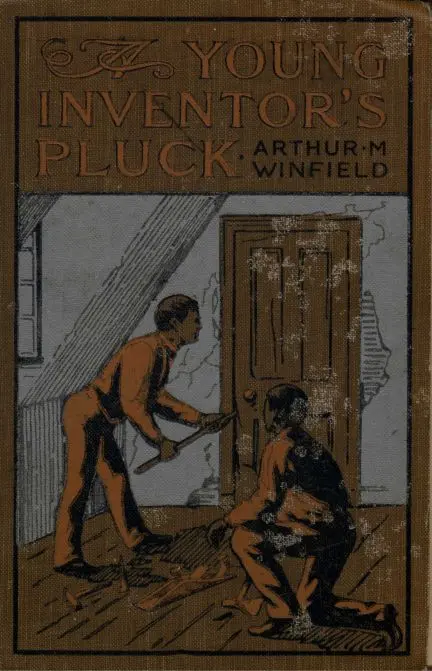
"A Young Inventor’s Pluck; or, The Mystery of the Willington Legacy" by Arthur M. Winfield is a novel written in the early 20th century. The story centers around Jack Willington, a young and resourceful machinist who faces numerous misfortunes when he is suddenly thrust into a position of responsibility as the sole guardian of his sister, Deb. The narrative explores themes of perseverance, ambition, and the challenges of proving one's innocence against adverse circumstances. The opening of the novel introduces Jack and Deb Willington, orphans struggling to make ends meet in the factory town of Corney. Their troubles begin when Jack learns of the factory's closure, leading to their financial instability as their savings in the bank become inaccessible. In the midst of their woes, Jack is wrongfully accused of setting fire to Mr. Gray's mansion, an event that further complicates their situation. Jack's unwavering spirit and inventive nature drive him to seek a resolution in order to secure their futures amidst the unfolding challenges. As Jack navigates these obstacles, he must also solve the mystery behind the accusations and support his sister while grappling with the pressure that comes with being the head of their small household.
Introduction adapted from the source catalogue; source summaries may be automatically generated.
Free to read · English · 40,793 words · No account needed
MAKE TIME FOR A GOOD BOOK
On by default. Untick to stop anonymous reading totals. Each page counts after 10 seconds in view. How this works.
Anonymous counting is on unless you have switched it off.
"You're right, Deb," he exclaimed starting up, "and I ought to be thankful for what we have got, especially for having such a good little sister to ease things up."
"Say, Jack," suddenly began Deb, struck with an idea, "you are so handy with the tools, why don't you open a little shop of your own? Wouldn't it pay?"
Jack's face brightened more than it had for many a day.
"I'm glad you said that," he replied. "I've often thought of it. But I hated to give up a certainty like my wages for----"
"Yes, but now----" began Deb.
"One misfortune gives me a chance to tempt another." He gave a sorry little laugh. "Is that what you mean?"
"You'll get along--never fear."
"There ought to be a chance, true enough. I could sharpen tools, repair lawn mowers and bicycles, and mend all sorts of things. There is no such shop in Corney as yet, and it ought to pay."
"How much would it cost to start?" asked Deb, with great interest.
"I think fifty or sixty dollars would put me into shape to do small work. I have most of the tools, and would only need a lathe and one or two other things--that I could get second-hand."
"I'll tell you what to do then," was Deb's conclusion; "to-morrow morning, go down to the bank and draw out seventy-five dollars. Then we'll pay the rent, and you can take the rest and try your luck."
"Yes, but----"
"No buts, Jack; I'm willing to put up with whatever comes--bad luck as well as good. I'm sure you'll succeed."
"If your good wishes count for anything, I certainly shall," exclaimed Jack, earnestly. "I think I can rent a shop for ten dollars a month, or, maybe, if I pay a little more, I can get one with living rooms attached, which would be cheaper than hiring two places."
"And nicer, too," returned Deb; "you wouldn't have to go so far for dinner, and I could attend to customers while you were away."
The pair talked in this strain for over an hour. His sister's sanguine way of looking at the matter made the young machinist feel as if perhaps the shut-down was not such a bad thing, after all, and might prove the turning point to something better than they had ever before known.
The next morning, for the first time in several years, Jack had breakfast late. It was soon over, and then he put on his good clothes and started for the bank.
Your reading position is saved on this browser. Take it to another device with a library code. Reading pages adapt to text, rather than matching a printed edition.
Edward Stratemeyer

Edward Stratemeyer
Edward Stratemeyer

Edward Stratemeyer
BEHIND THE BOOK
This eBook is for the use of anyone anywhere in the United States and most other parts of the world at no cost and with almost no restrictions whatsoever. You may copy it, give it away or re-use it under the terms of the Project Gutenberg License included with this eBook or online at www.gutenberg.org. If you are not located in the United States, you will have to check the laws of the country where you are located before using this eBook. Read the source licence.
The original source file, including credits and licence, is retained by this library. Request an original-format copy at no charge. Please include the book title and Project Gutenberg identifier #42142.
KEEP YOUR CURIOSITY GOING
Coulson Kernahan

Maurice Baring
Frances Wright
Cécile Tormay

Frederic Jesup Stimson

W. H. P. (William Henry Pope) Jarvis