THE CLASSIC COLLECTION✦Found in the Philippines: The Story of a Woman’s LettersCLASSIC FREE BOOKS
Found in the Philippines: The Story of a Woman’s Letters
Charles King
THE CLASSIC COLLECTION · 1888
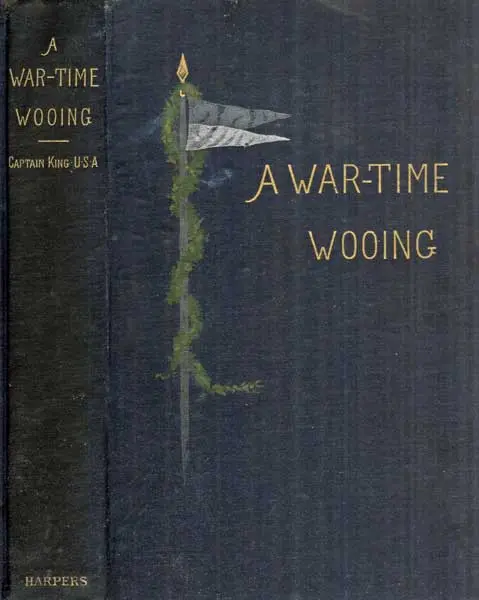
"A War-Time Wooing" by Captain Charles King is a novel written in the late 19th century. Set against the backdrop of the American Civil War, the story explores themes of love and sacrifice, primarily through the characters of Bessie Warren, a young girl mourning the death of her brother, and Lieutenant Paul Revere Abbot, a soldier whose correspondence with Bessie becomes a poignant thread in their lives. As war rages, personal connections are deepened and complicated by the harsh realities of military life and loss. At the start of the tale, the narrative introduces us to Bessie Warren and her father, Doctor Warren, at a suburban train station as they await news from the frontlines. Bessie is revealed to be experiencing developing feelings for Lieutenant Abbot, a soldier who has only interacted with her through letters, igniting a hope that is entwined with the ongoing war. The opening hints at the emotional turmoil caused by war when Doctor Warren finds himself reconciling his daughter's affection for a stranger with the deep grief of having lost his own son to the battlefield. Such dynamics are set against a backdrop of military camaraderie, duty, and the unfolding tragedy of the war, suggesting a rich exploration of how personal narratives collide with larger historical events.
Introduction adapted from the source catalogue; source summaries may be automatically generated.
Free to read · English · 41,380 words · No account needed
MAKE TIME FOR A GOOD BOOK
On by default. Untick to stop anonymous reading totals. Each page counts after 10 seconds in view. How this works.
Anonymous counting is on unless you have switched it off.
Cold and gray in the mist of the morning the long columns have filed down from the heights, and are massed at the water's edge. It is chill December, and the frost has eaten deep into the ruddy soil of Virginia, but the Rappahannock flows swiftly along, uncrusted by the ice that fetters Northern streams, yet steaming in the biting air. Fog-wreaths rise from the rippling surface, and all along the crowded shore the clouds hang dense and heavy. Nowhere can one see in any direction more than a dozen yards away; all beyond is wrapped in swirling, eddying fog-bank. Here in the thronging ranks, close at hand, men speak in low tones as they stamp upon the frozen ground or whip their mittened hands across the broad blue chests to restore circulation and drive the ache and numbness away. Here and there are some who have turned their light blue capes up over their heads, and take no part in the low-toned chat. Leaning on their muskets, they let their thoughts go wandering far away, for all men know that bloody work is coming. The engineers are hammering at their bulky pontoons now, and down at the water's edge the clumsy boats are moored, waiting for chess and balk carriers to be told off, and the crews to man the heavy sweeps. Up on the heights to the rear, planted thickly on every knoll and ridge, are the black-mouthed guns, and around them are grouped the squads of ghostly, grisly, fog-dripping cannoneers. One may walk along that line of heights for mile after mile, and find there only grim ranges of batteries and waiting groups of men. All is silence; all is alertness; all is fog. Back of the lines of unlimbered cannon, sheltered as far as possible from returning fire, the drivers and horses and the heavy-laden caissons are shrouded in the mist-veil, and the staff officers, groping to and fro, have to ask their way from battery to battery, or go yards beyond their real objective point. Little fires are burning here and there, and battery-lanterns are flickering in the gloom. Out on the face of the stream, too, one can see from the northern shore weird, dancing lights, like will-o'-the-wisps, go twinkling through the fog; and far across the waters, from time to time, there is heard the sudden crack of rifle. The Southern pickets are beginning to catch faint glimpses of those lights, and are opening fire, for vigilant officers are there to interpret every sound and sight, and with the first break of the wintry dawn they grasp the meaning of the murmur that has come for hours from the upper shore. "The Yanks are laying bridges" is the word that goes from mouth to mouth, and long before the day is fairly opened the nearing sounds and the will-o'-the-wisp lights out there in the fog tell the shivering pickets that the foe is more than half-way across. Daybreak brings strong forces into line along the southern bank, all eyes straining through the fog. Out to the front the ping! ping! of the rifles has become rapid and incessant, and by broad daylight all the river bank and the walls of the buildings that command a view of it are packed with gray riflemen ready for work the instant those bridge-heads loom into view. When seven o'clock comes, and the fog thins just a little, there are the bridge-ends, sure enough, poking drearily into space, but the only signs of the builders are the motionless forms in blue that are stretched here and there about the boats or planks, only faintly visible through the mist; the working parties have been forced to give it up. Back they come, what is left of them, and tell their tale among the sympathizing blue overcoats in the wearying ranks, and officers ride away up the slopes, and there are moments of suspense and question, and then the thud of sponge-staff and rammer among the batteries, and a sudden flash and roar, tearing the mists asunder; another, another; and then, up and down along the line of heights, the order goes, and gun after gun belches forth its charge of shot and shell, and back from the walls of Fredericksburg comes the direful echo and the crash of falling roof or gable. "Depress those muzzles!" is the growling order. "The whole bank is alive with rebs, and we must shell 'em out before those bridges can be finished." The elevating screws are spun in their beds, the shell fuzes cut down to the very edge. Some guns are so near the river that they are rammed with grape and canister; and so, for an hour, the thundering cannonade goes on, and the infantry crouch below, and swear and shiver, and once in a while set up a cheer when occasion seems to warrant it. And then, covered by this furious fog-bombardment, the engineers again push forward their bridge-builders, and cram their pontoons, and launch them forth upon the stream. It is all useless. No sooner do they reach the bridge-end when down they go by the dozens before the hot fire of a thousand Southern rifles. So dense is the fog that the gunners cannot aim. Shot, shell, and canister go shrieking through roof and wall, and ripping up streets and crossings; but the plucky riflemen hug the shore in stern determination, and again the bridges are abandoned.
Your reading position is saved on this browser. Take it to another device with a library code. Reading pages adapt to text, rather than matching a printed edition.
Charles King

Charles King

Charles King

Charles King
BEHIND THE BOOK
This eBook is for the use of anyone anywhere in the United States and most other parts of the world at no cost and with almost no restrictions whatsoever. You may copy it, give it away or re-use it under the terms of the Project Gutenberg License included with this eBook or online at www.gutenberg.org. If you are not located in the United States, you will have to check the laws of the country where you are located before using this eBook. Read the source licence.
The original source file, including credits and licence, is retained by this library. Request an original-format copy at no charge. Please include the book title and Project Gutenberg identifier #22906.
KEEP YOUR CURIOSITY GOING
Cécile Tormay

Moritz Busch
Coulson Kernahan
John L. Ransom

Maurice Baring
Frances Wright