THE CLASSIC COLLECTION✦Found in the Philippines: The Story of a Woman’s LettersCLASSIC FREE BOOKS
Found in the Philippines: The Story of a Woman’s Letters
Charles King
THE CLASSIC COLLECTION · 1888
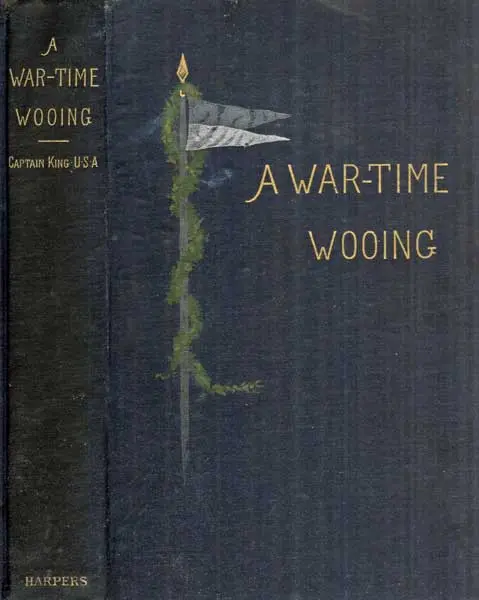
"A War-Time Wooing" by Captain Charles King is a novel written in the late 19th century. Set against the backdrop of the American Civil War, the story explores themes of love and sacrifice, primarily through the characters of Bessie Warren, a young girl mourning the death of her brother, and Lieutenant Paul Revere Abbot, a soldier whose correspondence with Bessie becomes a poignant thread in their lives. As war rages, personal connections are deepened and complicated by the harsh realities of military life and loss. At the start of the tale, the narrative introduces us to Bessie Warren and her father, Doctor Warren, at a suburban train station as they await news from the frontlines. Bessie is revealed to be experiencing developing feelings for Lieutenant Abbot, a soldier who has only interacted with her through letters, igniting a hope that is entwined with the ongoing war. The opening hints at the emotional turmoil caused by war when Doctor Warren finds himself reconciling his daughter's affection for a stranger with the deep grief of having lost his own son to the battlefield. Such dynamics are set against a backdrop of military camaraderie, duty, and the unfolding tragedy of the war, suggesting a rich exploration of how personal narratives collide with larger historical events.
Introduction adapted from the source catalogue; source summaries may be automatically generated.
Free to read · English · 41,380 words · No account needed
MAKE TIME FOR A GOOD BOOK
On by default. Untick to stop anonymous reading totals. Each page counts after 10 seconds in view. How this works.
Anonymous counting is on unless you have switched it off.
Sitting by the open window and looking out over the bustling street Major Abbot later in the evening is trying to collect his senses and convince himself that he really is himself. "It never rains but it pours," and events have been pouring upon him with confusing rapidity. Early in the summer he had noted an odd constraint in the tone of the few letters that came from Miss Winthrop. That they were few and far between was not in itself a matter to give him much discomfort. From boyhood he had been accustomed to the household cry that at some time in the future--the distant future--Viva Winthrop was to be his wife. He had known her quite as long as he had been conscious of his own existence, and the relations between the families were such as to render the alliance desirable. Excellent friends were the young people as they grew to years of discretion, and, in the eyes of parents and intimate acquaintances, no formal betrothal was ever necessary, simply because "it was such an understood thing." For more than a year previous to the outbreak of the war, however, Miss Winthrop was in Europe, and much of the time, it was said, she had been studying. So had Mr. Hollins, who withdrew from Harvard in his second year and read law assiduously in the office of Winthrop & Lawrence, and then went abroad for his health. They returned on the Cunarder in the early part of April, and Mrs. Winthrop was ill from the time she set foot on the saloon deck until they sighted the State House looming through the fog, and nothing could have been more fortunate than that Mr. Hollins was with them--he was so attentive, so very thoughtful. When he wasn't doing something for her he was promenading with Viva on deck or bundling that young lady in warm wraps and hedging her in a sunny corner. Pity that Mr. Hollins was so poor and rather obscure in his family--his immediate family--connections. His mother was Mr. Winthrop's first cousin, and she had been very fond of Mr. Winthrop when she was a child, and he had befriended her son when a friend was needed. She died years ago, and no one knew just when her husband followed her. He was a person no one ever met, said Mrs. Winthrop, a man who had a singular career, was an erratic genius, and very dissipated. But he was a very fascinating person, she understood, in his younger days, and his son was most talented and deserving, but entirely out of the question as an intimate or associate. Viva would not be apt to see anything of him after their return; but the question never seemed to occur to her, how much had the daughter been influenced by their frequent companionship abroad? It really mattered nothing. Viva was to marry Revere Abbot, as Mrs. Winthrop preferred to call him, and such was distinctly the family understanding. Miss Winthrop had been home but a few weeks when all the North was thrilled by the stirring call for volunteers, and the old Bay State responded, as was to be expected of her. In the --th Massachusetts were a score of officers, as has been said, whose names were as old as the colony and whose family connections made them thoroughly well known to each other at the earliest organization of the command. That Paul Abbot should be among the first to seek a commission as a junior lieutenant was naturally expected. Then with all possible hesitancy and delicacy, after a feminine council in the family, his mother asked him if he did not think there ought to be some distinct understanding about Viva Winthrop before he went away to the front. The matter was something that he had thought of before she went to Europe, but believed then that it could wait, Now that she had returned, improved both physically and intellectually, Mr. Abbot had once or twice thought that it would not be long before he would be asked some such question as his mother now propounded, but again decided that it was a matter that could be deferred. They had met with much hearty cordiality, and called each other Paul and Viva, as they had from babyhood, and then she had a round of social duties and he became absorbed in drills, day and night, and they saw very little of each other--much less than was entirely satisfactory to the parental councils, and these were frequent. While the masters of the households of Abbot and Winthrop seldom interchanged a word on the subject, they had their personal views none the less; and, as to the mothers, their hearts had long been set upon the match. Miss Winthrop had abundant wealth in her own right. Paul Abbot's blood was blue as the doctrines of the Puritans. Without being a beauty in face or form, Miss Winthrop was unquestionably distinguished-looking, and her reputation for a certain acerbity of temper and the faculty of saying cutting things did not materially lower her value in the matrimonial market. There was, however, that constantly recurring statement, "Oh, she's engaged to Paul Abbot," and that, presumably, accounted for the lack of those attentions in society which are so intangible when assailed, and yet leave such a void when omitted. Mrs. Abbot put it very plainly to Paul when she said:
Your reading position is saved on this browser. Take it to another device with a library code. Reading pages adapt to text, rather than matching a printed edition.
Charles King

Charles King

Charles King

Charles King
BEHIND THE BOOK
This eBook is for the use of anyone anywhere in the United States and most other parts of the world at no cost and with almost no restrictions whatsoever. You may copy it, give it away or re-use it under the terms of the Project Gutenberg License included with this eBook or online at www.gutenberg.org. If you are not located in the United States, you will have to check the laws of the country where you are located before using this eBook. Read the source licence.
The original source file, including credits and licence, is retained by this library. Request an original-format copy at no charge. Please include the book title and Project Gutenberg identifier #22906.
KEEP YOUR CURIOSITY GOING
Cécile Tormay

Moritz Busch
Coulson Kernahan
John L. Ransom

Maurice Baring
Frances Wright