THE CLASSIC COLLECTION✦Found in the Philippines: The Story of a Woman’s LettersCLASSIC FREE BOOKS
Found in the Philippines: The Story of a Woman’s Letters
Charles King
THE CLASSIC COLLECTION · 1888
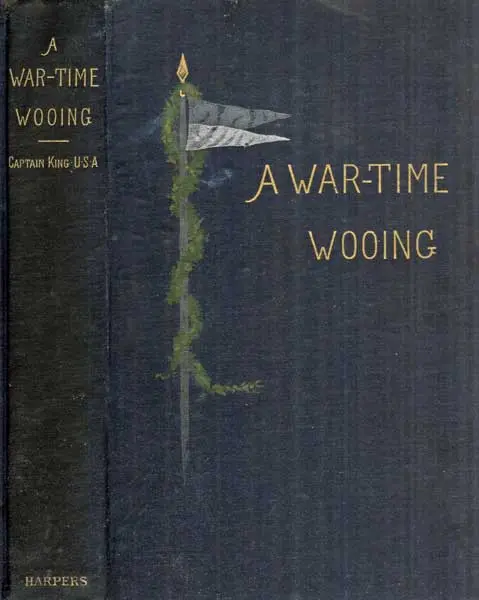
"A War-Time Wooing" by Captain Charles King is a novel written in the late 19th century. Set against the backdrop of the American Civil War, the story explores themes of love and sacrifice, primarily through the characters of Bessie Warren, a young girl mourning the death of her brother, and Lieutenant Paul Revere Abbot, a soldier whose correspondence with Bessie becomes a poignant thread in their lives. As war rages, personal connections are deepened and complicated by the harsh realities of military life and loss. At the start of the tale, the narrative introduces us to Bessie Warren and her father, Doctor Warren, at a suburban train station as they await news from the frontlines. Bessie is revealed to be experiencing developing feelings for Lieutenant Abbot, a soldier who has only interacted with her through letters, igniting a hope that is entwined with the ongoing war. The opening hints at the emotional turmoil caused by war when Doctor Warren finds himself reconciling his daughter's affection for a stranger with the deep grief of having lost his own son to the battlefield. Such dynamics are set against a backdrop of military camaraderie, duty, and the unfolding tragedy of the war, suggesting a rich exploration of how personal narratives collide with larger historical events.
Introduction adapted from the source catalogue; source summaries may be automatically generated.
Free to read · English · 41,380 words · No account needed
MAKE TIME FOR A GOOD BOOK
On by default. Untick to stop anonymous reading totals. Each page counts after 10 seconds in view. How this works.
Anonymous counting is on unless you have switched it off.
The other matter is one to which he hastens with eager heart. Twice he has written to Doctor Warren since their parting at Washington, and he has asked permission to call upon them at Hastings before returning. His orders come before any reply. He therefore writes to Hastings the day before he leaves home, begging that a telegram be sent to meet him at the Metropolitan, the war-time rendezvous of army men when in New York on leave, and his face is blank with disappointment when the clerk tells him that no telegram has been received. He has a day at his disposal, and he loses no time, but goes up the river by an afternoon train, and returns by the evening "accommodation" with uneasy heart. Doctor Warren and Miss Bessie had not yet come back was the news that met him at the pretty little homestead. The doctor had been ill in Washington, and when he was well enough to start the young lady was suddenly taken down. Abbot is vaguely worried. He anxiously questions the kindly old housekeeper, and draws from her all that she knows. She is looking for letters any moment; but the last one was from Willard's, four days since, saying they would have to stay. Miss Bessie was suddenly taken ill. Won't the gentleman come in? and she will get the letter. He takes off his cloak and forage cap, and steps reverently into the little sitting-room, wherein every object is bathed in the sunshine of late afternoon, and everywhere he sees traces of her handiwork. There on the wall is Guthrie's picture; there hangs his honored sword and the sash he wore when he led the charge at Seven Pines. With the soldier-spirit in his heart, with the thrill of sympathy and comradeship that makes all brave men kin, Abbot stands before that silent presentment of the man he knew at college, and slowly stretches forth his hand and reverently touches the sword-hilt of the buried officer. He is not unworthy; he, too, has led in daring charge, and borne his country's flag through a hell of carnage. They are brothers in arms, though one be gathered already into the innumerable host beyond the grave. They are comrades in spirit, though since college days no word has ever passed between them, and Abbot's eyes fill with emotion he cannot repress as he thinks how bitter a loss this son and brother has been to the stricken old father and fragile sister. Ah! could he but have known, that day on the Monocacy; could he but have read the truth in the old man's eyes, and accepted as a fact his share of that mysterious correspondence rather than have unwillingly dealt so cruel a blow! His lips move in a short, silent prayer, that seems to well up from his very heart; and then the housekeeper is at his side, and here is the doctor's letter. It is too meagre of detail for his anxiety. He reads it twice, but it is all too brief and bare. He is recalled to himself again. The housekeeper begs pardon, but she is sure this must be Mr. Abbot, whose letters were so eagerly watched for all the time before they went away. She had heard in the village he was killed, and she is all a-quiver now, as he can see, with excitement and suppressed feeling at his resurrection. Yes, this is Mr. Abbot, he tells her, and he is going straight to Washington that he may find them. And she shows him pictures of Bessie in her girlhood, Bessie at school, Bessie in the bonnie dress she wore at the Soldiers' Fair. Yes, he remembers having seen that very group before, at Edwards's Ferry, before Ball's Bluff. She prattles about Bessie, and of Bessie's going for his letters, and how she cried over them. He is all sympathy, and bids her say on as he moves about the room, touching little odds-and-ends that he knows must be hers; and he is loath to go, but eager too, since it is to carry him back to her. He writes a few lines on a card to tell them of his visit and his orders, should they fail to meet; he begs the doctor to write, and warns him that he must expect frequent letters; and then, with one long look about the sunlit, love-haunted room, with one appeal for brotherly sympathy in his parting gaze at Guthrie Warren's picture, he strides back to the station, and by sunrise of another day is hurrying to Washington. In his breast-pocket he carries the compact little wad of letters, all addressed to himself, all written in her own delicate and dainty hand, yet sealed from his eyes as securely as though locked in casket of steel. Though he longs inexpressibly to read their pages and to better know the gentle soul that has so suddenly come into his life, they are not his to open. What would he not give for one moment face to face with the man who had lured and tricked her--and with his name!
Your reading position is saved on this browser. Take it to another device with a library code. Reading pages adapt to text, rather than matching a printed edition.
Charles King

Charles King

Charles King

Charles King
BEHIND THE BOOK
This eBook is for the use of anyone anywhere in the United States and most other parts of the world at no cost and with almost no restrictions whatsoever. You may copy it, give it away or re-use it under the terms of the Project Gutenberg License included with this eBook or online at www.gutenberg.org. If you are not located in the United States, you will have to check the laws of the country where you are located before using this eBook. Read the source licence.
The original source file, including credits and licence, is retained by this library. Request an original-format copy at no charge. Please include the book title and Project Gutenberg identifier #22906.
KEEP YOUR CURIOSITY GOING
Cécile Tormay

Moritz Busch
Coulson Kernahan
John L. Ransom

Maurice Baring
Frances Wright