THE CLASSIC COLLECTION✦My diaries, being a personal narrative of events 1888-1914, Part 2 (1900-1914)CLASSIC FREE BOOKS
My diaries, being a personal narrative of events 1888-1914, Part 2 (1900-1914)
Wilfrid Scawen Blunt
THE CLASSIC COLLECTION · 1905
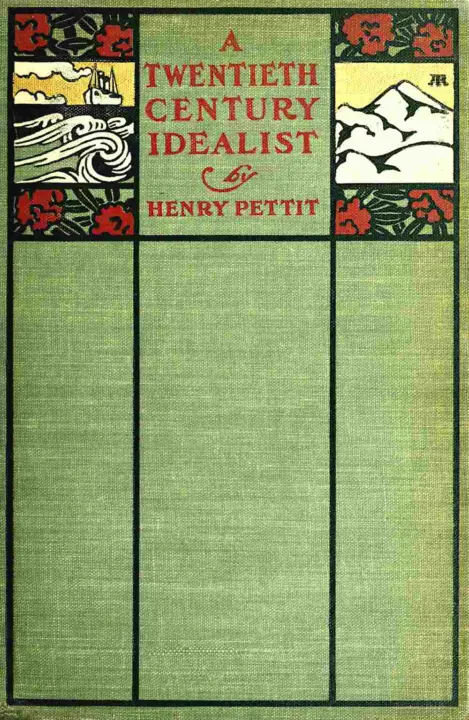
"A Twentieth Century Idealist" by Henry Pettit is a historical novel written in the early 20th century. The book explores the ideals and aspirations of its central character, Adele Cultus, alongside the philosophical musings of those around her, particularly the Doctor and Paul. Themes of spirituality, personal ambition, and the subtlety of human interactions are likely to feature prominently throughout the narrative. The opening portion introduces us to the characters of the Doctor and Paul as they engage in a thought-provoking conversation about ideals and personalities, specifically discussing the intriguing Adele Cultus. The Doctor reflects on his admiration for her sincerity and spiritual nature, while Paul appears more practical and focused on surface impressions. Their dialogue reveals complexities in their perspectives, setting the stage for the exploration of Adele’s character and her influence on those around her. Additionally, the Doctor's interest in palmistry hints at a deeper exploration of character traits and innate qualities, promising a nuanced examination of human behavior and relationships as the narrative unfolds.
Introduction adapted from the source catalogue; source summaries may be automatically generated.
Free to read · English · 89,531 words · No account needed
MAKE TIME FOR A GOOD BOOK
On by default. Untick to stop anonymous reading totals. Each page counts after 10 seconds in view. How this works.
Anonymous counting is on unless you have switched it off.
“It is the music of the waterfall perhaps, and the movement too. The water is so much alive, it’s living water.”
“All life seeks life,” said the Doctor. “Some sort of companionship; even a hermit likes the life in his glen. It’s not uncheerful here, after all, is it--even if it seems gloomy?”
“No, listen; the waterfall is singing. I could catch the rhythm, and perhaps a cadence, in a short time if I were to try; it seems to say something.”
“What does it say, to you?”
“Oh, ’tis ‘the water of life repeating,’” said Adele, quoting one of her favorite lines. “I cannot tell you exactly what it says in words, but the music in it is hopeful; I love to listen to it.”
“So do I,” said the Doctor. “Would you like a drink?”
“Indeed, I would; just for remembrance, to say we have been here together. Let us take a drink in remembrance.”
They both drank from a cup made of leaves--both of the same cup--“the water of life,” as Adele called it; and as they drank a bird flew down from its nest, perched itself on a rock near the cascade above them, and drank also; a little bird with a red breast. They did not see the bird, emblem of suffering unto death for others, and only took a drop or two themselves, for verily the realities of life made the glen damp and cold, yet the thought symbolized by the bird was ever with them and the moment precious.
“I should like to drink that water always,” said Adele.
“Always is a long time.”
“Well, I did not mean exactly that--until----”
The Doctor waited.
“Well, if I must tell you, until the resurrection.”
“I trust we may,” said he solemnly.
They understood each other perfectly, and after a pause, while the robin sang a morning hymn, they continued their walk.
Drops of rain began to fall upon the tree-tops. Adele and the Doctor
caught the sound.
“Only a little condensation,” said he, “a draught of cooler air has passed over. We will be out of it in a few minutes.”
Adele felt chilly, but would not say so. She drew her hooded-wrap about her, and felt quite safe with the Doctor.
“A Lepcha shanty is just beyond here,” said he, “if it comes to the worst we can find shelter.”
“And plenty of dirt,” thought Adele. “No doubt, lots of insects, especially on a damp day.”
Your reading position is saved on this browser. Take it to another device with a library code. Reading pages adapt to text, rather than matching a printed edition.
BEHIND THE BOOK
This eBook is for the use of anyone anywhere in the United States and most other parts of the world at no cost and with almost no restrictions whatsoever. You may copy it, give it away or re-use it under the terms of the Project Gutenberg License included with this eBook or online at www.gutenberg.org. If you are not located in the United States, you will have to check the laws of the country where you are located before using this eBook. Read the source licence.
The original source file, including credits and licence, is retained by this library. Request an original-format copy at no charge. Please include the book title and Project Gutenberg identifier #64612.
KEEP YOUR CURIOSITY GOING
Wilfrid Scawen Blunt
Wilfrid Scawen Blunt

E. W. (Edgar Watson) Howe
Cécile Tormay

Moritz Busch
Coulson Kernahan