THE CLASSIC COLLECTION✦My diaries, being a personal narrative of events 1888-1914, Part 2 (1900-1914)CLASSIC FREE BOOKS
My diaries, being a personal narrative of events 1888-1914, Part 2 (1900-1914)
Wilfrid Scawen Blunt
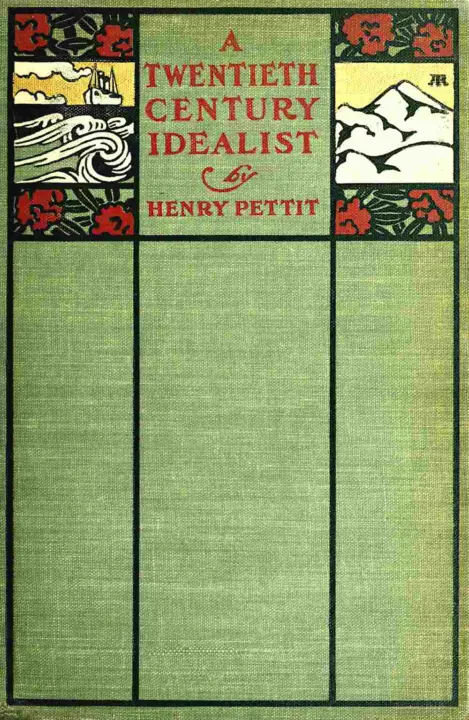
THE CLASSIC COLLECTION · 1905
"A Twentieth Century Idealist" by Henry Pettit is a historical novel written in the early 20th century. The book explores the ideals and aspirations of its central character, Adele Cultus, alongside the philosophical musings of those around her, particularly the Doctor and Paul. Themes of spirituality, personal ambition, and the subtlety of human interactions are likely to feature prominently throughout the narrative. The opening portion introduces us to the characters of the Doctor and Paul as they engage in a thought-provoking conversation about ideals and personalities, specifically discussing the intriguing Adele Cultus. The Doctor reflects on his admiration for her sincerity and spiritual nature, while Paul appears more practical and focused on surface impressions. Their dialogue reveals complexities in their perspectives, setting the stage for the exploration of Adele’s character and her influence on those around her. Additionally, the Doctor's interest in palmistry hints at a deeper exploration of character traits and innate qualities, promising a nuanced examination of human behavior and relationships as the narrative unfolds.
Introduction adapted from the source catalogue; source summaries may be automatically generated.
Free to read · English · 89,531 words · No account needed
MAKE TIME FOR A GOOD BOOK
On by default. Untick to stop anonymous reading totals. Each page counts after 10 seconds in view. How this works.
Anonymous counting is on unless you have switched it off.
“No! it’s so really high; we’re so high I don’t feel easy--it’s not natural; it takes my breath away.”
“Oh, then you feel the effect of the thin air; open your mouth wide and get the air on both sides of your ear-drums. The pressure will then be even; you’ll feel better.” Adele did so and felt more at ease.
“How resourceful you are, Paul--so practical; that pressure was becoming too much for me--I felt faint.” Then after looking around for some time and observing other things, she remarked with considerable energy, yet serious:
“These pinnacle views are too much!”
“What is it now?” asked Paul.
“Why--look before you--those are mountains beneath us, yet they look
flat.”
“Yes, they do.”
“They are neither picturesque nor artistic, when you look down upon
them.”
“Then don’t look at them, my dear! Look at me.”
Adele smiled, but continued in her mood.
“Paul! from above, those mountains are not true to nature, they are
not mountains at all.”
“From your point of view, no.”
“From here, the world is all out of drawing, it does not give you a
true idea of itself.”
“It certainly doesn’t look very round,” remarked Paul; “it’s rather concave, with the horizon as high up as we are.”
“No, the idea is not true,” continued Adele; “seen from here, one might think our journey had been over a flat country--easy to walk over--but you know it wasn’t.”
Paul laughed. “No, it wasn’t, my saddle tells me so--it was a hard road to travel. But the view! that’s all right; Adele, it is the grandest we have seen. I never expect to see anything finer.”
“It’s too grand for me--it overwhelms.”
“How, Adele?”
“I’m deceived, in so many ways; deceived as to distance and heights, and I can’t tell what I’m looking at. There now--over there, is a large bare place, I suppose, but it looks like a small field; and just the reverse, there is a clump of foliage, it may be a jungle with tigers, although from here it looks so harmless.”
“Oh, but you must use your common sense and gumption, and not be
misled by experiences.”
“Indeed! Well, what do you call that?”
“Where?”
“That thing over there--what is it?” pointing with her whip.
Paul looked. Far away an irregular cloud-like something stood out clearly as if raised above the surface of the earth; it gleamed or glistened faintly in the distance, but being irregular in form, light in color, and doubtless lifted up because it appeared so, Paul pronounced it to be a cloud drifting between the lower hills.
Your reading position is saved on this browser. Take it to another device with a library code. Reading pages adapt to text, rather than matching a printed edition.
BEHIND THE BOOK
This eBook is for the use of anyone anywhere in the United States and most other parts of the world at no cost and with almost no restrictions whatsoever. You may copy it, give it away or re-use it under the terms of the Project Gutenberg License included with this eBook or online at www.gutenberg.org. If you are not located in the United States, you will have to check the laws of the country where you are located before using this eBook. Read the source licence.
The original source file, including credits and licence, is retained by this library. Request an original-format copy at no charge. Please include the book title and Project Gutenberg identifier #64612.
KEEP YOUR CURIOSITY GOING
Wilfrid Scawen Blunt
Wilfrid Scawen Blunt

E. W. (Edgar Watson) Howe
Cécile Tormay

Moritz Busch
Coulson Kernahan