THE CLASSIC COLLECTION✦An outlaw’s diary: the CommuneCLASSIC FREE BOOKS
An outlaw’s diary: the Commune
Cécile Tormay
THE CLASSIC COLLECTION · 1896
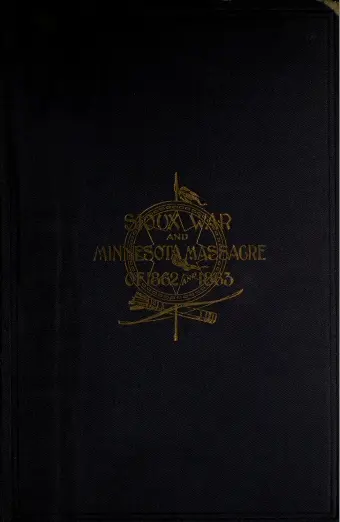
"A Thrilling Narrative of the Minnesota Massacre and the Sioux War of 1862-63" by A. P. Connolly is a historical account written in the late 19th century. The narrative centers around the events of the Minnesota Massacre and the subsequent Sioux War, detailing the clashes between the Sioux tribes and white settlers during a tumultuous period of American history. The author aims to present a vivid recollection of these historical events from a personal and experiential perspective. At the start of the narrative, Connolly establishes a sense of urgency and excitement that prevailed in Minnesota during the Civil War era, describing the chaos and fear induced by the uprising of the Sioux Indians. He recounts the initial outbreak of violence, including the tragic story of individuals like Charles Nelson, who lost his family to the massacre. The narrative paints a backdrop of desperation as settlers attempted to flee and grasp the reality of the renewed hostilities, setting the stage for the detailed recounting of military engagements and the personal experiences of those involved in the conflicts that followed.
Introduction adapted from the source catalogue; source summaries may be automatically generated.
Free to read · English · 53,669 words · No account needed
MAKE TIME FOR A GOOD BOOK
On by default. Untick to stop anonymous reading totals. Each page counts after 10 seconds in view. How this works.
Anonymous counting is on unless you have switched it off.
In August, 1862, what do we see? Homes, beautiful prairie homes of yesterday, to-day have sunken out of sight, buried in their own ashes; the wife of an early love has been overtaken and compelled to submit to the unholy passion of her cruel captor; the prattling tongues of the innocents have been silenced in sudden death, and reason dethroned. A most pathetic case was that of Charles Nelson, a Swede. The day previous, his dwelling had been burned to the ground, his daughter outraged, the head of his wife, Lela, cleft by the tomahawk, and while seeking to save himself, he saw, for a moment, his two sons, Hans and Otto, rushing through the corn-field with the Indians in swift pursuit. Returning with the troops under Colonel McPhail, and passing by the ruins of his home, he gazed about him wildly, and closing the gate of the garden, asked: "When will it be safe to return?" His reason was gone!
This pathetic scene witnessed by so many who yet live to remember it, was made a chapter entitled, "The Maniac," in a work from the pen of Mrs. Harriet E. McConkey, published soon after it occurred.
Captain Chittenden, of Colonel McPhail's command, while sitting a few days after, under the Falls of Minnehaha, embodied in verse this wonderful tragedy, giving to the world the following lines:
Minne-ha-ha, laughing water,
Cease thy laughing now for aye,
Savage hands are red with slaughter
Of the innocent to-day.
Ill accords thy sportive humor
With their last despairing wail;
While thou'rt dancing in the sunbeam,
Mangled corpses strew the vale.
Change thy note, gay Minne-ha-ha;
Let some sadder strain prevail--
Listen, while a maniac wanderer
Sighs to thee his woeful tale;
"Give me back my Lela's tresses,
Let me kiss them once again!
She, who blest me with caresses
Lies unburied on the plain!
"See yon smoke? there was my dwelling;
That is all I have of home!
Hark! I hear their fiendish yelling,
As I, houseless, childless, roam!
"Have they killed my Hans and Otto?
Did they find them in the corn?
Go and tell that savage monster
Not to slay my youngest born.
"Yonder is my new-bought reaper,
Standing mid the ripened grain;
E'en my cow asks why I leave her
Wand'ring, unmilked, o'er the plain.
"Soldiers, bury here my Lela;
Place me also 'neath the sod;
Long we lived and wrought together--
Let me die with her--O God!
"Faithful Fido, you they've left me,
Can you tell me, Fido, why
God at once has thus bereft me?
All I ask is here to die.
"O, my daughter Jennie, darling!
Worse than death is Jennie's fate!"
Your reading position is saved on this browser. Take it to another device with a library code. Reading pages adapt to text, rather than matching a printed edition.
BEHIND THE BOOK
This eBook is for the use of anyone anywhere in the United States and most other parts of the world at no cost and with almost no restrictions whatsoever. You may copy it, give it away or re-use it under the terms of the Project Gutenberg License included with this eBook or online at www.gutenberg.org. If you are not located in the United States, you will have to check the laws of the country where you are located before using this eBook. Read the source licence.
The original source file, including credits and licence, is retained by this library. Request an original-format copy at no charge. Please include the book title and Project Gutenberg identifier #51990.
KEEP YOUR CURIOSITY GOING
Cécile Tormay

Moritz Busch
John L. Ransom
Frances Wright
Cécile Tormay

Mabel Potter Daggett