THE CLASSIC COLLECTION✦An outlaw’s diary: the CommuneCLASSIC FREE BOOKS
An outlaw’s diary: the Commune
Cécile Tormay
THE CLASSIC COLLECTION · 1896
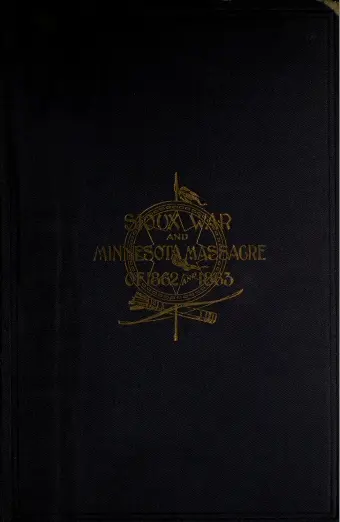
"A Thrilling Narrative of the Minnesota Massacre and the Sioux War of 1862-63" by A. P. Connolly is a historical account written in the late 19th century. The narrative centers around the events of the Minnesota Massacre and the subsequent Sioux War, detailing the clashes between the Sioux tribes and white settlers during a tumultuous period of American history. The author aims to present a vivid recollection of these historical events from a personal and experiential perspective. At the start of the narrative, Connolly establishes a sense of urgency and excitement that prevailed in Minnesota during the Civil War era, describing the chaos and fear induced by the uprising of the Sioux Indians. He recounts the initial outbreak of violence, including the tragic story of individuals like Charles Nelson, who lost his family to the massacre. The narrative paints a backdrop of desperation as settlers attempted to flee and grasp the reality of the renewed hostilities, setting the stage for the detailed recounting of military engagements and the personal experiences of those involved in the conflicts that followed.
Introduction adapted from the source catalogue; source summaries may be automatically generated.
Free to read · English · 53,669 words · No account needed
MAKE TIME FOR A GOOD BOOK
On by default. Untick to stop anonymous reading totals. Each page counts after 10 seconds in view. How this works.
Anonymous counting is on unless you have switched it off.
General Sully, an unpretentious man, with clear perception, appeared to know where the Indians were, and what they would do. His service in the regular army peculiarly fitted him for this service, and this, with his genial temperament, made him an agreeable commander.
The boats were unloaded, the command supplied with sixty days' rations and divested of all surplus clothing and equipments, made ready for a vigorous march after Indians.
The troops were reviewed by the commanding officer, General Sully, who, by the way, was at one time Colonel of the First Minnesota, and afterwards promoted to Major-General of Volunteers and Brevet Brigadier-General of the regular army. The review of the troops constituted the celebrating the Fourth of July, 1864.
When the column finally moved, which was on July 19, it marched out into an unknown and unexplored country, from the white man's standpoint.
What a transformation,--then unknown and unexplored,--no highways, no railroads, no civilization,--to-day the onward march of our race has left its imprint by railroads, beautiful farms, busy cities, busy factories, Christian civilization, education and the "little red school house." But I am anticipating; turn back the leaves and we are again on the Knife river, and we snuff a battle, for the Indians are ahead in great numbers.
It was on July 28th, among the foothills of the mountains, that a large camp of Indians was found. In this camp were no less than one hundred and ten bands of hostile Sioux, and they meant business, for they had congregated here for the express purpose of cleaning out the white soldiers, and they felt confident they could do it.
The Indians, on their horses, were stripped for the fray, and began leisurely to ride in line of battle toward the white enemy. When within rifle shot, the soldiers opened fire, and instantly the scene was changed. The bands concentrated, and, uttering their war cries, they dashed at full speed on our lines, firing, and, like the wind, whirled to the rear, loading as they went, when they would again face the enemy, and, coming within gunshot, fire again.
They were so confident of success that they did not attempt to save their own camp, which was the objective point of the soldiers; and they did not realize their dangerous position until they found that their terrific onslaught on our lines did not in the least impede the progress of the troops.
Soon the artillery was brought up, and the shells were sent thick and fast among them. By this time they began to realize that retreat were the tactics now.
Your reading position is saved on this browser. Take it to another device with a library code. Reading pages adapt to text, rather than matching a printed edition.
BEHIND THE BOOK
This eBook is for the use of anyone anywhere in the United States and most other parts of the world at no cost and with almost no restrictions whatsoever. You may copy it, give it away or re-use it under the terms of the Project Gutenberg License included with this eBook or online at www.gutenberg.org. If you are not located in the United States, you will have to check the laws of the country where you are located before using this eBook. Read the source licence.
The original source file, including credits and licence, is retained by this library. Request an original-format copy at no charge. Please include the book title and Project Gutenberg identifier #51990.
KEEP YOUR CURIOSITY GOING
Cécile Tormay

Moritz Busch
John L. Ransom
Frances Wright
Cécile Tormay

Mabel Potter Daggett