THE CLASSIC COLLECTION✦An outlaw’s diary: the CommuneCLASSIC FREE BOOKS
An outlaw’s diary: the Commune
Cécile Tormay
THE CLASSIC COLLECTION · 1916
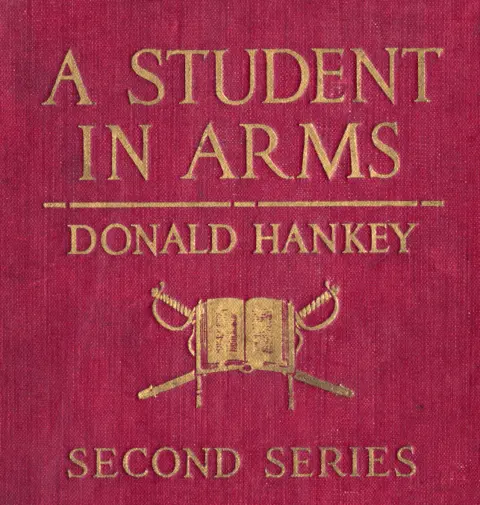
"A Student in Arms: Second Series" by Donald Hankey is a collection of reflective writings and accounts, likely penned during the early 20th century amid World War I. This work explores the complexities of military life from the perspective of a soldier, delving into themes of camaraderie, the harsh realities of war, and the philosophical introspections that arise from such experiences. The main character, Donald Hankey, is depicted as a thoughtful and sensitive individual who grapples with the atrocities of war while seeking a deeper understanding of life and humanity. The opening of the book sets the tone by highlighting Hankey's personal history and the early influences that shaped him. It recounts his upbringing, emphasizing the tension between his natural proclivity for peace and the martial expectations placed upon him by his brothers and societal norms. As he progresses into military life, Hankey reflects on the dichotomy of bravery and vulnerability faced by soldiers, particularly as he approaches the front lines of battle. His observations reveal a keen awareness of the human condition, showcasing the camaraderie formed among soldiers amidst the chaos of war, while also foreshadowing the internal struggles they endure in the face of violence and loss. Through introspective narration, the stage is established for an exploration of the romantic and brutal nature of warfare.
Introduction adapted from the source catalogue; source summaries may be automatically generated.
Free to read · English · 31,272 words · No account needed
MAKE TIME FOR A GOOD BOOK
On by default. Untick to stop anonymous reading totals. Each page counts after 10 seconds in view. How this works.
Anonymous counting is on unless you have switched it off.
SCENE. A barber's shop in a small French town about thirty miles from the front. A SUBALTERN and a stout BOURGEOIS are waiting their turn.
BOURGEOIS. Is it that it is the mud of the trenches on the boots of
Monsieur?
SUBALTERN. Ah! but no, Monsieur, for then it would reach to my waist!
BOURGEOIS. Nevertheless, Monsieur is but recently come from the
trenches, is it not so?
SUBALTERN. Yes, I am arrived from the trenches yesterday.
BOURGEOIS. Then Monsieur has assisted at the great attack!
SUBALTERN. Oh, yes, I helped a very little bit.
BOURGEOIS. There have been immense losses, is it not so?
SUBALTERN (vaguely). There are always great losses when one attacks.
BOURGEOIS. Ah! but much greater than one expected--I have seen, I, the wounded coming down the river.
SUBALTERN. I--I have always expected great losses.
BOURGEOIS. 'Tis true. There are always great losses when one attacks. But all goes well, Monsieur, is it not so?
SUBALTERN. It is difficult to estimate the success of an attack until after several weeks. But I think that all goes well.
BOURGEOIS. But yes, the French, they have had a great success, and also the English. The English are wonderful. Their equipment! It is that which astonishes me. Everything is complete. They say that the English have saved France; but the French also, they have saved England, is it not so, Monsieur?
SUBALTERN. But we are saving each other!
BOURGEOIS. Good! We are saving each other! Very good! But after the war, Monsieur, England will fight against France, hein?
SUBALTERN. Never!
BOURGEOIS. Never?
SUBALTERN. Never in life!
BOURGEOIS. You think so?
SUBALTERN. We do not love war. We do not seek war. It is only when a nation is so execrable that one is compelled to fight, as have been the Germans, that we make war.
BOURGEOIS. You do not love war, eh? Before the war you had a very small Army, about three hundred thousand, is it not so? And now you have about three million. You do not love war, you others.
SUBALTERN. The Germans thought that they loved war, but I do not believe that they will love it very much longer!
BOURGEOIS. No! The war will give them the stomach-ache. They will love
it no longer!
COIFFEUR. But these English, whom did they fight before? The Boers,
was it not?
SUBALTERN. Yes, but a great many English think now that it was a bêtise. There was also great provocation. And nevertheless, who knows if there was not in that affair also a German plot?
BOURGEOIS. It is very likely. Then Monsieur thinks that we are true friends, the English and the French?
Your reading position is saved on this browser. Take it to another device with a library code. Reading pages adapt to text, rather than matching a printed edition.
BEHIND THE BOOK
This eBook is for the use of anyone anywhere in the United States and most other parts of the world at no cost and with almost no restrictions whatsoever. You may copy it, give it away or re-use it under the terms of the Project Gutenberg License included with this eBook or online at www.gutenberg.org. If you are not located in the United States, you will have to check the laws of the country where you are located before using this eBook. Read the source licence.
The original source file, including credits and licence, is retained by this library. Request an original-format copy at no charge. Please include the book title and Project Gutenberg identifier #14823.
KEEP YOUR CURIOSITY GOING
Cécile Tormay

Moritz Busch
John L. Ransom
Frances Wright
Cécile Tormay

Mabel Potter Daggett