
Recollections The Reminiscences of the Busy Life of One Who Has Played the Varied Parts of Sailor, Author & Lecturer
Frank Thomas Bullen
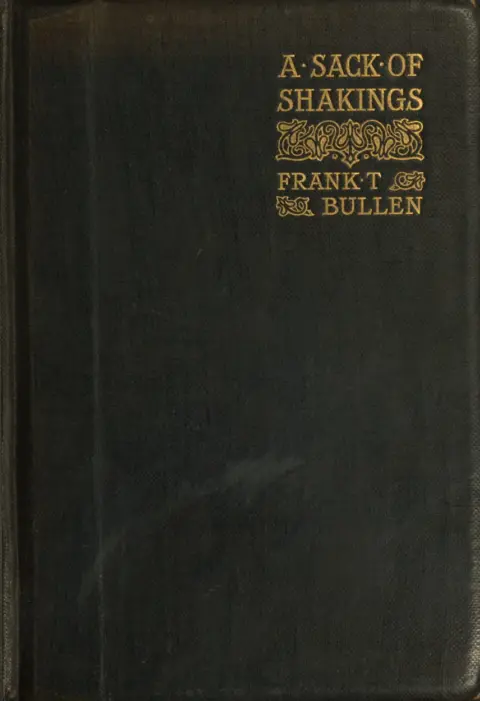
THE CLASSIC COLLECTION · 1901
"A Sack of Shakings" by Frank T. Bullen is a collection of essays written in the early 20th century. The essays draw on the author’s experiences at sea and explore various topics related to the ocean, its creatures, and maritime life. The opening portion introduces readers to an engaging narrative about a school of sperm whales, focusing on themes of family, survival, and the harsh realities of life beneath the waves. The beginning of the work captures a tranquil moment in the Pacific Ocean, where a troop of sperm whales enjoys a peaceful existence until they face an unexpected attack from whalers. As the scene unfolds, it vividly describes the majestic and delicate nature of these creatures, particularly the newly-born calf who becomes orphaned amidst the chaos of destruction. This opening sets the stage for a broader exploration of marine life, touched by the balance between the beauty of nature and the cruelty of survival at sea. Bullen’s descriptive style effectively immerses the reader in the ocean's depths, hinting at the complexities of the ecosystems and the challenges faced by its inhabitants.
Introduction adapted from the source catalogue; source summaries may be automatically generated.
Free to read · English · 103,431 words · No account needed
MAKE TIME FOR A GOOD BOOK
On by default. Untick to stop anonymous reading totals. Each page counts after 10 seconds in view. How this works.
Anonymous counting is on unless you have switched it off.
Owing to the close watch kept upon Jocko he led a blameless life for months. Apparently reconciled to his captivity he gradually came to be regarded as a changed animal who had repented and forsaken his evil ways for life. But my opinion of him never changed. It was never asked and I knew better than to offer it, but there was a lurking devil in his sleepy eyes that assured me if ever he got loose again his previous achievements would pale into insignificance before the feats of diabolical ingenuity he would then perform. Still the days and weeks rolled by uneventfully until we were well into the fine weather to the north’ard of the Line in the Atlantic. We had been exceptionally favoured by the absence of rain, and owing to the exertions of the second mate, who was an enthusiast over his paint-work, her bulwarks within and her houses were a perfectly dazzling white, with a satiny sheen like enamel. In fact I heard him remark with pardonable pride that he’d never seen the paint look so well in all his seven voyages as second of the Belle. Tenderly, as if it were his wife’s face, he would go over that paint-work even in his watch below, with bits of soft rag and some clean fresh water, wiping off every spot of defilement as soon as it appeared. Tarring down was accomplished without a spot or a smear upon the paint, and the decks having been holystoned and varnished, the second mate now began to breathe freely. No more dirty work remained to be done, and he would have a lot more time to devote to his beloved white paint. We had been slipping along pretty fast to the north’ard, and one afternoon the old man had all hands up to bend our winter suit of sails. Every mother’s son of them were aloft except me, and I was busy about the mainmast standing by to attend to the running gear, as I was ordered from above. As they had hoisted all the sails up before they had started aloft, they were there a long time, as busy as bees trying to get the job finished. At last all was ready and down they came. One of them went forrard for something, and immediately raised an outcry that brought all hands rushing to the spot, thinking that the ship was on fire or something. The sight they saw was a paralysing one to a sailor. On both sides of the bulwarks and the lower panels of the house were great smears and splashes of Stockholm tar, while all along the nice blue covering-board the mess was indescribable. With one accord everybody shouted “That---- monkey.” Yes, as they spoke there was a dull thud and down from aloft fell a huge oakum wad saturated with tar. They looked up and there he sat, an infernal object, hardly distinguishable for a monkey, being smothered from head to tail-end with the thick glutinous stuff. But his white teeth gleamed and his wicked eye twinkled merrily as he thought of the heavenly time he’d been having, a recompense for what must have seemed years of waiting. Too late, the men now remembered that the tar barrel, its head completely out, had been left up-ended by the windlass where it had been placed for convenience during tarring down. It was there still, but leading from it in all directions were streams of tar where Jocko had dragged away the dripping wads he had fished out of its black depths. I was never revengeful, but if I had been I should have felt sorry for the second mate, my old tyrant, now. He drooped and withered like a scarlet runner under the first sharp frost. Not a word did he say, but he looked as if all the curses in every tongue that ever were spoken were pouring over his brain in a flood. Pursuit of the monkey was out of the question. Clambering over the newly tarred rigging was bad enough when done with all care, but in a chase, especially over places where it had been freshly anointed by the fugitive, we should have had all hands captured like flies on a gummed string. They all stood and glared at the mess like men not knowing how to adjust their minds to this new condition of things, nor, when the skipper and mate came forrard to see what was the matter, did they contribute any words good, bad, or indifferent. Apparently they would have remained there till they dropped, fascinated by the horrible sight, but suddenly piercing screams aft startled everybody. Jocko had crept down the mizen rigging and pounced upon poor little Tip, who was delicately combing himself (he was as daintily clean as a cat) on the after hatch. And now Jocko was perched on the cro’jack yard vigorously wiping his tar-drenched fur with Tip as if he had been a dry wad. The second mate started from his lethargy and sprang aloft to the rescue of his screaming pet with an agility scarcely inferior to that of Jocko. Rage seemed to give him energy, for presently he pressed Jocko so hard (he let poor little Tip go as soon as he saw his pursuer) that he ran out along the mizen topsail brace, and, balancing himself for a moment, covered his eyes with his hands and sprang into the sea. Bobbing up like a cork, he struck out away from the ship which was only just moving, but in less than five minutes he repented his rashness and swam back. A line was flung to him, he promptly seized it and was at once a captive again. The men were so impressed by his prowess that they refused to allow the second mate to touch him, nor did any of them even beat him lest they should have bad luck. But they replaced the chafed-through ring he had broken by a massive connecting-link, and when Jamrach’s man came aboard in London Jocko was sold to him for five shillings. Tip went to the Crystal Palace and met a worse fate.
Your reading position is saved on this browser. Take it to another device with a library code. Reading pages adapt to text, rather than matching a printed edition.
Frank Thomas Bullen

Frank Thomas Bullen

Frank Thomas Bullen

Frank Thomas Bullen
BEHIND THE BOOK
This eBook is for the use of anyone anywhere in the United States and most other parts of the world at no cost and with almost no restrictions whatsoever. You may copy it, give it away or re-use it under the terms of the Project Gutenberg License included with this eBook or online at www.gutenberg.org. If you are not located in the United States, you will have to check the laws of the country where you are located before using this eBook. Read the source licence.
The original source file, including credits and licence, is retained by this library. Request an original-format copy at no charge. Please include the book title and Project Gutenberg identifier #63559.
KEEP YOUR CURIOSITY GOING

David Patterson (Spirit) Hatch

David Patterson (Spirit) Hatch

David Patterson (Spirit) Hatch

Ralph Waldo Emerson

Maurice Baring

Oscar Wilde & James McNeill Whistler