THE CLASSIC COLLECTION✦Salve Venetia, gleanings from Venetian history; vol. IICLASSIC FREE BOOKS
Salve Venetia, gleanings from Venetian history; vol. II
F. Marion (Francis Marion) Crawford
THE CLASSIC COLLECTION · 1897
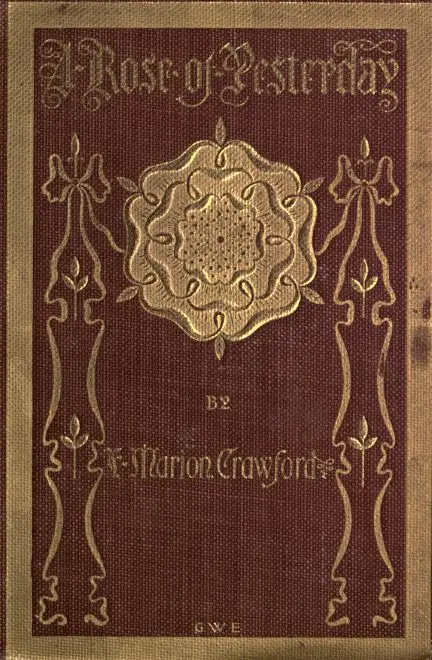
"A Rose of Yesterday" by F. Marion Crawford is a novel written in the late 19th century. The narrative unfolds around the character of Sylvia, who is navigating her feelings towards her guardian, Colonel Wimpole, amidst themes of love, loss, and social expectations. The story explores the complexities of their relationship as Sylvia, an impressionable young woman, grapples with emotions that intertwine affection with the looming specter of age and societal constraints. The opening of the novel introduces Sylvia in a personal moment with Colonel Wimpole, as they discuss an etching depicting a noble knight and the deeper meanings it may hold. Their dialogue hints at Sylvia's infatuation with the ideals of heroism and love, while Colonel Wimpole reflects on his past and the unfulfilled promises rooted in his experiences of war and honor. As the narrative develops, the emotional tension between them is palpable, with themes of unreciprocated love and the weight of societal norms coming into play, especially as Sylvia mistakes Wimpole’s fatherly affection for something more. The delicate balance between youth and age, destiny, and the longing for love sets the stage for a compelling exploration of human relationships and the challenges of defining true passion within societal confines.
Introduction adapted from the source catalogue; source summaries may be automatically generated.
Free to read · English · 52,003 words · No account needed
MAKE TIME FOR A GOOD BOOK
On by default. Untick to stop anonymous reading totals. Each page counts after 10 seconds in view. How this works.
Anonymous counting is on unless you have switched it off.
She turned suddenly in her seat and half buried her face against the back of the chair, so that Wimpole could not see it, and she bit the coarse velvet savagely, trying to be silent and tearless till he should go away. But he knew what she was doing. If he had not spoken, she could still have kept back the scalding tears awhile. But he did speak, and very gently.
"Helen--dear Helen--what is it?"
"My heart is breaking," she said, almost quietly.
But then the tears came, and she shook once or twice, like an animal that has a deep wound but cannot die. The tears came slowly, and burned her like drops of fire. She kept her face turned away.
Wimpole was beside her and held her passive hand. It twitched painfully as it lay in his, and every agonized movement of it shot through him, but he could not say anything at first. Besides, she knew he was there and would help her if he could. At last he spoke his thought.
"I will keep him from you," he said. "He shall not come near you."
Her hand tightened upon his, instantly, and she sat up in her chair, turning her face to him, quite white in the dusk, by the open window.
"Then you know?" she asked.
"Yes. It is in the Paris paper to-day. But it is only a report. I do
not believe it is true."
She rose, mastering herself, as she withdrew her hand, and steadied herself a moment against the chair beside him.
"It is true," she said. "He has recovered. He has written to me."
Wimpole felt as if he had been condemned to death without warning.
"When?" he managed to ask.
"I got the letter this afternoon."
Their voices answered each other, dull and colourless in the gloom, and for some moments neither spoke. Helen went to the window and leaned upon the broad marble sill, breathing the evening air from the lake, and Wimpole followed her. The electric lamps were lighted in the street, glaring coldly out of the grey dusk, and many people were moving slowly along the pavement below, in little parties, some gay, some silent.
"That is why I did not let you come up," said Helen, after a long time. "But now--since you know--" She stopped, still hesitating, and he tried to see her expression, but there was not enough light.
"Yes?" he said, with a question, not pressing her, but waiting.
"Since you know," she answered at last, "you can guess the rest."
Your reading position is saved on this browser. Take it to another device with a library code. Reading pages adapt to text, rather than matching a printed edition.
F. Marion (Francis Marion) Crawford
F. Marion (Francis Marion) Crawford

F. Marion (Francis Marion) Crawford

F. Marion (Francis Marion) Crawford
BEHIND THE BOOK
This eBook is for the use of anyone anywhere in the United States and most other parts of the world at no cost and with almost no restrictions whatsoever. You may copy it, give it away or re-use it under the terms of the Project Gutenberg License included with this eBook or online at www.gutenberg.org. If you are not located in the United States, you will have to check the laws of the country where you are located before using this eBook. Read the source licence.
The original source file, including credits and licence, is retained by this library. Request an original-format copy at no charge. Please include the book title and Project Gutenberg identifier #41009.
KEEP YOUR CURIOSITY GOING
Coulson Kernahan

Maurice Baring
Frances Wright
Cécile Tormay

Frederic Jesup Stimson

W. H. P. (William Henry Pope) Jarvis