THE CLASSIC COLLECTION✦Salve Venetia, gleanings from Venetian history; vol. IICLASSIC FREE BOOKS
Salve Venetia, gleanings from Venetian history; vol. II
F. Marion (Francis Marion) Crawford
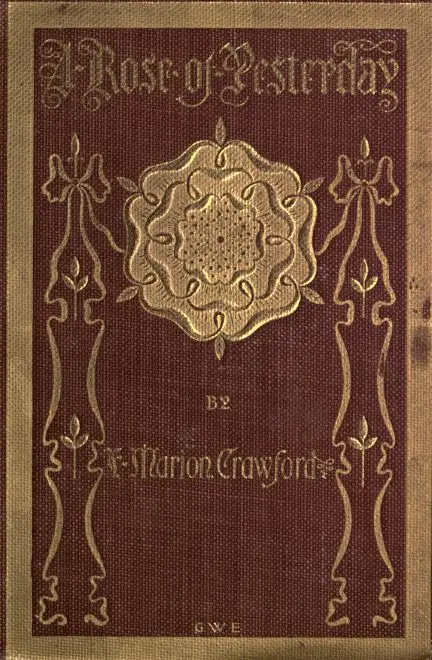
THE CLASSIC COLLECTION · 1897
"A Rose of Yesterday" by F. Marion Crawford is a novel written in the late 19th century. The narrative unfolds around the character of Sylvia, who is navigating her feelings towards her guardian, Colonel Wimpole, amidst themes of love, loss, and social expectations. The story explores the complexities of their relationship as Sylvia, an impressionable young woman, grapples with emotions that intertwine affection with the looming specter of age and societal constraints. The opening of the novel introduces Sylvia in a personal moment with Colonel Wimpole, as they discuss an etching depicting a noble knight and the deeper meanings it may hold. Their dialogue hints at Sylvia's infatuation with the ideals of heroism and love, while Colonel Wimpole reflects on his past and the unfulfilled promises rooted in his experiences of war and honor. As the narrative develops, the emotional tension between them is palpable, with themes of unreciprocated love and the weight of societal norms coming into play, especially as Sylvia mistakes Wimpole’s fatherly affection for something more. The delicate balance between youth and age, destiny, and the longing for love sets the stage for a compelling exploration of human relationships and the challenges of defining true passion within societal confines.
Introduction adapted from the source catalogue; source summaries may be automatically generated.
Free to read · English · 52,003 words · No account needed
MAKE TIME FOR A GOOD BOOK
On by default. Untick to stop anonymous reading totals. Each page counts after 10 seconds in view. How this works.
Anonymous counting is on unless you have switched it off.
"Then I will explain my errand," he said. "May I?"
It seemed rather a relief to have so small a matter ready to hand.
"Yes. It will not take long, will it?" she asked rather nervously, for she felt how his presence tempted her to confidence. "It--it will soon be dinner time, you know."
"I shall not stay long," said the colonel, quietly. "It is rather an awkward little matter. You know Archie was with you this morning when I saw you in the shop and got that miniature."
Helen looked at him suddenly with a change of expression, expecting some
new trouble.
"Yes, Archie was with us. What is it?" Her voice was full of a new
anxiety.
"It is nothing of any great importance," answered Wimpole, quickly, for he saw that she was nervous. "Only, he went out by himself afterwards, and came across my sister and Sylvia in a milliner's shop--"
"What was he doing in a milliner's shop?" interrupted Helen, in
surprise.
"I don't know," said the colonel. "I fancy he saw them through the window and went in to speak to them. Sylvia was trying on a hat, you know, and she liked it, and Archie, without saying anything, out of pure goodness of heart, I suppose--"
He hesitated. On any other day he would have smiled, but just now he was as deeply disturbed as Helen herself, and the absurd incident of the hat assumed a tremendous importance.
"Well? What did he do?" Helen's nerves were on edge, and she spoke
almost sharply.
"He paid for the hat," answered Wimpole, with an air of profound sorrow, and even penitence, as if it had been all his fault. "And then he went off, before they knew it."
Helen bit her lip, for it trembled. He had not told the story very clearly or connectedly, but she understood. Archie had just been talking to her strangely about Sylvia, and she had seen that he had fallen in love with his old playmate, and she was afraid. And now, she was horribly ashamed for him. It was so stupid, so pitifully stupid.
The colonel, guessing what greater torment was tearing at her heart, sat still in a rather dejected attitude, waiting for her to speak, but not watching her.
The matter which had brought him was certainly not very terrible in itself, but it stirred and quickened all the ever-growing pain for her son which was a part of her daily life. It knitted its strength to that of all the rest, to hurt her cruelly, and the torture was more than she could bear.
Your reading position is saved on this browser. Take it to another device with a library code. Reading pages adapt to text, rather than matching a printed edition.
F. Marion (Francis Marion) Crawford
F. Marion (Francis Marion) Crawford

F. Marion (Francis Marion) Crawford

F. Marion (Francis Marion) Crawford
BEHIND THE BOOK
This eBook is for the use of anyone anywhere in the United States and most other parts of the world at no cost and with almost no restrictions whatsoever. You may copy it, give it away or re-use it under the terms of the Project Gutenberg License included with this eBook or online at www.gutenberg.org. If you are not located in the United States, you will have to check the laws of the country where you are located before using this eBook. Read the source licence.
The original source file, including credits and licence, is retained by this library. Request an original-format copy at no charge. Please include the book title and Project Gutenberg identifier #41009.
KEEP YOUR CURIOSITY GOING
Coulson Kernahan

Maurice Baring
Frances Wright
Cécile Tormay

Frederic Jesup Stimson

W. H. P. (William Henry Pope) Jarvis