THE CLASSIC COLLECTION✦Salve Venetia, gleanings from Venetian history; vol. IICLASSIC FREE BOOKS
Salve Venetia, gleanings from Venetian history; vol. II
F. Marion (Francis Marion) Crawford
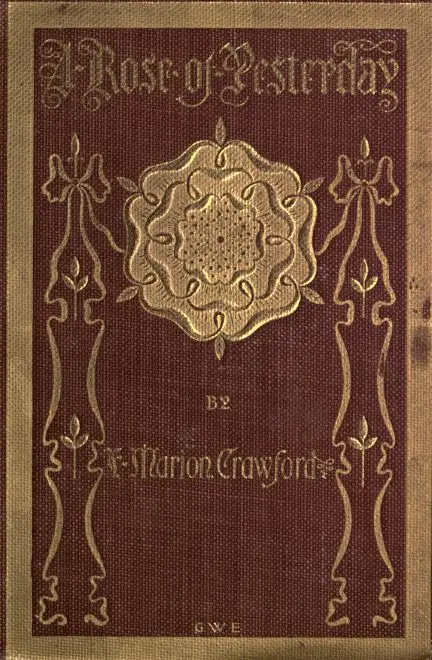
THE CLASSIC COLLECTION · 1897
"A Rose of Yesterday" by F. Marion Crawford is a novel written in the late 19th century. The narrative unfolds around the character of Sylvia, who is navigating her feelings towards her guardian, Colonel Wimpole, amidst themes of love, loss, and social expectations. The story explores the complexities of their relationship as Sylvia, an impressionable young woman, grapples with emotions that intertwine affection with the looming specter of age and societal constraints. The opening of the novel introduces Sylvia in a personal moment with Colonel Wimpole, as they discuss an etching depicting a noble knight and the deeper meanings it may hold. Their dialogue hints at Sylvia's infatuation with the ideals of heroism and love, while Colonel Wimpole reflects on his past and the unfulfilled promises rooted in his experiences of war and honor. As the narrative develops, the emotional tension between them is palpable, with themes of unreciprocated love and the weight of societal norms coming into play, especially as Sylvia mistakes Wimpole’s fatherly affection for something more. The delicate balance between youth and age, destiny, and the longing for love sets the stage for a compelling exploration of human relationships and the challenges of defining true passion within societal confines.
Introduction adapted from the source catalogue; source summaries may be automatically generated.
Free to read · English · 52,003 words · No account needed
MAKE TIME FOR A GOOD BOOK
On by default. Untick to stop anonymous reading totals. Each page counts after 10 seconds in view. How this works.
Anonymous counting is on unless you have switched it off.
After the door had closed, Helen stood a moment by the table, motionless. Then she sat down by the feeble light of the taper and wrote upon a sheet of paper her husband's address and one word--'forgiven.' She looked at the writing fixedly for a minute or two, and then rang the bell.
"Have this telegram sent at once, please, and bring me a lamp and dinner," she said to the servant.
With the lamp came Archie, following it with a sort of interest, as
children do.
"You must have been in the dark ever so long, mother," he said, and just then he saw her white face. "You are not looking all right," he observed.
Helen smiled, from force of habit, rather wearily. The servant began to set the table, moving stealthily, as though he were meditating some sudden surprise which never came. He was a fairly intelligent Swiss, with an immense pink face and very small blue eyes.
Helen watched him for a moment, and sighed. The man was intellectually her son's superior, and she knew it. Any one else might have smiled at the thought, as grotesque, but it had for her the cruel vividness of a misfortune that had saddened all of her life which her husband had not embittered. She envied, for her son, the poor waiter's little powers of mental arithmetic and memory.
"What's the matter, mother?" asked Archie, who sat looking at her.
"Nothing, dear," she answered, rousing herself, and smiling wearily again. "I am a little tired, perhaps. It has been a hot day."
"Has it? I didn't notice. I never do--at least, not much. I say, mother, let's go home! I'm tired of Europe, and I know you are. Let's all go home together--we and the Wimpoles."
"We shall be going home soon," said Helen.
"I thought you meant to go to Carlsbad first. Wasn't it to Carlsbad we
were going?"
"Yes, dear. But--here comes dinner--we will talk about it by and by."
They sat down to table. In hotels abroad Helen always dined in her rooms, for she was never quite sure of Archie. He seemed strangely unconscious of his own defect of mind, and was always ready to enter boldly into conversation with his neighbours at a foreign hotel dinner table. His childish ignorance had once or twice caused her such humiliation as she did not feel called upon to bear again.
"I don't know why we shouldn't talk about it now," began Archie, when he had eaten his soup in silence, and the servant was changing his plate.
"We shall be alone, after dinner," answered his mother.
Your reading position is saved on this browser. Take it to another device with a library code. Reading pages adapt to text, rather than matching a printed edition.
F. Marion (Francis Marion) Crawford
F. Marion (Francis Marion) Crawford

F. Marion (Francis Marion) Crawford

F. Marion (Francis Marion) Crawford
BEHIND THE BOOK
This eBook is for the use of anyone anywhere in the United States and most other parts of the world at no cost and with almost no restrictions whatsoever. You may copy it, give it away or re-use it under the terms of the Project Gutenberg License included with this eBook or online at www.gutenberg.org. If you are not located in the United States, you will have to check the laws of the country where you are located before using this eBook. Read the source licence.
The original source file, including credits and licence, is retained by this library. Request an original-format copy at no charge. Please include the book title and Project Gutenberg identifier #41009.
KEEP YOUR CURIOSITY GOING
Coulson Kernahan

Maurice Baring
Frances Wright
Cécile Tormay

Frederic Jesup Stimson

W. H. P. (William Henry Pope) Jarvis