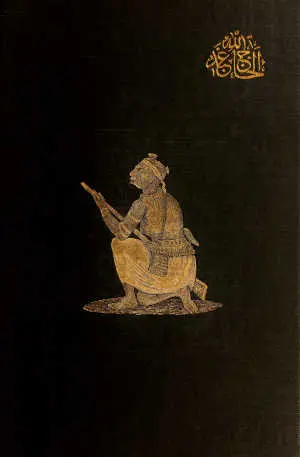
A mission to Gelele, King of Dahome, Vol. 2 (of 2)
Richard Francis, Sir Burton
THE CLASSIC COLLECTION · 1893
"A mission to Gelele, King of Dahome, Vol. 1 (of 2)" by Sir Richard Francis Burton is a travel narrative and ethnographic-historical account written in the mid-19th century. The work chronicles a British diplomatic mission to Dahomey, portraying the king, his female regiments, royal ceremonies, human sacrifices, and the coastal slave trade through first-hand observation. It blends statecraft with vivid reportage across West African locales, including Fernando Po, Lagos, Whydah, and the Dahoman interior.
The opening of the book frames Burton’s mission through Isabel Burton’s memorial preface and official Foreign Office letters directing him to promote lawful trade, curb the slave export, and discourage human sacrifices, while carrying specific royal presents. Before setting out inland, Burton sketches Fernando Po’s climate and the creation of a highland sanitarium at Santa Cecilia, then offers lively ethnographic notes on the Bubé people and his quiet life at Buena Vista. He departs aboard a naval steamer, gives a terse, unhealthy portrait of Lagos, and reaches Whydah, where he undergoes elaborate landings, toasts, and processions across the lagoon, complete with bands, salutes, and strenuous war dances. Formal receptions follow with local Dahoman officials—the Ka-wo, Ainadu, and others—who deliver the king’s messages and gifts, after which Burton begins a brief tour of Whydah’s layout, population, and history, noting its ruined state, origins of its name, and the legacy of Dahomean conquest and European forts.
Introduction adapted from the source catalogue; source summaries may be automatically generated.
Free to read · English · 89,083 words · No account needed
MAKE TIME FOR A GOOD BOOK
On by default. Untick to stop anonymous reading totals. Each page counts after 10 seconds in view. How this works.
Anonymous counting is on unless you have switched it off.
[Footnote 117: See Preface. It is not a little curious that the map and the orthography of 1772 are still copied into our best charts of 1864.]
[Footnote 118: In quoting these apparently impossible forces, it must ever be remembered that the African army consists of the whole of the male population between eighteen and fifty. Thus it would be easy to raise 200,000 men from a total of 2,000,000 souls—in Negroland, not in Europe.]
[Footnote 119: Mr. Duncan rates the population of “Savay” at 150 souls.]
[Footnote 120: A semi-mineral bead of many kinds, dug up in this part of the world, and a subject of some discussion. Every West African book alludes to it, and I have no new information that would justify a detailed description.]
[Footnote 121: Yewe-no, or God-mother, i.e., God man, is the name taken by Protestant missionaries, to distinguish themselves from Vodun- no, Fetish-mother, or Fetish man. The French seem to prefer Mau-no, which is, as will be found, equally objectionable.]
[Footnote 122: The water on this road is generally white as milk, and sometimes bitter to boot. The price, during the dry season, varies from forty cowries, or one string, to four times that sum, per gallon, in a country where a man can feed himself for 120 shells a day.]
[Footnote 123: Akansan is corn (maize), finely levigated by means of cankey stones, which resembles the “rubstones” of Ireland. Here, as in Europe, the instrument precedes the “quern”; it is the rudest and the most laborious way of grinding, but the best. The nether stone is a smooth granite slab, convex behind, and above hollowed into a concavity by use: it is disposed at an angle, sloping from the grinder, so as to allow the ground material to fall off. Some thirty to forty grains of well-soaked maize are placed upon it, to be bruised and pounded with a circular stone rubber or pestle, tapering, for a handle, at both ends. The housewives work like painters grinding colours, often stopping to wet the corn with water, and they are unpleasant to behold. The material is then placed in wallets like cowrie-bags, and during one day is allowed to ferment in the sun. It is afterwards mixed with water boiled in country pots, and laboured till the sediment, which is good for fattening sheep, goats, and pigs, subsides. The clearer portion is again strained, and boiled to the consistency of gruel. It hardens like blanc mange when it cools; and, lastly, it is packed in leaves. This African succedaneum for bread is wholesome, nutritious, cooling, and slightly acidulated—the sour and the bitter are instinctively preferred in hot, damp, and bile-exciting climates. It is almost always procurable in Yoruba, a few cowries per diem support a man, and if well made, as by the women of Hausa and the parts adjoining, it will be relished by the traveller after a week’s practice. Mixed with water and drunk, it forms a cool subacid drink, suitable for hot weather. I cannot but suspect that the “Akassa Creek,” which connects the Brass and Nun rivers, derives its name from this “staff of life.” Agidi and cankey are coarser stuffs; lió is stronger than akansan: káji is the smallest and highest flavoured, and there are other varieties, as numerous as our breads. Fufu is mashed yam. “Wo,” pronounced Waw, and by some travellers written Dab-a-dab, or Dabb-adab, is a kind of hasty pudding, eaten cold; a thick pancake of maize or Guinea corn-flour, mixed with boiling water, and stirred about with sticks till thickened to the consistency of batter; it is then picked out with bits of gourd, and moulded till cold in a shallow calabash. We found it by no means unpalatable, especially when it came from “the palace.” The Dahomans, it will be seen, are anti- Banting, and fond of azymous food.]
Your reading position is saved on this browser. Take it to another device with a library code. Reading pages adapt to text, rather than matching a printed edition.
Richard Francis, Sir Burton
BEHIND THE BOOK
This eBook is for the use of anyone anywhere in the United States and most other parts of the world at no cost and with almost no restrictions whatsoever. You may copy it, give it away or re-use it under the terms of the Project Gutenberg License included with this eBook or online at www.gutenberg.org. If you are not located in the United States, you will have to check the laws of the country where you are located before using this eBook. Read the source licence.
The original source file, including credits and licence, is retained by this library. Request an original-format copy at no charge. Please include the book title and Project Gutenberg identifier #78570.
KEEP YOUR CURIOSITY GOING
Wilfrid Scawen Blunt
Wilfrid Scawen Blunt

E. W. (Edgar Watson) Howe
Francis Greenleaf Allinson & Anne C. E. (Anne Crosby Emery) Allinson
Cyrenus Cole

John Martineau