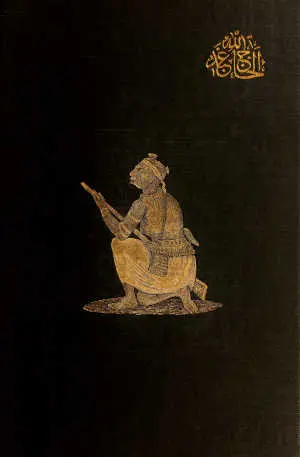
A mission to Gelele, King of Dahome, Vol. 2 (of 2)
Richard Francis, Sir Burton
THE CLASSIC COLLECTION · 1893
"A mission to Gelele, King of Dahome, Vol. 1 (of 2)" by Sir Richard Francis Burton is a travel narrative and ethnographic-historical account written in the mid-19th century. The work chronicles a British diplomatic mission to Dahomey, portraying the king, his female regiments, royal ceremonies, human sacrifices, and the coastal slave trade through first-hand observation. It blends statecraft with vivid reportage across West African locales, including Fernando Po, Lagos, Whydah, and the Dahoman interior.
The opening of the book frames Burton’s mission through Isabel Burton’s memorial preface and official Foreign Office letters directing him to promote lawful trade, curb the slave export, and discourage human sacrifices, while carrying specific royal presents. Before setting out inland, Burton sketches Fernando Po’s climate and the creation of a highland sanitarium at Santa Cecilia, then offers lively ethnographic notes on the Bubé people and his quiet life at Buena Vista. He departs aboard a naval steamer, gives a terse, unhealthy portrait of Lagos, and reaches Whydah, where he undergoes elaborate landings, toasts, and processions across the lagoon, complete with bands, salutes, and strenuous war dances. Formal receptions follow with local Dahoman officials—the Ka-wo, Ainadu, and others—who deliver the king’s messages and gifts, after which Burton begins a brief tour of Whydah’s layout, population, and history, noting its ruined state, origins of its name, and the legacy of Dahomean conquest and European forts.
Introduction adapted from the source catalogue; source summaries may be automatically generated.
Free to read · English · 89,083 words · No account needed
MAKE TIME FOR A GOOD BOOK
On by default. Untick to stop anonymous reading totals. Each page counts after 10 seconds in view. How this works.
Anonymous counting is on unless you have switched it off.
[Footnote 98: Akho ’si properly means king’s wife; it is applied to the eunuchs, who, as customary throughout Yoruba, form part of the royal establishment. Mr. Duncan (vol. i. p. 275) signally mistakes the meaning of “king’s wife.” The operation is performed in the palace, at the age of eighteen to twenty, by evulsion, others say by scission and extraction, and the victims remain anorchides. Of course many die; sometimes, it is said, five out of six. There is great difficulty in Dahome about gaining information touching these matters; the boldest speak in whispers when a stranger begins to question concerning what takes place “within.” The names of our eunuch envoys were as follow: De (here), adan (brave); De (here) means “He is valiant in Dahome.” Ya-mo- ji ’a is supposed to signify, “Cannot-get-such-a-son-to-be-born.”]
[Footnote 99: Kakopwe (in Forbes, Koao-peh) must not be confounded with the Kan-gbo-de (in Forbes, Camboodee), the King’s body attendant, whose lieutenant he is.]
[Footnote 100: So-kun is an unintelligible name in the “Bo-fetish.”]
[Footnote 101: Wa (shark), and kpo (a stick).]
[Footnote 102: Kini-kini (lion), and kpo (a stick).]
[Footnote 103: Logun (crocodile), and kpo (a stick).]
[Footnote 104: Má (knob), and kpo (a stick). Mr. Duncan (vol. i. p. 226) gives sketches of these weapons.]
[Footnote 105: In Appendix II. the reader will find a list of presents, supplies, and expenses required and incurred during six weeks’ to two months’ stay with the King of Dahome.]
[Footnote 106: On the Gold Coast a confidential slave, who is killed
when his master dies.]
[Footnote 107: The Dahoman cannot articulate any terminal consonant, except the highly nasalized n; he says “Tomú” for Tom, “Gunái ’tú” (goo’-nait’oo) for good night, and so forth.]
[Footnote 108: Literally “canoe father,” a title given to merchant captains, governors of petty places, head singers and drummers. Uhun or Hun is the generic name for a vessel: thus yevo-hun is a white man’s ship; ajo-hun, a trading vessel; ahwan-hun, a man-of-war, and zo-hun, a fire-ship, or steamer.]
[Footnote 109: The Iwe is probably the Italle of the Egbas, a grub bred in or issuing from mud floors, and celebrated for attacking those who lie down.]
[Footnote 110: For the distances, altitudes, and other purely
geographical features of the march, the reader is referred to Appendix
I.]
[Footnote 111: The characteristic feature of the East African “park- land” is the vivid ring of luscious verdure invariably sheltered under the shade of each large tree. Here, as in England, vegetation in such places is generally deficient.]
[Footnote 112: The shortness of the pure negro’s neck is one of his most characteristic features: hence he and his female in European attire always appear high-shouldered.]
Your reading position is saved on this browser. Take it to another device with a library code. Reading pages adapt to text, rather than matching a printed edition.
Richard Francis, Sir Burton
BEHIND THE BOOK
This eBook is for the use of anyone anywhere in the United States and most other parts of the world at no cost and with almost no restrictions whatsoever. You may copy it, give it away or re-use it under the terms of the Project Gutenberg License included with this eBook or online at www.gutenberg.org. If you are not located in the United States, you will have to check the laws of the country where you are located before using this eBook. Read the source licence.
The original source file, including credits and licence, is retained by this library. Request an original-format copy at no charge. Please include the book title and Project Gutenberg identifier #78570.
KEEP YOUR CURIOSITY GOING
Wilfrid Scawen Blunt
Wilfrid Scawen Blunt

E. W. (Edgar Watson) Howe
Francis Greenleaf Allinson & Anne C. E. (Anne Crosby Emery) Allinson
Cyrenus Cole

John Martineau