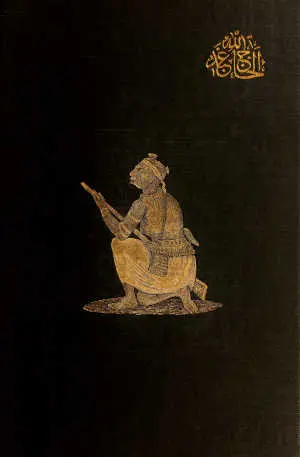
A mission to Gelele, King of Dahome, Vol. 2 (of 2)
Richard Francis, Sir Burton
THE CLASSIC COLLECTION · 1893
"A mission to Gelele, King of Dahome, Vol. 1 (of 2)" by Sir Richard Francis Burton is a travel narrative and ethnographic-historical account written in the mid-19th century. The work chronicles a British diplomatic mission to Dahomey, portraying the king, his female regiments, royal ceremonies, human sacrifices, and the coastal slave trade through first-hand observation. It blends statecraft with vivid reportage across West African locales, including Fernando Po, Lagos, Whydah, and the Dahoman interior.
The opening of the book frames Burton’s mission through Isabel Burton’s memorial preface and official Foreign Office letters directing him to promote lawful trade, curb the slave export, and discourage human sacrifices, while carrying specific royal presents. Before setting out inland, Burton sketches Fernando Po’s climate and the creation of a highland sanitarium at Santa Cecilia, then offers lively ethnographic notes on the Bubé people and his quiet life at Buena Vista. He departs aboard a naval steamer, gives a terse, unhealthy portrait of Lagos, and reaches Whydah, where he undergoes elaborate landings, toasts, and processions across the lagoon, complete with bands, salutes, and strenuous war dances. Formal receptions follow with local Dahoman officials—the Ka-wo, Ainadu, and others—who deliver the king’s messages and gifts, after which Burton begins a brief tour of Whydah’s layout, population, and history, noting its ruined state, origins of its name, and the legacy of Dahomean conquest and European forts.
Introduction adapted from the source catalogue; source summaries may be automatically generated.
Free to read · English · 89,083 words · No account needed
MAKE TIME FOR A GOOD BOOK
On by default. Untick to stop anonymous reading totals. Each page counts after 10 seconds in view. How this works.
Anonymous counting is on unless you have switched it off.
“Savi” is written “Savee” by Commander Forbes; Sabi, or Sabec (the latter is probably a misprint, copied into the Ethiopic Directory), by others; and Xavier, by Mr. Norris.[117] It was the ancient capital of the kingdom of Hwe-dah, Fidah, or Whydah, a royaume not exceeding the principality of Lichtenstein, but provided with an army of 200,000, not of seventy, soldiers.[118] Bosman, Barbot, and Phillips, at the end of the last century, dwelt lengthily upon its wealth, its fertility, and its wonderful populousness, the rascality of its people, and the villany of its royal animalculæ. In 1722 the despot of Whydah, upon whose court that of modern Dahome seems to have been modelled, could afford to “dash” a half-hundred weight of gold-dust to Captain, afterwards Sir Challoner Ogle, for capturing off Cape Lopez, and duly hanging, the pirate Roberts, in his ship, aptly named the “Royal Fortune.” Savi was separated from its northern neighbour, Allada (Ardrah), by a dangerous swamp, which we shall presently cross. In these lands, where there are neither streets nor public buildings, and where the best houses are of swish, we must not expect an approach to architectural antiquities; nothing now remains of the ancient glories of Savi; even in A.D. 1772, we are told, only the moats of the many European forts could be traced. A long trench, with a tall growth of trees, was the sole remnant of the palace occupied by the Whydah kings, whose descendants, even in their exile, held their ancient capital sacred. Savi is now a fine large village, a market, and a halting-place for travellers; its population has been rated at 4000, which I would reduce by one cypher.[119]
Our reception at Savi must be described; it will save the trouble of repetition. At every village, even where only two dancers could be mustered, upon us was the ceremony inflicted. Advancing in our hammocks, which were preceded by men capering, firing, and shouting songs of welcome, we saw the Caboceer Akponi prepared to receive us in state under the ragged ficus on the west of the town. Shaded by a tattered and battered old white calico umbrella, he sat upon a tall Gold-Coast stool, with a smaller edition cut out of the same block supporting his naked feet. He was a quiet-looking senior, in a striped waist-cloth; a single blue Popo bead,[120] strung with a human incisor to a thread—a Chiefly decoration,—represented the rest of his toilette. Our seats were ranged opposite the Caboceer,—mine in the centre, Mr. Cruikshank’s on the right, the Yewe-no[121] on my left, the interpreters behind, and the rest anywhere. After greetings and compliments, ensued a ceremony never afterwards neglected—the “King’s wife” was whispered by the chief, and frequently she returned with a large calabash, covered by a drinking cup of the same material, full of pure water.[122] De-Adan-de explained to the interpreter, who reported to us, that this luxury was sent to wash our mouths and to cool our hearts after the march. The officer first tasted it, and we all followed his example. The xenium, or guest-gift, was then placed before us. It varied with the wealth of the place. In a thriving town it consisted of a huge pot of water, a calabash of poor palm-oil, and a bowl of purer stuff, baskets of oranges and papaws, boiled maize, beans, and yams, cooked manioc, “akansan” wrapped in leaves, “cankey,” “agidi,” “fufu,” and a very tasty pudding, called “wo.[123]” A chicken, a fowl, or a goat denote a rich man. Where the King has palaces the wives forward dishes of palaver sauce, stews of pork and poultry, rich with the Occro,[124] and similar savoury dishes. The return was rum or gin. Owing, however, to the carelessness of So- kun, our boxes were hurried forwards, and we were obliged to borrow liquor on the road. The guides expect a glass every morning and evening when they come to salute, and the hammock-men also have a ration of rum. So So-kun’s hours were duly made bitter.
Your reading position is saved on this browser. Take it to another device with a library code. Reading pages adapt to text, rather than matching a printed edition.
Richard Francis, Sir Burton
BEHIND THE BOOK
This eBook is for the use of anyone anywhere in the United States and most other parts of the world at no cost and with almost no restrictions whatsoever. You may copy it, give it away or re-use it under the terms of the Project Gutenberg License included with this eBook or online at www.gutenberg.org. If you are not located in the United States, you will have to check the laws of the country where you are located before using this eBook. Read the source licence.
The original source file, including credits and licence, is retained by this library. Request an original-format copy at no charge. Please include the book title and Project Gutenberg identifier #78570.
KEEP YOUR CURIOSITY GOING
Wilfrid Scawen Blunt
Wilfrid Scawen Blunt

E. W. (Edgar Watson) Howe
Francis Greenleaf Allinson & Anne C. E. (Anne Crosby Emery) Allinson
Cyrenus Cole

John Martineau