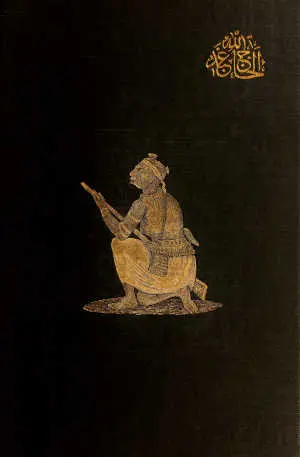
A mission to Gelele, King of Dahome, Vol. 2 (of 2)
Richard Francis, Sir Burton
THE CLASSIC COLLECTION · 1893
"A mission to Gelele, King of Dahome, Vol. 1 (of 2)" by Sir Richard Francis Burton is a travel narrative and ethnographic-historical account written in the mid-19th century. The work chronicles a British diplomatic mission to Dahomey, portraying the king, his female regiments, royal ceremonies, human sacrifices, and the coastal slave trade through first-hand observation. It blends statecraft with vivid reportage across West African locales, including Fernando Po, Lagos, Whydah, and the Dahoman interior.
The opening of the book frames Burton’s mission through Isabel Burton’s memorial preface and official Foreign Office letters directing him to promote lawful trade, curb the slave export, and discourage human sacrifices, while carrying specific royal presents. Before setting out inland, Burton sketches Fernando Po’s climate and the creation of a highland sanitarium at Santa Cecilia, then offers lively ethnographic notes on the Bubé people and his quiet life at Buena Vista. He departs aboard a naval steamer, gives a terse, unhealthy portrait of Lagos, and reaches Whydah, where he undergoes elaborate landings, toasts, and processions across the lagoon, complete with bands, salutes, and strenuous war dances. Formal receptions follow with local Dahoman officials—the Ka-wo, Ainadu, and others—who deliver the king’s messages and gifts, after which Burton begins a brief tour of Whydah’s layout, population, and history, noting its ruined state, origins of its name, and the legacy of Dahomean conquest and European forts.
Introduction adapted from the source catalogue; source summaries may be automatically generated.
Free to read · English · 89,083 words · No account needed
MAKE TIME FOR A GOOD BOOK
On by default. Untick to stop anonymous reading totals. Each page counts after 10 seconds in view. How this works.
Anonymous counting is on unless you have switched it off.
[Footnote 22: Except when absolutely necessary for explanation, I shall not use, in writing native vocables, accents or diacritical marks: these serve only to puzzle the reader, without enabling him to reproduce the sound of foreign words. In the future dictionaries, however, the words must be distinguished by accents, not as in English, by spelling, e.g., “boy” and “buoy,” “thy” and “thigh,” and so forth. Amongst the kindred Egbas the native etymology of English words has run wild, e.g., “Tamahana” for Thompson, “Wiremu,” as in New Zealand, for Williams, and “Piripi” for Philip.]
[Footnote 23: The Lagoon is salt only when the sea flows into it at high water. The people then wait till the tide has ebbed, and find on the mud-surface an efflorescence of salt, like hoar-frost, the work of rapid evaporation. It is scraped together, and packed in log huts for importation inland: most people prefer it in its original dirty and muddy state, others clean and whiten it by boiling.]
[Footnote 24: “De-nun,”—which Mr. Duncan (vol. i. p. 282) writes “Dtheno,” and evidently thinks to be a proper name, e.g., “the small kroom (a Gold Coast word) of Dtheno,”—is the “Bode” of the Egbas or Akus. The word “De” means custom-house dues; “nun,” properly “mouth,” or “side,” is a monosyllable of many significations. De-gan is the custom- house “captain,” who, as well as his guards, is locally called Decimero, from the Portuguese. The reader will observe that the terminal n in Dahoman words, is invariably a pure nasal, and sounds like the French “raison.” In “Je-sin-nun,” the first word signifies “salt,” the second “water,” and the nasal is so little defined, that an English ear would distinguish only “see,” or “si.”]
[Footnote 25: The Ffon, or Dahoman, a dialect of the great Yoruba family, has, like the Egba, or Abeokutan language, a G and a Gb, the latter at first inaudible to our ears, and difficult to articulate without long practice. On the other hand, it has a P (e.g., in Po-su), as well as a Kp (for instance, kpakpa, a duck), whereas the Egba possesses only the latter.]
[Footnote 26: When last in England, I saw sundry of these articles at the Turkish Bath in Jermyn Street, and very much out of place they looked.]
[Footnote 27: At Whydah the wells are about thirty feet deep, and the water is bad: they want a lining of lime and charcoal at the bottom. In the English fort, according to Mr. Duncan (vol. i. p. 120), after digging twenty feet deep, the soil was the same as at the top; at twelve feet they came upon a family sepulchre, decomposed human bones, and rusty anklets and armlets.]
Your reading position is saved on this browser. Take it to another device with a library code. Reading pages adapt to text, rather than matching a printed edition.
Richard Francis, Sir Burton
BEHIND THE BOOK
This eBook is for the use of anyone anywhere in the United States and most other parts of the world at no cost and with almost no restrictions whatsoever. You may copy it, give it away or re-use it under the terms of the Project Gutenberg License included with this eBook or online at www.gutenberg.org. If you are not located in the United States, you will have to check the laws of the country where you are located before using this eBook. Read the source licence.
The original source file, including credits and licence, is retained by this library. Request an original-format copy at no charge. Please include the book title and Project Gutenberg identifier #78570.
KEEP YOUR CURIOSITY GOING
Wilfrid Scawen Blunt
Wilfrid Scawen Blunt

E. W. (Edgar Watson) Howe
Francis Greenleaf Allinson & Anne C. E. (Anne Crosby Emery) Allinson
Cyrenus Cole

John Martineau