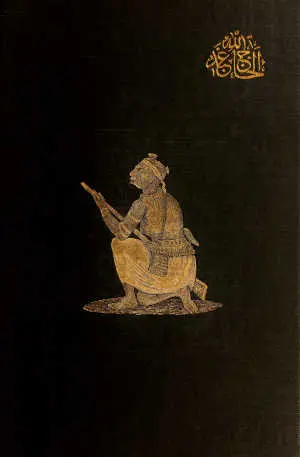
A mission to Gelele, King of Dahome, Vol. 2 (of 2)
Richard Francis, Sir Burton
THE CLASSIC COLLECTION · 1893
"A mission to Gelele, King of Dahome, Vol. 1 (of 2)" by Sir Richard Francis Burton is a travel narrative and ethnographic-historical account written in the mid-19th century. The work chronicles a British diplomatic mission to Dahomey, portraying the king, his female regiments, royal ceremonies, human sacrifices, and the coastal slave trade through first-hand observation. It blends statecraft with vivid reportage across West African locales, including Fernando Po, Lagos, Whydah, and the Dahoman interior.
The opening of the book frames Burton’s mission through Isabel Burton’s memorial preface and official Foreign Office letters directing him to promote lawful trade, curb the slave export, and discourage human sacrifices, while carrying specific royal presents. Before setting out inland, Burton sketches Fernando Po’s climate and the creation of a highland sanitarium at Santa Cecilia, then offers lively ethnographic notes on the Bubé people and his quiet life at Buena Vista. He departs aboard a naval steamer, gives a terse, unhealthy portrait of Lagos, and reaches Whydah, where he undergoes elaborate landings, toasts, and processions across the lagoon, complete with bands, salutes, and strenuous war dances. Formal receptions follow with local Dahoman officials—the Ka-wo, Ainadu, and others—who deliver the king’s messages and gifts, after which Burton begins a brief tour of Whydah’s layout, population, and history, noting its ruined state, origins of its name, and the legacy of Dahomean conquest and European forts.
Introduction adapted from the source catalogue; source summaries may be automatically generated.
Free to read · English · 89,083 words · No account needed
MAKE TIME FOR A GOOD BOOK
On by default. Untick to stop anonymous reading totals. Each page counts after 10 seconds in view. How this works.
Anonymous counting is on unless you have switched it off.
[Footnote 269: Alŭfá, probably a corruption of Arif, is the Egba word for a Mullah, a Moslem theologian. Imále in Egba, and Málenun in Ffon, both probably corrupted from Muallim, means the common Moslem. Hence some of our older authors brought the Malays to Dahome.— See History, p. 48, note signed “J.F.”]
[Footnote 270: Meaning, nyekple (the weapon itself), hen (hold), to (one that does). French travellers call them “Les faucheuses.”]
[Footnote 271: Ji (sky), bi (all), whe (sun), ton (belonging to), i.e., “all the sky belongs to the sun.” The commanding officeress is Danh-ji-hun-to, meaning, the rainbow is the captain or governor of (viz., goes round) the sky; that is to say, the King of Dahome rules the (black) world. Mr. Duncan’s “Dagbyweka,” vol. i. p. 231, seems to be a confusion between the two.]
[Footnote 272: The chopper is called anánun (confusion or badness), wá (doing), and hwisu (knife-sword, or dagger); meaning, the “cutting badly knife.” Strangers call it the blue-knife. It is a top-heavy blade four spans long, bluff and broadening to one palm at the end like the old Turkish falchion, and narrowing to two fingers at the hilt. The form is by no means so exaggerated as the wonderful chopping-knives of the Gold Coast. Down the centre runs a broad line, depressed and not polished like the back and edge. These knives, being royal gifts, may not be bought.]
[Footnote 273: Many of these end in a circle whose diameter is twice the breadth of the blade; sometimes the surface is worked and pierced like fish-slicers. The bill appears to be ornamental, not useful.]
[Footnote 274: Among the Dahomans are many mystic names, like Joshua, Isa, and others. These are mostly of the Bo-fetish, a war-medicine which prevents wounds (chapter xi.). The words mean, adan (brave), men (man), nun (side, face), kon (upon). The title is explained in two ways. “I am brave upon another man’s side,” i.e., to take him prisoner; or, “however brave nations are, the king is the bravest of all.”]
[Footnote 275: This is the Yoruban word Egba; in Ffon it means “break.” In Dahome the Egba race, from Lagos to Abeokuta, is called Anago at Whydah, and Nago at Agbome. J. F., the annotator of the History, says, “Of the Nago country nothing more is known than the name.” The word has been greatly corrupted by old travellers: it is, however, extensively used in Brazil. On the other hand, the Nago people call the Ffons, or Dahomans, Gunu.]
[Footnote 276: De! here means “softly,” as “Bleo” is used on the Gold
Coast.]
[Footnote 277: King Gezo accompanied Mr. Duncan almost to his dwelling.]
Your reading position is saved on this browser. Take it to another device with a library code. Reading pages adapt to text, rather than matching a printed edition.
Richard Francis, Sir Burton
BEHIND THE BOOK
This eBook is for the use of anyone anywhere in the United States and most other parts of the world at no cost and with almost no restrictions whatsoever. You may copy it, give it away or re-use it under the terms of the Project Gutenberg License included with this eBook or online at www.gutenberg.org. If you are not located in the United States, you will have to check the laws of the country where you are located before using this eBook. Read the source licence.
The original source file, including credits and licence, is retained by this library. Request an original-format copy at no charge. Please include the book title and Project Gutenberg identifier #78570.
KEEP YOUR CURIOSITY GOING
Wilfrid Scawen Blunt
Wilfrid Scawen Blunt

E. W. (Edgar Watson) Howe
Francis Greenleaf Allinson & Anne C. E. (Anne Crosby Emery) Allinson
Cyrenus Cole

John Martineau