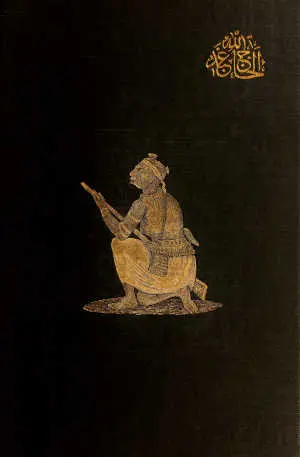
A mission to Gelele, King of Dahome, Vol. 2 (of 2)
Richard Francis, Sir Burton
THE CLASSIC COLLECTION · 1893
"A mission to Gelele, King of Dahome, Vol. 1 (of 2)" by Sir Richard Francis Burton is a travel narrative and ethnographic-historical account written in the mid-19th century. The work chronicles a British diplomatic mission to Dahomey, portraying the king, his female regiments, royal ceremonies, human sacrifices, and the coastal slave trade through first-hand observation. It blends statecraft with vivid reportage across West African locales, including Fernando Po, Lagos, Whydah, and the Dahoman interior.
The opening of the book frames Burton’s mission through Isabel Burton’s memorial preface and official Foreign Office letters directing him to promote lawful trade, curb the slave export, and discourage human sacrifices, while carrying specific royal presents. Before setting out inland, Burton sketches Fernando Po’s climate and the creation of a highland sanitarium at Santa Cecilia, then offers lively ethnographic notes on the Bubé people and his quiet life at Buena Vista. He departs aboard a naval steamer, gives a terse, unhealthy portrait of Lagos, and reaches Whydah, where he undergoes elaborate landings, toasts, and processions across the lagoon, complete with bands, salutes, and strenuous war dances. Formal receptions follow with local Dahoman officials—the Ka-wo, Ainadu, and others—who deliver the king’s messages and gifts, after which Burton begins a brief tour of Whydah’s layout, population, and history, noting its ruined state, origins of its name, and the legacy of Dahomean conquest and European forts.
Introduction adapted from the source catalogue; source summaries may be automatically generated.
Free to read · English · 89,083 words · No account needed
MAKE TIME FOR A GOOD BOOK
On by default. Untick to stop anonymous reading totals. Each page counts after 10 seconds in view. How this works.
Anonymous counting is on unless you have switched it off.
At certain hours the bugle-call from Santa Cecilia intimates that all about me is not savagery. And below where the smoke rises “a-twisten blue” from the dense plantation of palms, lies a rich study for an ethnologist—Basile, the Bubé village. No white man has lived long enough amongst this exceptional race of Fernandians to describe them minutely, and, as a rule, they have been grossly and unjustly abused.[14] A few lines will show the peculiarities which distinguish them from other African tribes.
The Bubé—who, as may be proved by language, is an aborigine of the mainland—has forgotten his origin, and he wisely gives himself no trouble about it. If you ask him whence he comes, he replies “from his mother”; whither he goes, and he answers “to Drikhatta ra Busala ’be[15] if a bad man,” and “to Lubakko ’pwa (the sky) if he has been a good Bubé.” He has a conception of and a name for the Creator, Rupe or Erupe, but he does not perplex himself with questions of essence and attribute, personality and visibility. Perhaps in this point too he shows good sense. He is also, you may be sure, not without an evil principle, Busala ’be, who acts as it were chief of police.
Coming down from the things of heaven to those of earth, the Fernandian is “aristocratic,” an out-and-out conservative; no oldest Tory of the old school can pretend to rival him. But in many points his attachment to ancient ways results not from prejudice, but from a tradition founded upon sound instinct. He will not live near the sea for fear of being kidnapped, also because the over-soft air effeminates his frame. He refuses to build higher up the mountains than 2000 to 3000 feet, as his staff of life, the palm and the plantain, will not flourish in the raw air and in the rugged ground. He confines himself therefore to the exact zone in which the medical geographer of the present age would place him—above the fatal fever level, and below the line of dysentery and pneumonia. His farm is at a distance from his cottage, to prevent domestic animals finding their way into it; his yam fields, which supply the finest crops, are as pretty and as neatly kept as vineyards in Burgundy, and he makes the best “topi” or palm toddy in Western Africa. His habitation is a mere shed without walls: he is a Spartan in these matters. Nothing will persuade him to wear, beyond the absolute requirements of decency, anything warmer than a thin coat of palm oil: near the summit of the mountain, 10,000 feet above sea-level, I have offered him a blanket, and he has preferred the fire. His only remarkable, somewhat “fashionable”-looking article of dress is an extensive wicker hat covered with a monkey skin, but this is useful to prevent tree snakes falling upon his head. He insists upon his wife preserving the same toilette, minus the hat—oh, how wise! If she does not come up to his beau ideal of fidelity, he cuts off, first her left hand, then her right, lastly, her throat; a very just sequence.[16] He is not a slave nor will he keep slaves; he holds them to be a vanity, and justly, because he can work for himself. He is no idler; after labouring at his farm, he will toil for days to shoot a monkey, a “philantomba” (alias “fritamba”), or a flying squirrel. Besides being a sportsman, he has his manly games, and I should not advise every one to tackle him with quarter-staff; his alpenstock is a powerful and a well-wielded weapon. Though so highly conservative, he is not, as some might imagine, greatly destitute of intelligence: he pronounces our harsh and difficult English less incorrectly that any West African tribe, including the Sierra Leonite. Brightest of all is his moral character: you may safely deposit rum and tobacco—that is to say, gold and silver—in his street, and he will pay his debt as surely as the Bank of England.[17] And what caps his worldly wisdom, is his perfect and perpetual suspiciousness. He never will tell you his name, he never receives you as a friend, he never trusts you, even when you bring gifts; he will turn out armed if you enter his village at an unseasonable hour, and if you are fond of collecting vocabularies, may the god of speech direct you! The fact is, that the plunderings and the kidnappings of bygone days are burned into his memory: he knows that such things have been, and he knows not when they may again be. So he confines himself to the society of his native hamlet, and he makes no other intimacies, even with the fellowmen whose village smoke he sees curling up from the neighbouring dell.[18]
Your reading position is saved on this browser. Take it to another device with a library code. Reading pages adapt to text, rather than matching a printed edition.
Richard Francis, Sir Burton
BEHIND THE BOOK
This eBook is for the use of anyone anywhere in the United States and most other parts of the world at no cost and with almost no restrictions whatsoever. You may copy it, give it away or re-use it under the terms of the Project Gutenberg License included with this eBook or online at www.gutenberg.org. If you are not located in the United States, you will have to check the laws of the country where you are located before using this eBook. Read the source licence.
The original source file, including credits and licence, is retained by this library. Request an original-format copy at no charge. Please include the book title and Project Gutenberg identifier #78570.
KEEP YOUR CURIOSITY GOING
Wilfrid Scawen Blunt
Wilfrid Scawen Blunt

E. W. (Edgar Watson) Howe
Francis Greenleaf Allinson & Anne C. E. (Anne Crosby Emery) Allinson
Cyrenus Cole

John Martineau