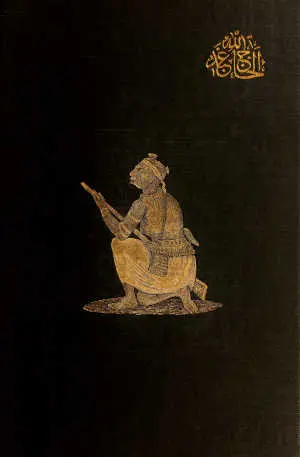
A mission to Gelele, King of Dahome, Vol. 2 (of 2)
Richard Francis, Sir Burton
THE CLASSIC COLLECTION · 1893
"A mission to Gelele, King of Dahome, Vol. 1 (of 2)" by Sir Richard Francis Burton is a travel narrative and ethnographic-historical account written in the mid-19th century. The work chronicles a British diplomatic mission to Dahomey, portraying the king, his female regiments, royal ceremonies, human sacrifices, and the coastal slave trade through first-hand observation. It blends statecraft with vivid reportage across West African locales, including Fernando Po, Lagos, Whydah, and the Dahoman interior.
The opening of the book frames Burton’s mission through Isabel Burton’s memorial preface and official Foreign Office letters directing him to promote lawful trade, curb the slave export, and discourage human sacrifices, while carrying specific royal presents. Before setting out inland, Burton sketches Fernando Po’s climate and the creation of a highland sanitarium at Santa Cecilia, then offers lively ethnographic notes on the Bubé people and his quiet life at Buena Vista. He departs aboard a naval steamer, gives a terse, unhealthy portrait of Lagos, and reaches Whydah, where he undergoes elaborate landings, toasts, and processions across the lagoon, complete with bands, salutes, and strenuous war dances. Formal receptions follow with local Dahoman officials—the Ka-wo, Ainadu, and others—who deliver the king’s messages and gifts, after which Burton begins a brief tour of Whydah’s layout, population, and history, noting its ruined state, origins of its name, and the legacy of Dahomean conquest and European forts.
Introduction adapted from the source catalogue; source summaries may be automatically generated.
Free to read · English · 89,083 words · No account needed
MAKE TIME FOR A GOOD BOOK
On by default. Untick to stop anonymous reading totals. Each page counts after 10 seconds in view. How this works.
Anonymous counting is on unless you have switched it off.
The gala-dress of the guardesses was decent, and not uncomely. A narrow fillet of blue or white cotton bound the hair, and the bosom was concealed by a sleeveless waistcoat of various colours, giving freedom to the arms, and buttoning in front like that affected by Hausa Moslems. The loin wrapper, of dyed stuff, mostly blue, pink, and yellow, extended to the ancles, and was kept tight round the waist by a sash, generally white, with long ends depending on the left. The body toilette was rendered more compact by an outer girthing of cartridge-box and belt, European-shaped, but home-made, of black leather, adorned with cowries; or of bandoleers, containing in separate compartments twelve to sixteen wooden gunpowder boxes, like cases for lucifer matches. The bullet-bag, with a few iron balls, hung by a shoulder strap to the dexter side, and was preserved in position by being passed under the cartridge-belt. All had knives, or short Dahoman falchions,[257] in shape not unlike, though smaller than, that most fatal—to the wearer—of all weapons, the old French briquet. The firelock, a good solid Tower-marked article,[258] was guarded by sundry charms, and protected from damp by a case of black monkey-skin tightly clasping the breeching, and opening to the rear. Many had long tassels dangling from the barrels.
The only other peculiarity in the court was a row of three large calabashes, ranged on the ground before and a little to the left of royalty. They contain the calvariæ of the three chiefs amongst forty kings, or petty headmen said to have been destroyed by Gelele: and they are rarely absent from the royal levées. A European would imagine these relics to be treated with mockery; whereas the contrary is the case. So the King Sinmenkpen (Adahoonzou II.), after unwrapping an enemy’s cranium, said to Mr. Norris, “If I should fall into hostile hands, I should wish to be treated with that decency of which I set the example.” The first skull was that of Akia’on, chief of Attako (Taccow), near “Porto Novo,” which was destroyed about three years ago. Beautifully white and polished, it is mounted in a ship or galley of thin brass about a foot long, with two masts, and jibboom, rattlings, anchor, and four portholes on each side, one pair being in the raised quarter-deck. When King Gezo died, his successor received a message from this chief, that all men were now truly joyful, that the sea had dried up, and that the world had seen the bottom of Dahome. Gelele rejoined by slaying him, and by mounting his skull in a ship, meaning that there is still water enough to float the kingdom, and that if the father is dead the son is alive. The second cranium, which also was well-boiled, and which, like the rest, wanted the lower jaw,[259] was that of Bakoko of Ishagga. It was crossed at right angles by four bars of bright brass; a thin mask of the same metal, rudely marked with eyes and unraised nose, gave it a monkey-like appearance. On the poll, and where the bars met, was a brass bowl with a tip like a calabash stalk, by which the upper half could be raised, to serve as a drinking-cup: this, when viewed in front, looked somewhat like a Phrygian cap, or a knightly helmet. During Gelele’s attack upon Abeokuta, in 1851, the people of Ishagga behaved with consummate treachery, which eleven years afterwards was terribly punished by the present ruler. Bakoko was put to death, and as a sign that he ought to have given water to a friend in affliction, men now drink from his recreant head. The third calvaria, also washed, was that of Flado, an Abeokutan general, sent to the aid of the Ishaggas. Along the ridge crown of the head ran a broad leaf in brass, to which was attached a thick copper wire and a chain which can raise it from its base; the latter is an imitation in brass of a country-trap; whilst a small white flag and cloth are wound round the stout wire. This showed that Flado fell into the pit which he dug for another.[260]
Your reading position is saved on this browser. Take it to another device with a library code. Reading pages adapt to text, rather than matching a printed edition.
Richard Francis, Sir Burton
BEHIND THE BOOK
This eBook is for the use of anyone anywhere in the United States and most other parts of the world at no cost and with almost no restrictions whatsoever. You may copy it, give it away or re-use it under the terms of the Project Gutenberg License included with this eBook or online at www.gutenberg.org. If you are not located in the United States, you will have to check the laws of the country where you are located before using this eBook. Read the source licence.
The original source file, including credits and licence, is retained by this library. Request an original-format copy at no charge. Please include the book title and Project Gutenberg identifier #78570.
KEEP YOUR CURIOSITY GOING
Wilfrid Scawen Blunt
Wilfrid Scawen Blunt

E. W. (Edgar Watson) Howe
Francis Greenleaf Allinson & Anne C. E. (Anne Crosby Emery) Allinson
Cyrenus Cole

John Martineau