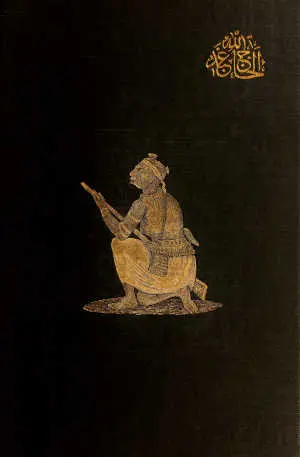
A mission to Gelele, King of Dahome, Vol. 2 (of 2)
Richard Francis, Sir Burton
THE CLASSIC COLLECTION · 1893
"A mission to Gelele, King of Dahome, Vol. 1 (of 2)" by Sir Richard Francis Burton is a travel narrative and ethnographic-historical account written in the mid-19th century. The work chronicles a British diplomatic mission to Dahomey, portraying the king, his female regiments, royal ceremonies, human sacrifices, and the coastal slave trade through first-hand observation. It blends statecraft with vivid reportage across West African locales, including Fernando Po, Lagos, Whydah, and the Dahoman interior.
The opening of the book frames Burton’s mission through Isabel Burton’s memorial preface and official Foreign Office letters directing him to promote lawful trade, curb the slave export, and discourage human sacrifices, while carrying specific royal presents. Before setting out inland, Burton sketches Fernando Po’s climate and the creation of a highland sanitarium at Santa Cecilia, then offers lively ethnographic notes on the Bubé people and his quiet life at Buena Vista. He departs aboard a naval steamer, gives a terse, unhealthy portrait of Lagos, and reaches Whydah, where he undergoes elaborate landings, toasts, and processions across the lagoon, complete with bands, salutes, and strenuous war dances. Formal receptions follow with local Dahoman officials—the Ka-wo, Ainadu, and others—who deliver the king’s messages and gifts, after which Burton begins a brief tour of Whydah’s layout, population, and history, noting its ruined state, origins of its name, and the legacy of Dahomean conquest and European forts.
Introduction adapted from the source catalogue; source summaries may be automatically generated.
Free to read · English · 89,083 words · No account needed
MAKE TIME FOR A GOOD BOOK
On by default. Untick to stop anonymous reading totals. Each page counts after 10 seconds in view. How this works.
Anonymous counting is on unless you have switched it off.
[Footnote 130: I can learn nothing of this word, which occurs in the
History.]
[Footnote 131: This is also in the old Whydah tongue.]
[Footnote 132: These are made of dollars beaten out thin, hollow cylinders, half a foot long, fastened with hooks and holes, with plain surfaces or with grotesque figures. Most of them are made at Agbome; some show, by the human heads upon them, that they are of European origin.]
[Footnote 133: The blacksmith in these lands is not an object of superstition; the highest craftsman is the King’s Huntoji or silversmith. The instruments are rude in the extreme; the anvil is a half-buried rock, the bellows are of common African type, the hammer is a cone of iron held in the hand, and the grindstone is a bit of fine close granite, shaped like the article with which the English mower whets his scythe.]
[Footnote 134: Barbot (Book 4) gives a fair account of this little place in the days of its independence.]
[Footnote 135: Dosu is the general name of a boy born after twins; he is called Yevo, or white man, from having been educated in a civilized manner at Bahia.]
[Footnote 136: On the Toffo road we afterwards found them in flower and fruit; the latter is eaten at Dahome, and, as will be seen, forms part of the King’s diet on campaigns.]
[Footnote 137: About the bad habits of these “butterfly schools,” see Mr. Duncan, vol. i. p. 209. He clapped his hat upon the heap, and secured fifty to sixty of all sorts and colours.]
[Footnote 138: Let down (the hammock), opposed to Zeiji, raise it up! But Dedde! means, softly! like the Fanti “Bleo.” The monosyllabic verb in Dahoman when repeated, seems to reduplicate the middle consonant, e.g., Do! Do! becomes Doddo!]
[Footnote 139: Singbo, Singbo-men or Singbo-eji, are terms applied to all double-storied buildings, as, e.g., the forts at Whydah. Hence the “Simbome” of Commandant Forbes.]
[Footnote 140: Menjo (man born), Ten (in the place). His principal is the Ak-pulogan. In Dahoman names and titles the following terminations mostly occur:—
Men (with peculiarly nasal N, sounding like “me”) “in,” as Danh-ho-men, and Agbo-men. In many local names it appears almost pleonastic, and thus corresponds with the Ni (in) of the Kisawahili and East African dialects, e.g., Kilima-ni, Mfu ’u-ni.
-nò, mother, carrier, master of, &c.
-nun, mouth, side, man.
’Si, from Asi, a wife.
-ten, prefix or affix, in the place, e.g., ten-che-men, in my place. Also -gon, e.g., Atto-gon, monkey’s place.
-to (taw), father, or “he who does,” e.g., wu-to, he who kills.
-ton (with nasal n), belonging to, e.g., Beecham-ton-e, it is
Beecham’s property.
Your reading position is saved on this browser. Take it to another device with a library code. Reading pages adapt to text, rather than matching a printed edition.
Richard Francis, Sir Burton
BEHIND THE BOOK
This eBook is for the use of anyone anywhere in the United States and most other parts of the world at no cost and with almost no restrictions whatsoever. You may copy it, give it away or re-use it under the terms of the Project Gutenberg License included with this eBook or online at www.gutenberg.org. If you are not located in the United States, you will have to check the laws of the country where you are located before using this eBook. Read the source licence.
The original source file, including credits and licence, is retained by this library. Request an original-format copy at no charge. Please include the book title and Project Gutenberg identifier #78570.
KEEP YOUR CURIOSITY GOING
Wilfrid Scawen Blunt
Wilfrid Scawen Blunt

E. W. (Edgar Watson) Howe
Francis Greenleaf Allinson & Anne C. E. (Anne Crosby Emery) Allinson
Cyrenus Cole

John Martineau