THE CLASSIC COLLECTION✦My diaries, being a personal narrative of events 1888-1914, Part 2 (1900-1914)CLASSIC FREE BOOKS
My diaries, being a personal narrative of events 1888-1914, Part 2 (1900-1914)
Wilfrid Scawen Blunt
THE CLASSIC COLLECTION · 1898
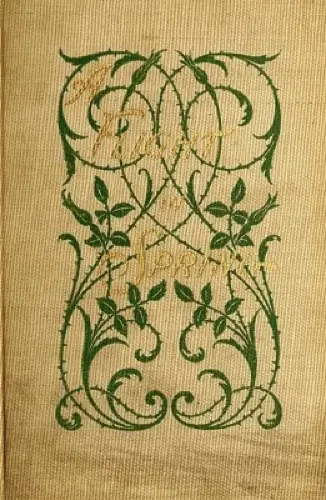
"A Flight in Spring" by J. Harris Knowles is a travel memoir written in the late 19th century. This work documents a leisurely journey aboard a private Pullman car, the "Lucania," as it travels from New York to various points across the United States, including the Pacific Coast, during the spring of 1898. The narrative is rich with observations on the landscapes, cities, and cultures encountered along the way, as the group grapples not only with the beauty of their surroundings but also with the impending backdrop of the Spanish-American War. The opening of the narrative sets the stage for this grand adventure, filled with an atmosphere of excitement and camaraderie among the passengers. As the journey commences, readers are introduced to the charm of the private car, equipped with comforts that promise an indulgent experience. The author describes the preparations, the joyful anticipation of travel, and the camaraderie felt amongst friends and companions, including moments like improvised theatricals and fine dining prepared by a talented cook. Knowles captures glimpses of American life in the late 19th century, the natural scenery, and the cultural diversity encountered, laying a foundation for a reflective and engaging travelogue as the party navigates their way through significant American cities.
Introduction adapted from the source catalogue; source summaries may be automatically generated.
Free to read · English · 41,733 words · No account needed
MAKE TIME FOR A GOOD BOOK
On by default. Untick to stop anonymous reading totals. Each page counts after 10 seconds in view. How this works.
Anonymous counting is on unless you have switched it off.
First he began to tease,
Then he began to squeeze,
Until there was a muddle--
Soon afterwards a fuddle.
This realistic effort was received with rounds of applause. The next poetic effort on the procrustean rhymes was by Miss Hayden, as follows:
Oh, why should I give,
Or expect me to live,
When, you called me a dove,
Yet you now cease to love?
I once was so merry,
My lips like a cherry,
I wept when you'd go,
And my heart beat so slow.
Then at once you would tease,
And kiss me, and squeeze,--
But--my brain's in a muddle,
And--you in a fuddle.
This effort, too, was greeted with approbation, and its tenderness duly
appreciated.
But the Nonsense Verses were the best fun. One would shout out a line, an additional line would come from some one else, and by the time the whole thing was complete, it would be hard to discriminate as to who was the author.
Here is one hurled at me:
There was a Canon named Knowles,
Whose mission it was to save souls;
When out on this trip,
He said, "Let them rip,
We'll save them all yet from the coals."
Some of our young ladies were deeply interested in the sailor boys at war, and for their benefit this nonsense had wing:
There was a young lady named Harding,
Whose sweetheart, the nation was guarding.
The rumor of war,
Went to her heart's core
For fear he'd be lost while bombarding.
These verses, too, have a maritime flavor:
There was a young lady of nerve,
Who bet on the Naval Reserve.
She got a flat cap
Like that of her chap,
And said, "This our love will preserve."
We had lots of others, and ever so many good stories, but it is time to end. This last must suffice for the Nonsense Verses:
There was a young lady en route,
Who wanted to go on a toot,
So she jumped off the ca--ah
When no one was ne--ah,
And feasted on candy and fruit.
This was the favorite refrain of all, for its reckless suggestions, and the special intonations of its third and fourth lines. Its echoes would sound out in the most unexpected connections--
"So she jumped off the ca--ah
When no one was ne--ah,"
and then would come a merry peal of laughter.
Sometimes the laughter even, would cease, and, we were all so free and unaffected, that siestas were taken, quite unceremoniously, when silence would settle down upon our party.
Your reading position is saved on this browser. Take it to another device with a library code. Reading pages adapt to text, rather than matching a printed edition.
BEHIND THE BOOK
This eBook is for the use of anyone anywhere in the United States and most other parts of the world at no cost and with almost no restrictions whatsoever. You may copy it, give it away or re-use it under the terms of the Project Gutenberg License included with this eBook or online at www.gutenberg.org. If you are not located in the United States, you will have to check the laws of the country where you are located before using this eBook. Read the source licence.
The original source file, including credits and licence, is retained by this library. Request an original-format copy at no charge. Please include the book title and Project Gutenberg identifier #33620.
KEEP YOUR CURIOSITY GOING
Wilfrid Scawen Blunt
Wilfrid Scawen Blunt

E. W. (Edgar Watson) Howe
Cécile Tormay

Moritz Busch
John L. Ransom