THE CLASSIC COLLECTION✦My diaries, being a personal narrative of events 1888-1914, Part 2 (1900-1914)CLASSIC FREE BOOKS
My diaries, being a personal narrative of events 1888-1914, Part 2 (1900-1914)
Wilfrid Scawen Blunt
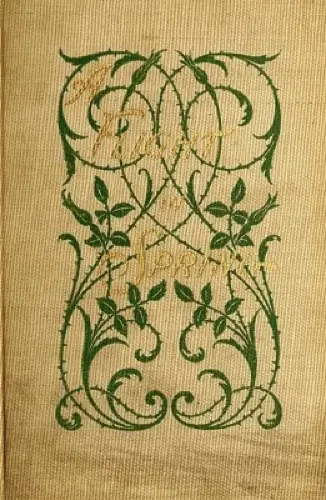
THE CLASSIC COLLECTION · 1898
"A Flight in Spring" by J. Harris Knowles is a travel memoir written in the late 19th century. This work documents a leisurely journey aboard a private Pullman car, the "Lucania," as it travels from New York to various points across the United States, including the Pacific Coast, during the spring of 1898. The narrative is rich with observations on the landscapes, cities, and cultures encountered along the way, as the group grapples not only with the beauty of their surroundings but also with the impending backdrop of the Spanish-American War. The opening of the narrative sets the stage for this grand adventure, filled with an atmosphere of excitement and camaraderie among the passengers. As the journey commences, readers are introduced to the charm of the private car, equipped with comforts that promise an indulgent experience. The author describes the preparations, the joyful anticipation of travel, and the camaraderie felt amongst friends and companions, including moments like improvised theatricals and fine dining prepared by a talented cook. Knowles captures glimpses of American life in the late 19th century, the natural scenery, and the cultural diversity encountered, laying a foundation for a reflective and engaging travelogue as the party navigates their way through significant American cities.
Introduction adapted from the source catalogue; source summaries may be automatically generated.
Free to read · English · 41,733 words · No account needed
MAKE TIME FOR A GOOD BOOK
On by default. Untick to stop anonymous reading totals. Each page counts after 10 seconds in view. How this works.
Anonymous counting is on unless you have switched it off.
Through Illinois, Indiana, Ohio.--Columbus.--The Beautiful Station. --Church Service.--Nearing Home.--Parting Thoughts.--Our Amusements. --To Ethel Asleep.--A Parting Wish.--Pilgrimages of Patriotism.
It was well on in Sunday morning when we reached our next stopping-place, Columbus, Ohio, where we stayed until Monday forenoon.
The morning light, as we journeyed on in the early hours, showed us the smiling country in its Sabbath rest. It was all such a contrast to the far West, and the Pacific Slope, and not an ungrateful one.
We were passing through Ohio, which, one might say, is no longer the West, but the centre of our land. It is a glorious country, rich, fertile, and prosperous-looking.
Columbus quite pleased us, by the evidences of its bustling activities and improvements; as well as by a certain old-fashioned dignity and state. It is the governmental seat of Ohio, and has some quite respectable public buildings, all done in the American-Greek-Classic style--rows of pillars, pediments, and all that--which, I confess, I like better than the strained effort after effect, seen in some more modern structures.
A new piece of architecture at Columbus, however, the beautiful railroad station, was charming. It is full of beauty, like a rich Italian palace, all warm with golden carvings, yellow marble walls, and mosaic pavements.
The interior effect of the waiting-rooms was exquisite, with the arched and coffered roof, and the graceful outlines of all.
On Sunday night we all attended church, where we heard a good sermon, and joined, with keen relish, in a fine choral service, rendered by a well-trained surpliced choir of men and boys. The leader of the choir evidently had a heart for the noble effects of Gregorian music, while not such a purist as to rule out all modern compositions. In this he was right. Gregorian music is like salt, really necessary as a healthful adjunct in church song, but too much of it is as bad as none at all.
It was toward evening when we reached Pittsburg, where we made but a short stay; and in the early morning hour we were once more at the Pennsylvania Depot in Jersey City, where we took reluctant leave of each other and our good car "Lucania."
Sleep had refreshed us, as we flew, all unconscious, through the splendid scenery of the Alleghanies. But what were such mountains to us now, who had seen the Rockies; and what was the Horseshoe Curve, compared to the daring engineering of Colorado railroads! Nothing. We were more than satisfied with all we had seen.
Your reading position is saved on this browser. Take it to another device with a library code. Reading pages adapt to text, rather than matching a printed edition.
BEHIND THE BOOK
This eBook is for the use of anyone anywhere in the United States and most other parts of the world at no cost and with almost no restrictions whatsoever. You may copy it, give it away or re-use it under the terms of the Project Gutenberg License included with this eBook or online at www.gutenberg.org. If you are not located in the United States, you will have to check the laws of the country where you are located before using this eBook. Read the source licence.
The original source file, including credits and licence, is retained by this library. Request an original-format copy at no charge. Please include the book title and Project Gutenberg identifier #33620.
KEEP YOUR CURIOSITY GOING
Wilfrid Scawen Blunt
Wilfrid Scawen Blunt

E. W. (Edgar Watson) Howe
Cécile Tormay

Moritz Busch
John L. Ransom