THE CLASSIC COLLECTION✦My diaries, being a personal narrative of events 1888-1914, Part 2 (1900-1914)CLASSIC FREE BOOKS
My diaries, being a personal narrative of events 1888-1914, Part 2 (1900-1914)
Wilfrid Scawen Blunt
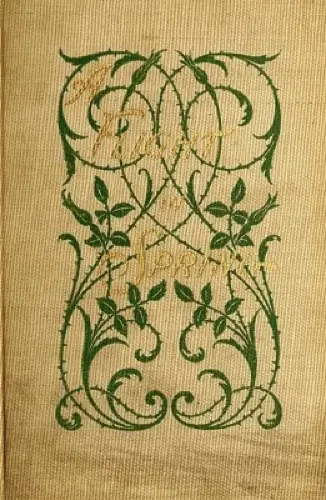
THE CLASSIC COLLECTION · 1898
"A Flight in Spring" by J. Harris Knowles is a travel memoir written in the late 19th century. This work documents a leisurely journey aboard a private Pullman car, the "Lucania," as it travels from New York to various points across the United States, including the Pacific Coast, during the spring of 1898. The narrative is rich with observations on the landscapes, cities, and cultures encountered along the way, as the group grapples not only with the beauty of their surroundings but also with the impending backdrop of the Spanish-American War. The opening of the narrative sets the stage for this grand adventure, filled with an atmosphere of excitement and camaraderie among the passengers. As the journey commences, readers are introduced to the charm of the private car, equipped with comforts that promise an indulgent experience. The author describes the preparations, the joyful anticipation of travel, and the camaraderie felt amongst friends and companions, including moments like improvised theatricals and fine dining prepared by a talented cook. Knowles captures glimpses of American life in the late 19th century, the natural scenery, and the cultural diversity encountered, laying a foundation for a reflective and engaging travelogue as the party navigates their way through significant American cities.
Introduction adapted from the source catalogue; source summaries may be automatically generated.
Free to read · English · 41,733 words · No account needed
MAKE TIME FOR A GOOD BOOK
On by default. Untick to stop anonymous reading totals. Each page counts after 10 seconds in view. How this works.
Anonymous counting is on unless you have switched it off.
But before closing this scattering record of our "Flight in Spring," surely it will be well to look back, once more, at its pleasant hours, and sweet companionship.
In those six weeks of our trip, equal almost to a lifetime of contact, under ordinary circumstances, how well we got to know each other. Surely the more each knew of each, the more did trifling fault fade away, and clear goodness come out into pleasing prominence. Was it not so?
So that when we came to part at the station, it was with a regret for that parting, and a hope that friendships were cemented on our journey, which nothing ever could dissever.
Let us think, too, with gratitude of the unwearying attention given to our comfort by Mr. Payson, in whose charge were all the details of our transportation, involving so much of most serious importance, as well for our safety, as our comfort. How wonderful to think that our eight thousand miles of travel was all conducted like clockwork, with entire reliability, and precision, from point to point, across the continent and back again, without hitch or accident.
Then we must remember the Pullman employees, to whom the whole journey was but an episode, in lives of such journeys; and yet how enthusiastic and attentive they were, at all times.
And we must remember Delia and Charles, in their sphere of usefulness, ever ready and willing to carry out the hospitable intentions of our good host and hostess.
It is all over, our "Flight in Spring," with all its pleasant incidents. Some of the sweetest moments were, when we turned in upon ourselves for amusement and pleasure, at the evening hours, when formal sightseeing was over; or in those hours of travel, when the eyes refused to gaze longer on the flying landscape.
Then came the Nonsense Verses, and the Stories, and the Songs, and the Machine Poetry, and all the fun. Shall we not gather up some of those trifles, as worthy of preservation in our record? Yes, certainly we will.
We will first start out with the machine poetry. Rhymes were furnished, which were these dreadful collocations, "give, live, dove, love, merry, cherry, go, slow, tease, squeeze, muddle, fuddle." A hopeless list surely.
Dear Fred, who said he could not write poetry, evolved the following:
And when a pretty orange he did give,
He thought it was too sweet to live,
So he gave it to his dove
To ever sustain their love.
One day when all was merry,
He gave to her a cherry;
And he said she should not go,
For fear it would be slow.
Your reading position is saved on this browser. Take it to another device with a library code. Reading pages adapt to text, rather than matching a printed edition.
BEHIND THE BOOK
This eBook is for the use of anyone anywhere in the United States and most other parts of the world at no cost and with almost no restrictions whatsoever. You may copy it, give it away or re-use it under the terms of the Project Gutenberg License included with this eBook or online at www.gutenberg.org. If you are not located in the United States, you will have to check the laws of the country where you are located before using this eBook. Read the source licence.
The original source file, including credits and licence, is retained by this library. Request an original-format copy at no charge. Please include the book title and Project Gutenberg identifier #33620.
KEEP YOUR CURIOSITY GOING
Wilfrid Scawen Blunt
Wilfrid Scawen Blunt

E. W. (Edgar Watson) Howe
Cécile Tormay

Moritz Busch
John L. Ransom