THE CLASSIC COLLECTION✦Found in the Philippines: The Story of a Woman’s LettersCLASSIC FREE BOOKS
Found in the Philippines: The Story of a Woman’s Letters
Charles King
THE CLASSIC COLLECTION · 1902
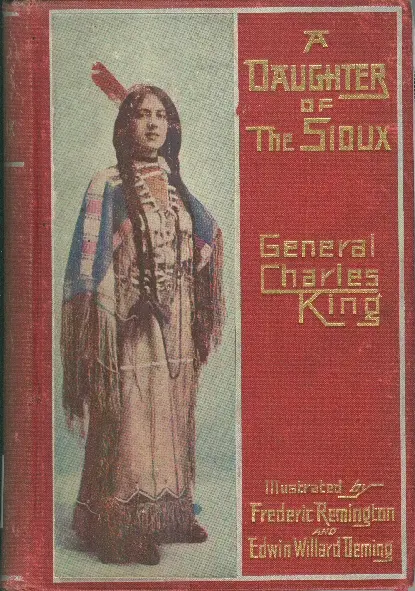
"A Daughter of the Sioux: A Tale of the Indian Frontier" by Charles King is a historical novel set in the late 19th century. The story takes place on the American frontier and follows the life of Lieutenant Beverly Field as he navigates the complexities of military duty and personal relationships amidst the rising tensions with Native American tribes. Key characters include Field, who is dedicated but distracted by his feelings for Esther Dade, and the captivating newcomer, Nanette Flower, who adds to the drama at Fort Frayne. The opening of the narrative introduces us to Major Webb and Lieutenant Field as they grapple with the lieutenant's frequent requests for absences to spend time with the lovely Esther Dade. The tension grows as it becomes evident that another woman, Nanette Flower, who has just arrived at Fort Frayne, captivates the attention of Field and other officers, inciting jealousy from Esther. As the chapter unfolds, it sets the stage for a sense of impending conflict, both personal and in terms of the looming threat from hostile Sioux forces. The relationships between the characters, particularly the dynamics between Field, Esther, and Nanette, foreshadow deeper complications that are likely to influence the unfolding story.
Introduction adapted from the source catalogue; source summaries may be automatically generated.
Free to read · English · 76,142 words · No account needed
MAKE TIME FOR A GOOD BOOK
On by default. Untick to stop anonymous reading totals. Each page counts after 10 seconds in view. How this works.
Anonymous counting is on unless you have switched it off.
And well she might be. Dark and lustrous were her eyes; black, luxuriant and lustrous was her hair; dark, rich and lustrous her radiant beauty. In contour her face was well nigh faultless. It might have been called beautiful indeed but for the lips, or something about the mouth, that in repose had not a soft or winsome line, but then it was never apparently in repose. Smiles, sunshine, animation, rippling laughter, flashing, even, white teeth--these were what one noted when in talk with Miss Flower. There was something actually radiant, almost dazzling, about her face. Her figure, though petite, was exquisite, and women marked with keen appreciation, if not envy, the style and finish of her varied and various gowns. Six trunks, said Bill Hay's boss teamster, had been trundled over the range from Rawlins, not to mention a box containing her little ladyship's beautiful English side-saddle, Melton bridle and other equine impedimenta. Did Miss Flower like to ride? She adored it, and Bill Hay had a bay half thoroughbred that could discount the major's mare 'cross country. All Frayne was out to see her start for her first ride with Beverly Field, and all Frayne reluctantly agreed that sweet Essie Dade could never sit a horse over ditch or hurdle with the superb grace and unconcern displayed by the daring, dashing girl who had so suddenly become the centre of garrison interest. For the first time in her life Mrs. Bill Hay knew what it was to hold the undivided attention of army society, for every woman at Fort Frayne was wild to know all about the beautiful newcomer, and only one could tell.
Hay, the trader, had prospered in his long years on the frontier, first as trader among the Sioux, later as sutler, and finally, when Congress abolished that title, substituting therefore the euphemism, without material clog upon the perquisites, as post trader at Fort Frayne. No one knew how much he was worth, for while apparently a most open-hearted, whole-souled fellow, Hay was reticence itself when his fortunes or his family were matters of question or comment. He had long been married, and Mrs. Hay, when at the post, was a social sphinx,--kind-hearted, charitable, lavish to the soldiers' wives and children, and devotion itself to the families of the officers when sickness and trouble came, as come in the old days they too often did. It was she who took poor Ned Robinson's young widow and infant all the way to Cheyenne when the Sioux butchered the luckless little hunting party down by Laramie Peak. It was she who nursed Captain Forrest's wife and daughter through ten weeks of typhoid, and, with her own means, sent them to the seashore, while the husband and father was far up on the Yellowstone, cut off from all communication in the big campaign of '76. It was she who built the little chapel and decked and dressed it for Easter and Christmas, despite the fact that she herself had been baptized in the Roman Catholic faith. It was she who went at once to every woman in the garrison whose husband was ordered out on scout or campaign, proffering aid and comfort, despite the fact long whispered in the garrisons of the Platte country, that in the old, old days she had far more friends among the red men than the white. That could well be, because in those days white men were few and far between. Every one had heard the story that it was through her the news of the massacre at Fort Phil Kearny was made known to the post commander, for she could speak the dialects of both the Arapahoe and the Sioux, and had the sign language of the Plains veritably at her fingers' ends. There were not lacking those who declared that Indian blood ran in her veins--that her mother was an Ogalalla squaw and her father a French Canadian fur trapper, a story to which her raven black hair and brows, her deep, dark eyes and somewhat swarthy complexion gave no little color. But, long years before, Bill Hay had taken her East, where he had relatives, and where she studied under excellent masters, returning to him summer after summer with more and more of refinement in manner, and so much of style and fashion in dress that her annual advent had come to be looked upon as quite the event of the season, even by women of the social position of Mrs. Ray and Mrs. Blake, the recognized leaders among the young matrons of the ----th Cavalry, and by gentle Mrs. Dade, to whom every one looked up in respect,--almost in reverence. Despite the mystery about her antecedents there was every reason why Mrs. Hay should be held in esteem and affection. Bill Hay himself was a diamond in the rough,--square, sturdy, uncompromising, generous and hospitable; his great pride and glory was his wife; his one great sorrow that their only child had died almost in infancy. His solecisms in syntax and society were many. He was given at times to profanity, and at others, when madame was away, to draw poker; but officers and men alike proclaimed him a man of mettle and never hesitated to go to him when in financial straits, sure of unusurious aid. But, even had this not been the case, the popularity of his betterhalf would have carried him through, for there was hardly a woman at Frayne to speak of her except in terms of genuine respect. Mrs. Hay was truth telling, sympathetic, a peacemaker, a resolute opponent of gossip and scandal of every kind, a woman who minded her own business and was only mildly insistent that others should do likewise. She declined all overtures leading to confidences as to her past, and demanded recognition only upon the standard of the present, which was unimpeachable.
Your reading position is saved on this browser. Take it to another device with a library code. Reading pages adapt to text, rather than matching a printed edition.
Charles King

Charles King

Charles King

Charles King
BEHIND THE BOOK
This eBook is for the use of anyone anywhere in the United States and most other parts of the world at no cost and with almost no restrictions whatsoever. You may copy it, give it away or re-use it under the terms of the Project Gutenberg License included with this eBook or online at www.gutenberg.org. If you are not located in the United States, you will have to check the laws of the country where you are located before using this eBook. Read the source licence.
The original source file, including credits and licence, is retained by this library. Request an original-format copy at no charge. Please include the book title and Project Gutenberg identifier #19023.
KEEP YOUR CURIOSITY GOING
Cécile Tormay

Moritz Busch
Coulson Kernahan
John L. Ransom

Maurice Baring
Frances Wright