THE CLASSIC COLLECTION✦Found in the Philippines: The Story of a Woman’s LettersCLASSIC FREE BOOKS
Found in the Philippines: The Story of a Woman’s Letters
Charles King
THE CLASSIC COLLECTION · 1902
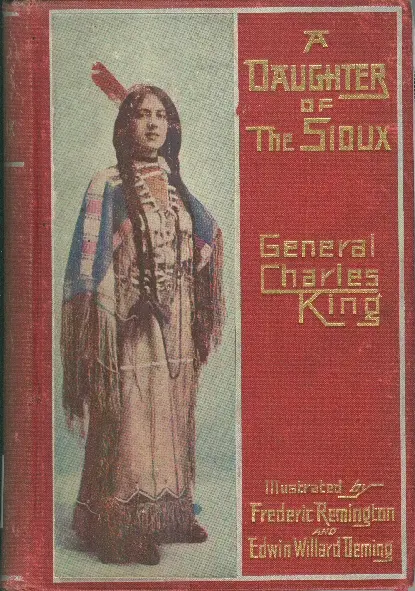
"A Daughter of the Sioux: A Tale of the Indian Frontier" by Charles King is a historical novel set in the late 19th century. The story takes place on the American frontier and follows the life of Lieutenant Beverly Field as he navigates the complexities of military duty and personal relationships amidst the rising tensions with Native American tribes. Key characters include Field, who is dedicated but distracted by his feelings for Esther Dade, and the captivating newcomer, Nanette Flower, who adds to the drama at Fort Frayne. The opening of the narrative introduces us to Major Webb and Lieutenant Field as they grapple with the lieutenant's frequent requests for absences to spend time with the lovely Esther Dade. The tension grows as it becomes evident that another woman, Nanette Flower, who has just arrived at Fort Frayne, captivates the attention of Field and other officers, inciting jealousy from Esther. As the chapter unfolds, it sets the stage for a sense of impending conflict, both personal and in terms of the looming threat from hostile Sioux forces. The relationships between the characters, particularly the dynamics between Field, Esther, and Nanette, foreshadow deeper complications that are likely to influence the unfolding story.
Introduction adapted from the source catalogue; source summaries may be automatically generated.
Free to read · English · 76,142 words · No account needed
MAKE TIME FOR A GOOD BOOK
On by default. Untick to stop anonymous reading totals. Each page counts after 10 seconds in view. How this works.
Anonymous counting is on unless you have switched it off.
And though his favorite comrades at the post were captains like Blake and Billy Ray, married men both whose wives he worshipped, the major's rugged heart went out especially to Beverly Field, his boy adjutant, a lad who came to them from West Point only three years before the autumn this story opens, a young fellow full of high health, pluck and principle--a tip top soldier, said everybody from the start, until, as Gregg and other growlers began to declaim, the major completely spoiled him. Here, three years only out of military leadingstrings, he was a young cock of the walk, "too dam' independent for a second lieutenant," said the officers' club element of the command, men like Gregg, Wilkins, Crane and a few of their following. "The keenest young trooper in the regiment," said Blake and Ray, who were among its keenest captains, and never a cloud had sailed across the serene sky of their friendship and esteem until this glorious September of 188-, when Nanette Flower, a brilliant, beautiful brunette came a visitor to old Fort Frayne.
And it was on her account the major would, could he have seen the way, said no to the adjutant's request to be absent again. On her account and that of one other, for that request meant another long morning in saddle with Miss Flower, another long morning in which "the sweetest girl in the garrison," so said they all, would go about her daily duties with an aching heart. There was no woman at Fort Frayne who did not know that Esther Dade thought all the world of Beverly Field. There was only one man who apparently had no inkling of it--Beverly Field himself.
She was the only daughter of a veteran officer, a captain of infantry, who at the age of fifty, after having held a high command in the volunteers during the civil war, was still meekly doing duty as a company officer of regulars nearly two decades after. She had been carefully reared by a most loving and thoughtful mother, even in the crude old days of the army, when its fighting force was scattered in small detachments all over the wide frontier, and men, and women, too, lived on soldier rations, eked out with game, and dwelt in tents or ramshackle, one-storied huts, "built by the labor of troops." At twelve she had been placed at school in the far East, while her father enjoyed a two years' tour on recruiting service, and there, under the care of a noble woman who taught her girls to be women indeed--not vapid votaries of pleasure and fashion, Esther spent five useful years, coming back to her fond father's soldier roof a winsome picture of girlish health and grace and comeliness--a girl who could ride, walk and run if need be, who could bake and cook, mend and sew, cut, fashion and make her own simple wardrobe; who knew algebra, geometry and "trig" quite as well as, and history, geography and grammar far better than, most of the young West Pointers; a girl who spoke her own tongue with accuracy and was not badly versed in French; a girl who performed fairly well on the piano and guitar, but who sang full-throated, rejoiceful, exulting like the lark--the soulful music that brought delight to her ageing father, half crippled by the wounds of the war days, and to the mother who so devotedly loved and carefully planned for her. Within a month from her graduation at Madame Piatt's she had become the darling of Fort Frayne, the pet of many a household, the treasure of her own. With other young gallants of the garrison, Beverly Field had been prompt to call, prompt to be her escort when dance or drive, ride or picnic was planned in her honor, especially the ride, for Mr. Adjutant Field loved the saddle, the open prairie or the bold, undulating bluffs. But Field was the busiest man at the post. Other youngsters, troop or company subalterns, had far more time at their disposal, and begged for rides and dances, strolls and sports which the post adjutant was generally far too busy to claim. It was Esther who brought lawn tennis to Frayne and found eager pupils of both sexes, but Field had been the first to meet and welcome her; had been for a brief time at the start her most constant cavalier. Then, as others began to feel the charm of her frank, cordial, joyous manner, and learned to read the beauty that beamed in her clear, truthful eyes and winsome, yet not beautiful face, they became assiduous in turn,--two of them almost distressingly so,--and she could not wound them by refusals. Then came a fortnight in which her father sat as a member of a court-martial down at old Fort Laramie, where were the band, headquarters and four troops of the ----th, and Captain and Mrs. Freeman, who were there stationed, begged that Mrs. Dade and Esther should come and visit them during the session of the court. There would be all manner of army gaieties and a crowd of outside officers, and, as luck would have it, Mr. Field was ordered thither as a witness in two important cases. The captain and his good wife went by stage; Esther and Beverly rode every inch of the way in saddle, camping over night with their joyous little party at La Bonte. Then came a lovely week at Laramie, during which Mr. Field had little to do but devote himself to, and dance with, Esther, and when his final testimony was given and he returned to his station, and not until then, Esther Dade discovered that life had little interest or joy without him; but Field rode back unknowing, and met at Frayne, before Esther Dade's return, a girl who had come almost unheralded, making the journey over the Medicine Bow from Rock Springs on the Union Pacific in the comfortable carriage of old Bill Hay, the post trader, escorted by that redoubtable woman, Mrs. Bill Hay, and within the week of her arrival Nanette Flower was the toast of the bachelors' mess, the talk of every household at Fort Frayne.
Your reading position is saved on this browser. Take it to another device with a library code. Reading pages adapt to text, rather than matching a printed edition.
Charles King

Charles King

Charles King

Charles King
BEHIND THE BOOK
This eBook is for the use of anyone anywhere in the United States and most other parts of the world at no cost and with almost no restrictions whatsoever. You may copy it, give it away or re-use it under the terms of the Project Gutenberg License included with this eBook or online at www.gutenberg.org. If you are not located in the United States, you will have to check the laws of the country where you are located before using this eBook. Read the source licence.
The original source file, including credits and licence, is retained by this library. Request an original-format copy at no charge. Please include the book title and Project Gutenberg identifier #19023.
KEEP YOUR CURIOSITY GOING
Cécile Tormay

Moritz Busch
Coulson Kernahan
John L. Ransom

Maurice Baring
Frances Wright