THE CLASSIC COLLECTION✦Found in the Philippines: The Story of a Woman’s LettersCLASSIC FREE BOOKS
Found in the Philippines: The Story of a Woman’s Letters
Charles King
THE CLASSIC COLLECTION · 1902
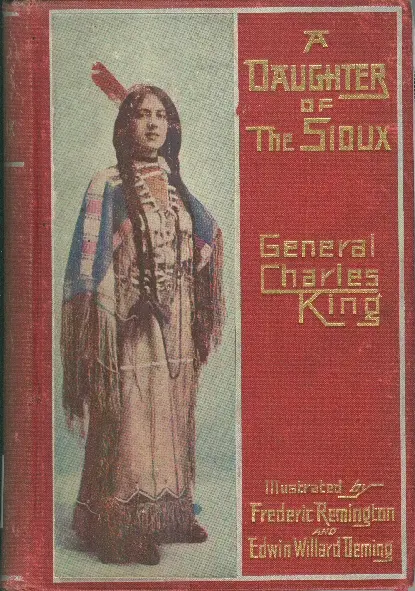
"A Daughter of the Sioux: A Tale of the Indian Frontier" by Charles King is a historical novel set in the late 19th century. The story takes place on the American frontier and follows the life of Lieutenant Beverly Field as he navigates the complexities of military duty and personal relationships amidst the rising tensions with Native American tribes. Key characters include Field, who is dedicated but distracted by his feelings for Esther Dade, and the captivating newcomer, Nanette Flower, who adds to the drama at Fort Frayne. The opening of the narrative introduces us to Major Webb and Lieutenant Field as they grapple with the lieutenant's frequent requests for absences to spend time with the lovely Esther Dade. The tension grows as it becomes evident that another woman, Nanette Flower, who has just arrived at Fort Frayne, captivates the attention of Field and other officers, inciting jealousy from Esther. As the chapter unfolds, it sets the stage for a sense of impending conflict, both personal and in terms of the looming threat from hostile Sioux forces. The relationships between the characters, particularly the dynamics between Field, Esther, and Nanette, foreshadow deeper complications that are likely to influence the unfolding story.
Introduction adapted from the source catalogue; source summaries may be automatically generated.
Free to read · English · 76,142 words · No account needed
MAKE TIME FOR A GOOD BOOK
On by default. Untick to stop anonymous reading totals. Each page counts after 10 seconds in view. How this works.
Anonymous counting is on unless you have switched it off.
Ray's gallant half hundred, as has been said, took the route for the north at break of day. Before them spread the open prairie, apparently level and unbroken for full five miles to the front and either flank, the distant slopes and ridges bounding the level expanse growing more distinct with every moment, and presently lighting up in exulting radiance in response to the rosy blushes of the eastward sky. Scorning the dusty stage road, the troop commander pointed to a distant height just visible against the northward horizon, bade the leading guide march straight on that; then gave the order "Right by Twos," that he might the more readily note the gait and condition of every horse and the bearing and equipment of his rider. There was still time to weed out weaklings of either class should any such there be. Riding slowly along the left flank, one after another, he carefully scanned every man and mount in his little detachment, then, at quicker pace, passed around to the eastward side of the column, and as critically, carefully studied them from that point of view. A light of quiet satisfaction shone in his fine, dark eyes as he finished, for, next to his wife and children, that troop was Ray's supreme delight. The preliminary look-over by lantern light had been all sufficient. This later inspection on the move revealed not a steed amiss, not an item of equipment either misplaced or lacking. "Steady as planets," barring the irrepressible tendency of some young, high-spirited horse to dance a bit until quieted by the monotony of the succeeding miles, at quick, light-hoofed walk, the sorrels tripped easily along in precise, yet companionable couples. "One yard from head to croup," said the drill book of the day, and, but for that, the riders might have dropped their reins upon the pommel as practically unnecessary. But, for the first hour or so, at least, the tendency toward the rear of column was ever to crowd upon the file leaders, a proceeding resented, not infrequently, in less disciplined commands than Ray's, by well-delivered kicks, or at least such signs of equine disapprobation as switching tail or set-back ears. But Ray's troop horses moved like so many machines, so constant and systematic had been their drill; and Ray's men rode in the perfection of uniform, so far as armament and equipment were concerned. Each greatcoat, precisely rolled, was strapped with its encircling poncho at the pommel. Each blanket, as snugly packed, with the sidelines festooned upon the top, was strapped at the cantle. Lariat and picket pin, coiled and secured, hung from the near side of the pommel. The canteen, suspended from its snap hook, hung at the off side. Saddle-bags, with extra horse shoes, nails, socks, underwear, brushes and comb, extra packages of carbine and revolver cartridges and minor impedimenta, equally distributed as to weight, swung from the cantle and underneath the blanket roll. From the broad, black leather carbine sling, over each trooper's left shoulder, the hard-shooting brown barrelled little Springfield hung suspended, its muzzle thrust, as was the fashion of the day, into the crude socket imposed so long upon our frontier fighters by officials who had never seen the West, save, as did a certain writer of renown, from a car window, thereby limiting their horizon. Ray despised that socket as he did the Shoemaker bit, but believed, with President Grant, that the best means to end obnoxious laws was their rigorous enforcement. Each man's revolver, a trusty brown Colt, hung in its holster at the right hip. Each man was girt with ammunition belt of webbing, the device of an old-time Yankee cavalryman that has been copied round the world, the dull-hued copper cartridges bristling from every loop. Each man wore, as was prescribed, the heavy, cumbrous cavalry boot of the day and generation, but had stowed in his saddle-bags light moccasins and leggings with which to replace them when, farther afield, their clear-headed commander should give the word. Each man, too, wore the gauntlets of Indian-tanned buckskin, a special pattern that Ray had been permitted to use experimentally. Each man was clad in dark blue flannel shirt and blouse, the latter soon probably to be stored with the big, weighty boots in Truscott's saddle room at Beecher, with, probably too, many of the light blue riding breeches, saddle-pieced with canvas--the uniform at the start destined, in the case of veteran troopers, at least, to be shed in favor of brown duck hunting trousers, or even, among certain extremists, fringed, beaded and embroidered buckskin, than which the present chronicler knows no more uncomfortable garb when soaked by pelting rains or immersion in some icy mountain stream. Even the brown campaign hats, uniformly "creased," as the fifty left the ford, would soon be knocked out of all semblance to the prescribed shape, and made at once comfortable and serviceable. Add to these items the well-filled haversack and battered tin quart cup, (for on a forced march of two or three days Captain Ray would have no pack mules,) and the personal equipment of his men was complete. As for the mounts, each sorrel tripped easily along under the sextuple folds of the saddle blanket, and the black-skinned McClellan saddle tree, with its broad horsehair cincha and hooded wooden stirrups, minus the useless skirts and sweat leathers. Neither breast strap, crupper nor martingale hampered the free movements of the sturdy, stocky little weight carriers. The black, single-reined curb bridle, fastened as to the throat latch by a light buckle, was slipped on over the headstall of the so-called watering bridle, whose toggled and detachable snaffle bit was generally "toted" from start to finish of a field scout in the saddle bags,--a twist of the flexible lariat, Indian fashion, between the complaisant jaws of his pet, being the troop's ready substitute. Add to this that, full, free and unmutilated, in glossy waves the beautiful manes and tails tossed in the upland breeze (for the heresies of Anglomania never took root in the American cavalry) and you have Ray's famous troop as it looked, fresh started from old Fort Frayne this glorious autumn morning of 188-, and with a nod of approbation, and "It couldn't be better, sergeant," to his devoted right hand man, the veteran senior non-commissioned officer of the troop, Ray rang out the command "At ease," and placed himself beside the silent young lieutenant at the head of column.
Your reading position is saved on this browser. Take it to another device with a library code. Reading pages adapt to text, rather than matching a printed edition.
Charles King

Charles King

Charles King

Charles King
BEHIND THE BOOK
This eBook is for the use of anyone anywhere in the United States and most other parts of the world at no cost and with almost no restrictions whatsoever. You may copy it, give it away or re-use it under the terms of the Project Gutenberg License included with this eBook or online at www.gutenberg.org. If you are not located in the United States, you will have to check the laws of the country where you are located before using this eBook. Read the source licence.
The original source file, including credits and licence, is retained by this library. Request an original-format copy at no charge. Please include the book title and Project Gutenberg identifier #19023.
KEEP YOUR CURIOSITY GOING
Cécile Tormay

Moritz Busch
Coulson Kernahan
John L. Ransom

Maurice Baring
Frances Wright