THE CLASSIC COLLECTION✦My diaries, being a personal narrative of events 1888-1914, Part 2 (1900-1914)CLASSIC FREE BOOKS
My diaries, being a personal narrative of events 1888-1914, Part 2 (1900-1914)
Wilfrid Scawen Blunt
THE CLASSIC COLLECTION · 1712
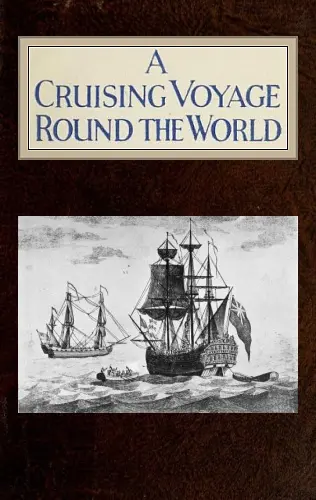
"A Cruising Voyage Round the World" by Woodes Rogers is a historical account written in the early 18th century. The book chronicles Rogers's remarkable voyage on two ships, the "Duke" and "Dutchess", as they set out to explore the South Seas and engage in privateering during a time of intense maritime competition and conflict. The narrative not only details the expedition's adventures and challenges but also provides insight into the life and character of Rogers, a significant figure in British maritime history. The opening of "A Cruising Voyage Round the World" introduces Captain Woodes Rogers as he prepares for a notable expedition in 1708, aiming to disrupt the lucrative South Sea trade dominated by France and Spain. His foresight leads him to gather a skilled crew, including the experienced Captain William Dampier, and organize two ships to sail from Bristol. The narrative unfolds with the preparations for the journey, the initial challenges faced by the crew—including mutiny and illness—and their eventual encounters with treasure ships and capture of prizes, setting the stage for a dramatic tale of adventure, resilience, and naval exploits that highlights the spirit of the age.
Introduction adapted from the source catalogue; source summaries may be automatically generated.
Free to read · English · 160,581 words · No account needed
MAKE TIME FOR A GOOD BOOK
On by default. Untick to stop anonymous reading totals. Each page counts after 10 seconds in view. How this works.
Anonymous counting is on unless you have switched it off.
[50] Edward Thaitch or Teach, a famous pirate known as “Blackbeard.” Killed in action with Robert Maynard of H.M.S. Pearl eighteen days after this letter. See also page xxix.
[52] Cal. Treasury Papers, Vol. 228, No. 24.
[55] This “Memorial” is printed in J. Ker’s “Memoirs,” pt. 3, 1726,
pp. 22-34.
[56] London Magazine, 12 Aug., 1721.
[57] Cal. Treasury Papers, vol. 235, No. 49.
[58] “Notes and Queries,” Ser. 9, vol. 1, p. 68.
[59] “D.N. Biog.,” article “Hosier.”
[60] Probably the same Captain Dennis who in 1718 conducted an expedition to Havana, the Proceedings of which are in the P.R.O. (C.O. 137, 13).
[61] B.M. Add. MSS. 33748, ff. 317-18.
[62] Runners, i.e. fast ships which risk every impediment as to privateers or blockade (Smyth, “Sailor’s Word Book,” p. 586). This is a very early use of the term.
[66] B.M. Add. MSS. 4459, ff. 101-2.
[67] B.M. Add. MSS. 4459, f. 102.
[68] B.M. Add. MSS. 36128, ff. 177-85.
[69] Cal. Treasury Books, 1729-30, pp. 57, 304.
[70] The picture is reproduced in this volume. In the will of Sarah Rogers, who died 1743, she bequeathed to “Mr. Sergeant Eyre, the picture of her father, brother, and herself, in one frame.” The painting afterwards came into the possession of Samuel Ireland, and was bought at his sale in 1801 by “Mr. Vernon.” Its present repository is unknown. It was engraved in 1799.
[71] Cal. of Treasury Books, 1729-30, p. 61.
[76] Just a year after his death, an Order in Council directed the Treasury to complete the bargain for the purchase of the Proprietors and Lessees’ rights (C.O. 23, 3).
[78] Ibid.
[79] Ibid.
[80] About this time Rogers transmitted to the Lords Commissioners of Trade “A general account and description of the Bahamas,” a most important document, occupying 14 folio pages, which is still preserved among the Colonial Records in the Public Record Office (C.O. 23, 3).
[82] The population comprised 256 men, 190 women, 489 white children, 275 able negroes, and 178 negro children.
[83] The landfall of Columbus is known to have been one of the Bahama Islands. Opinion is divided between Watling Island and Cat Island. Rogers’s letter lends support to the latter.
[84] In the following year he was chosen as one of the Council of the Bahamas. He was afterwards one of the three chief merchants of the Royal African Company, and died in 1735 “at Whydah, on the coast of Africa.”
[85] The Sovereigns; two remarkable rocky islets eastward of Kinsale Harbour; Big Sovereign (92 ft. high) and Little Sovereign.
[86] It appears from the will of Francis Rogers, part owner of the Duke and Dutchess, that Noblett Rogers was his brother. They were sons of Robert Rogers of Cork. The relationship to Woodes Rogers is uncertain. (“Notes & Queries,” Ser. X, vol. 9, p. 456.)
Your reading position is saved on this browser. Take it to another device with a library code. Reading pages adapt to text, rather than matching a printed edition.
BEHIND THE BOOK
This eBook is for the use of anyone anywhere in the United States and most other parts of the world at no cost and with almost no restrictions whatsoever. You may copy it, give it away or re-use it under the terms of the Project Gutenberg License included with this eBook or online at www.gutenberg.org. If you are not located in the United States, you will have to check the laws of the country where you are located before using this eBook. Read the source licence.
The original source file, including credits and licence, is retained by this library. Request an original-format copy at no charge. Please include the book title and Project Gutenberg identifier #55538.
KEEP YOUR CURIOSITY GOING
Wilfrid Scawen Blunt
Wilfrid Scawen Blunt

E. W. (Edgar Watson) Howe
Cécile Tormay

Moritz Busch
John L. Ransom