THE CLASSIC COLLECTION✦My diaries, being a personal narrative of events 1888-1914, Part 2 (1900-1914)CLASSIC FREE BOOKS
My diaries, being a personal narrative of events 1888-1914, Part 2 (1900-1914)
Wilfrid Scawen Blunt
THE CLASSIC COLLECTION · 1712
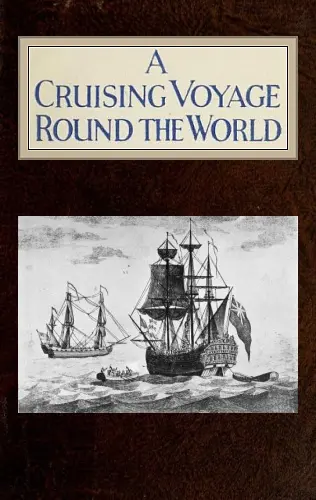
"A Cruising Voyage Round the World" by Woodes Rogers is a historical account written in the early 18th century. The book chronicles Rogers's remarkable voyage on two ships, the "Duke" and "Dutchess", as they set out to explore the South Seas and engage in privateering during a time of intense maritime competition and conflict. The narrative not only details the expedition's adventures and challenges but also provides insight into the life and character of Rogers, a significant figure in British maritime history. The opening of "A Cruising Voyage Round the World" introduces Captain Woodes Rogers as he prepares for a notable expedition in 1708, aiming to disrupt the lucrative South Sea trade dominated by France and Spain. His foresight leads him to gather a skilled crew, including the experienced Captain William Dampier, and organize two ships to sail from Bristol. The narrative unfolds with the preparations for the journey, the initial challenges faced by the crew—including mutiny and illness—and their eventual encounters with treasure ships and capture of prizes, setting the stage for a dramatic tale of adventure, resilience, and naval exploits that highlights the spirit of the age.
Introduction adapted from the source catalogue; source summaries may be automatically generated.
Free to read · English · 160,581 words · No account needed
MAKE TIME FOR A GOOD BOOK
On by default. Untick to stop anonymous reading totals. Each page counts after 10 seconds in view. How this works.
Anonymous counting is on unless you have switched it off.
[87] Rear-Admiral Sir George Saunders, born about 1671. Entered R.N. 1689. Present at the Battle of La Hogue. With Rooke at Cadiz & Vigo. Appointed to the Shoreham in 1705 and continued in her till 1710, cruising in the Irish Sea. Captain of the Barfleur in defeat of the Spanish fleet off Cape Passaro. Knighted 1720 and afterwards a Commissioner of the Navy. Died 5 Dec. 1734.
[88] A mixture of beer and spirit, sweetened with sugar and heated.
[89] An officer who has been deprived of a command but retains his rank and pay. The term was also occasionally employed to designate a volunteer.
[90] i.e. Yawl; a boat usually rowed with 4 or 6 oars.
[91] The Archduke Charles of Austria, whom the Allies in 1703 proposed to make King of Spain, as Charles III.
[92] For a similar ceremony on entering the Mediterranean, see Teonge
Diary, 1927, p. 264.
[93] From now onward Woodes Rogers employs the contraction L. for
“league.”
[94] Long bars or bolts of iron, with shackles sliding on them, and a lock at the end, used to confine the feet of prisoners.
[95] Jears; the tackles by which the lower yards of a ship are hoisted
or lowered.
[96] i.e. Trestle-trees; two strong bars of timber fixed horizontally on the opposite sides of the lower mast head, to support the frame of the top, and the weight of the top-mast.
[97] Roove or Rove; a weight of about 30 lb. used in the seventeenth
and eighteenth centuries.
[98] A favourite song during the Commonwealth, which describes in a humorous way the tastes of the Puritans. The words and the tune are to be found in D’Urfey’s “Pills to Purge Melancholy” (1719) ii, 286-7.
[99] Jan Nieuhof, a Dutch traveller of the middle of the seventeenth century. His “Voyages and Travels into Brasil” were reprinted in Churchill’s “Collection of Voyages”, Vol. II.
[100] Count John Maurice of Nassau Siegen was sent by the Dutch as governor of their Brazilian colonies in 1636. His attempts to found an empire in S. America were thwarted by the cupidity of the merchants, and he resigned his post in 1644.
[101] An interesting example of the widespread custom of the couvade.
[102] Probably the “Description de tout l’Univers en plusiers cartes, etc.” By Nicolas & Guillaume Sanson, an edition of which appeared in 1700.
[103] Pedro Texeira was the first to ascend the Amazon, in 1638. He made his way to Quito by the River Napo.
[104] Davies (William) Barber-Surgeon of London. His “Description, etc., of the River Amazon” is printed in Purchas “Pilgrimes,” 1625, vol. IV.
[105] Francisco de Orellana. For his “Voyage down the Amazons”, 1540-1, see Hakluyt Soc., vol. XXIV.
Your reading position is saved on this browser. Take it to another device with a library code. Reading pages adapt to text, rather than matching a printed edition.
BEHIND THE BOOK
This eBook is for the use of anyone anywhere in the United States and most other parts of the world at no cost and with almost no restrictions whatsoever. You may copy it, give it away or re-use it under the terms of the Project Gutenberg License included with this eBook or online at www.gutenberg.org. If you are not located in the United States, you will have to check the laws of the country where you are located before using this eBook. Read the source licence.
The original source file, including credits and licence, is retained by this library. Request an original-format copy at no charge. Please include the book title and Project Gutenberg identifier #55538.
KEEP YOUR CURIOSITY GOING
Wilfrid Scawen Blunt
Wilfrid Scawen Blunt

E. W. (Edgar Watson) Howe
Cécile Tormay

Moritz Busch
John L. Ransom